No. 69107
Grodno Castle
Poland
CastleRuin14th century
No. 22810
Castle · Poland
No. 22810 · 50.694 N, 16.318 E
Quick summary
Rogowiec Castle is a castle in Poland with origins associated with the 12th century.
See all castles in PolandRogowiec Castle is situated in the municipality of Głuszyca, Poland. Originally erected by the Polish rulers, its early phases reflect the strategic efforts of regional dukes to protect the borderlands.
The first known fortification on the site was a wooden structure founded in the 12th century by Bolesław Wysoki. This initial stronghold was later replaced towards the end of the 13th century when Duke Bolko I of Świdnica commissioned the construction of a stone castle. Built around 1292, this new fortress was part of a defensive network along the border with Czech lands. Early records from 1292 and 1299 mention the castle, with Reinsko from Makowice serving as its castellan under Bolko I. By 1340, Rogowiec continued to function as a castellany, a territorial administration center typical of medieval Poland.
In the early 14th century, the castle played a military role during internal conflicts among Silesian dukes. In 1316, Duke Władysław of Legnica used Rogowiec as a base for raids against his brother Bolesław of Brzeg. These attacks were reportedly carried out by outlawed knights and mercenaries operating from the castle grounds. Later in 1345, during the war between Bolko II of Świdnica and the Luxembourg brothers Jan and Karol, the fortress was used to imprison individuals accused of treason, such as Henryk von Schweinischen. The castle also sheltered Bolko II in 1353 as he prepared an incursion into Bohemian lands. Documents from 1353 and 1364 list Rogowiec among the fortifications of the Świdnica-Jawor duchy.
Between 1361 and 1374, the castle was under the authority of its burgrave, Mikołaj Bolcze, steward of the Świdnica court, who is credited with enhancing the castle’s status and possibly its facilities. Following the death of Bolko II’s wife, Agnieszka, in 1392, the Świdnica-Jawor duchy was absorbed into the Bohemian Crown, and the castle became a royal possession. In 1404, King Wenceslaus IV granted Rogowiec to Jan Kruszyna von Leuchtenberg, a starost (regional official) of the duchy. A burgrave named Franczek Adelungspach is mentioned in 1409, indicating continued administrative use.
The castle’s military significance continued into the Hussite Wars in the early 15th century. Hussite forces captured and damaged Rogowiec, after which it became a refuge for robber knights. In 1420, Franz von Pogorella seized the fortress. Soon after, in 1429, ownership passed to the Schellendorf family, who held the castle until 1482. That year, the forces of Matthias Corvinus, led by Georg von Stein, captured and destroyed Rogowiec Castle. Following its destruction, the castle was never rebuilt.
By the early 1500s, the surrounding lands along with the ruined castle had been acquired by the Hochberg family, notable owners of the nearby Książ Castle. Throughout its history, Rogowiec formed an important element in consolidating ducal authority over the mountainous border region. Alongside nearby fortresses such as Radosno, Grodno, and Nowy Dwór, it helped control a medieval trade route through the Rybna valley and served as an administrative center for the local estates.
Rogowiec Castle was built on a steep, rocky hill rising to 870 meters above sea level, composed primarily of melaphyre, a type of volcanic rock dating from the Permian period. The fortress’s layout followed an expanded horseshoe shape adapted to the rugged terrain of the Gór Suchych mountains. The walls were constructed from roughly hewn stone blocks, deliberately left without smooth finishing, giving the castle a rugged, natural appearance.
The upper part of the castle occupied a roughly triangular area, about 30 by 20 meters, encompassing nearly 700 square meters. At the western point of the eastern fortifications stood a round tower measuring approximately 10 meters in diameter, with walls about 3.6 meters thick at the base. This tower was integrated into the defensive wall, which itself reached two meters in thickness. A two-winged residential building occupied the southwestern corner of the inner courtyard, attached to the northern and eastern curtain walls. Notably, a tunnel connected this building to the round tower, suggesting a need for protected movement within the complex.
Inside the courtyard, space was limited but accommodated key structures such as stables, economic buildings, and quarters for the garrison. A lower castle area featured two towers and a gatehouse, further strengthened by a second line of defensive walls built adjacent to the original fortifications.
In the 14th century, the castle underwent significant enhancements. A rectangular residential tower, roughly 9.2 by 11 meters in size, was erected on the site of the original eastern wing. Defensive capabilities were bolstered by the addition of a semicircular bastion at the northeastern corner. These improvements reflect the ongoing military importance of Rogowiec during that period.
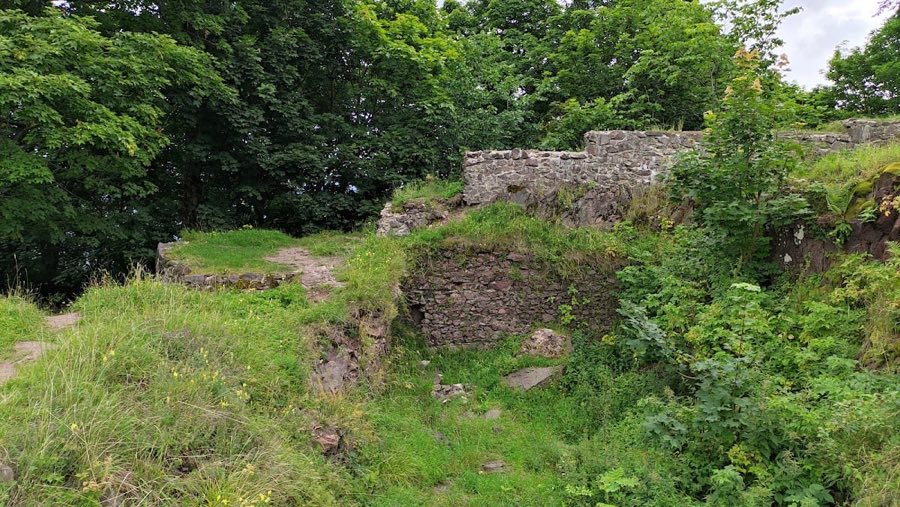
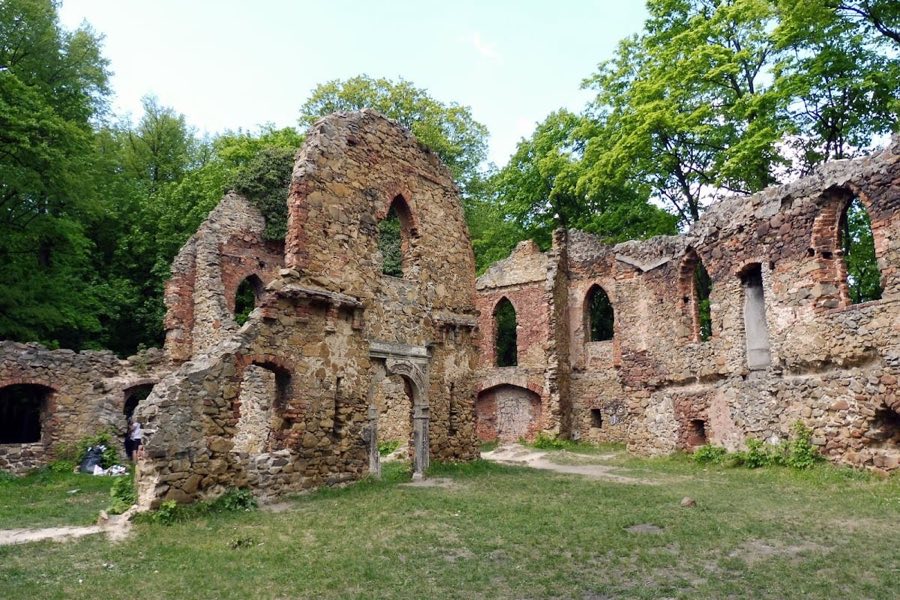
Today, the ruins preserve fragments of the original perimeter walls, faint evidence of bastions, and the still-standing cylindrical tower, which remains about three meters high. The castle site is notable for being the highest located castle ruin in Poland, offering views over the surrounding mountain ranges including the Góry Sowie, Góry Wałbrzyskie, and Góry Kamienne. The road that once led to the castle’s secured gate traversed steep slopes and small deep ravines, passing distinctive rock formations locally known as “Skalne Bramy” or “Stone Gates.”
Archaeological investigation at Rogowiec is ongoing, led by Dr. Artur Boguszewicz from the University of Wrocław. Students specializing in archaeology and ethnology participate in excavations, which aim to uncover further details about the castle’s construction, use, and historical context.
No. 69107
No. 51048
No. 94884
No. 30071
Comments
Comments for Rogowiec Castle will require a verified account before posting.
We'll send a verification link before your first comment is published.