No. 26265
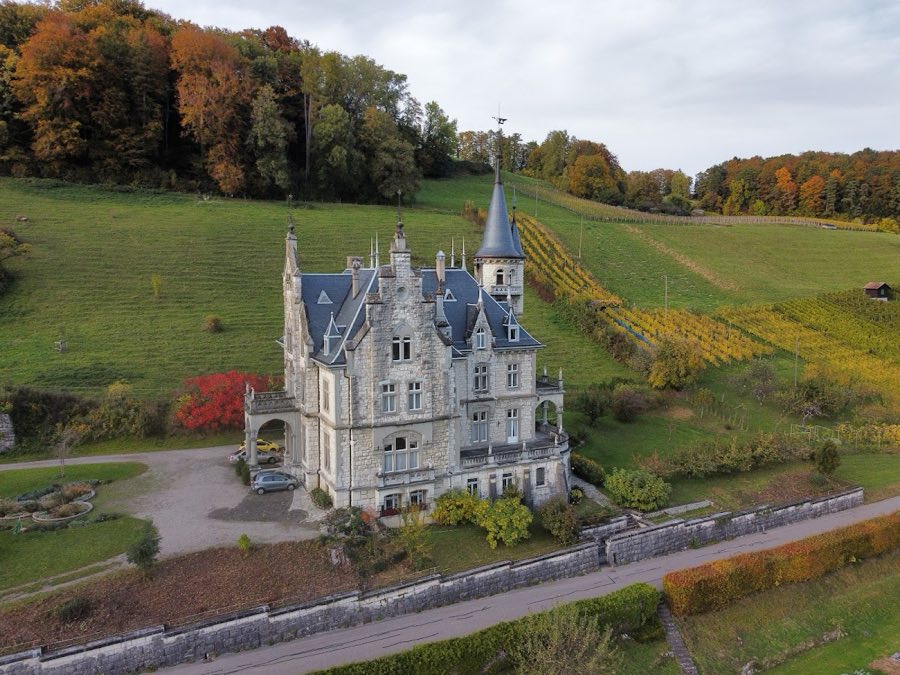
Wart Castle, Neftenbach
Neftenbach, Switzerland
Manor houseRestored19th century
No. 83341
Castle · Switzerland
No. 83341 · 47.534 N, 8.587 E
Quick summary
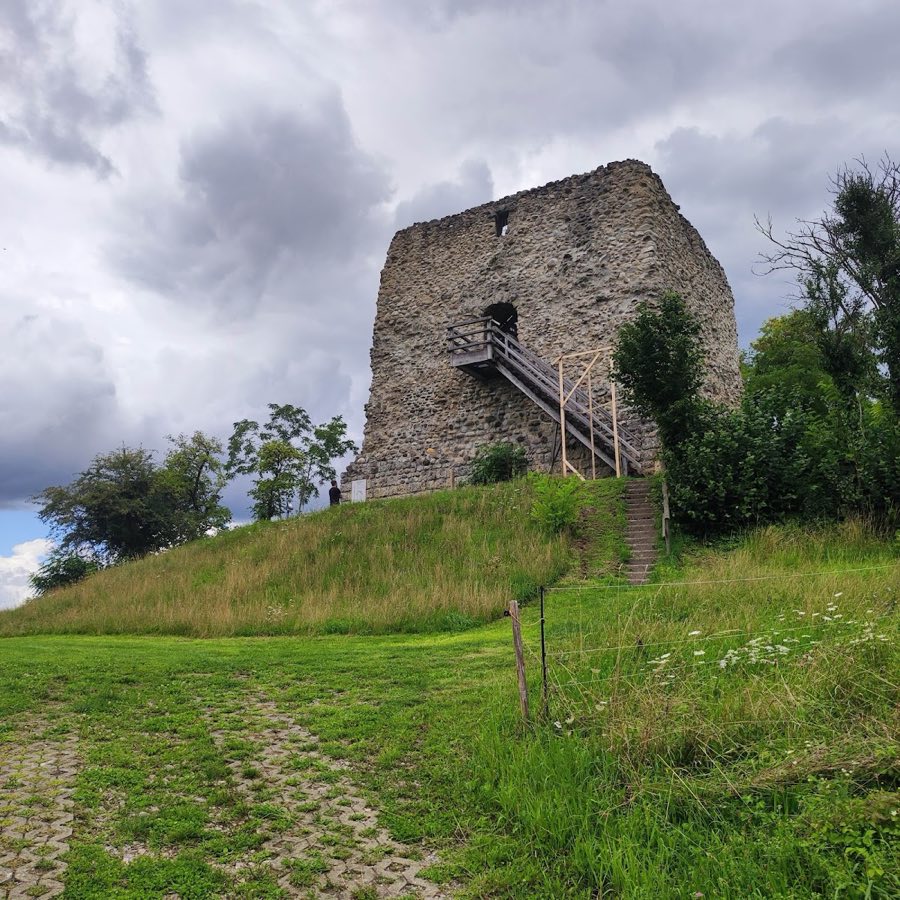
Ruine Freienstein is a castle in Switzerland with origins associated with the 13th century.
See all castles in SwitzerlandRuine Freienstein stands above the village of Freienstein-Teufen in Switzerland and was erected in the mid-13th century by a member of the von Tengen noble family.
The site first appears in records in 1254 when Conrad de Tengen transferred the holding to his daughter Ita and her husband, Egolf von Hasle. After that gift, Egolf and his descendants adopted the name Freiherren von Freienstein, and the settlement became known as Freienstein. The local coat of arms combined a hazel twig, reflecting descent from the Hasle line, with a lion motif probably drawn from the Kyburg heraldic tradition. In 1302 Egolf, with the agreement of his sons Heinrich and Johannes, sold the farmstead of Freienstein, the Meierhof, to the monastery of Töss. Heinrich, who had married Nertha von Tüfen, served as land judge in the Zürichgau in 1282 and lived beyond 1314.
Citizens of Zürich destroyed the castle in 1334 or in 1338; the building was later rebuilt. Johannes von Freienstein died in 1360, ending the male line of that family, and the site then passed through a succession of owners. By 1436 the castle belonged to the Schaffhausen knight Herrmann Künsch. In 1443, after Künsch had taken a man from the County of Kyburg prisoner, armed contingents from Winterthur and Diessenhofen under the regional official Heinrich Schwend attacked and set the castle on fire; a prisoner left in the dungeon suffocated in the smoke. Ritter Felix Schwarzmurer acquired the property in 1485, and after his death in 1492 the ruined site passed to Hans Erhart and Urban zum Thor of Teufen.
In 1600 the judicial lordship and the lordship of Teufen were transferred to the Zürich family von Meiss, who retained ownership until they sold the estate in 1838. The last private owner was Lieutenant Colonel Gottfried von Meiss-Trachsler (1785–1862). In 1806 a large proportion of the castle’s masonry was removed and reused to construct the Töss bridge. The heirs of von Meiss-Trachsler handed the ruin to the Canton of Zürich in 1975. The ruin was conserved in 1976 with a donation from Franz Xaver Arnet and additional funds from the Confederation, the canton and the municipality, and the site was placed under the protection of the Swiss Confederation.
Ruine Freienstein occupies a hilltop vineyard site at about 460 meters above sea level and survives as a ruined medieval hill castle. The layout centers on a tower with traces of its base and is enclosed by a surrounding defensive ditch cut into the slope. Archaeological investigation and later conservation work have recorded these principal elements as the core of the castle’s plan.
A deep shaft-well known as the Sodbrunnen was found to the west of the tower. The feature was discovered in 1968 and fully excavated between 1981 and 1982. From the bottom of the outer ditch workers drove a rectangular shaft roughly 2.30 by 2.40 meters in plan down into the local Molasse bedrock to a depth of 26.40 meters; the overall depth of the well reaches 33.5 meters. Tuffstone ashlar blocks appear at about 10 and 15 meters below ground, demonstrating that the shaft was lined with masonry at least up to the level of the tower base.
The construction therefore combines worked stone masonry and excavation into bedrock, with the tuffstone ashlar representing built sections of the shaft and the surrounding rock forming the deeper profile. Many of the castle’s dressed stones were removed in 1806 and used in the construction of the nearby bridge over the Töss, a documented episode of material reuse. Today the standing fabric survives only as ruins of the tower and its base together with the ditch and the preserved shaft-well; the ruin was conserved in 1976 and is protected by federal heritage law.
No. 26265
No. 56223
No. 32237
No. 55108
Comments
Comments for Ruine Freienstein will require a verified account before posting.
We'll send a verification link before your first comment is published.