No. 44174
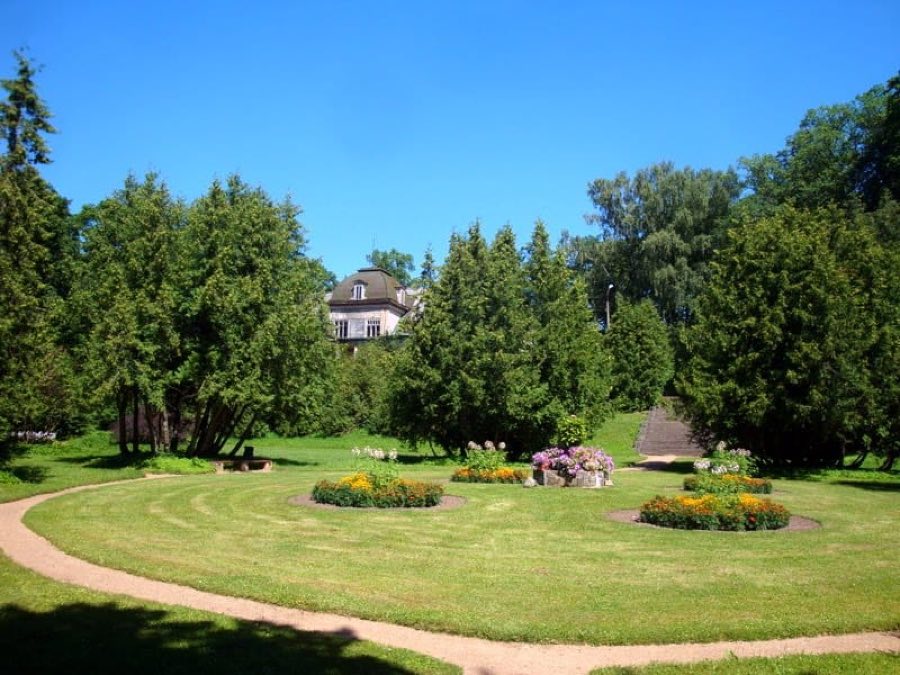
Burtnieki Castle
Latvia
CastleRuin14th century
No. 31292
Castle · Latvia
No. 31292 · 57.882 N, 25.370 E
Quick summary
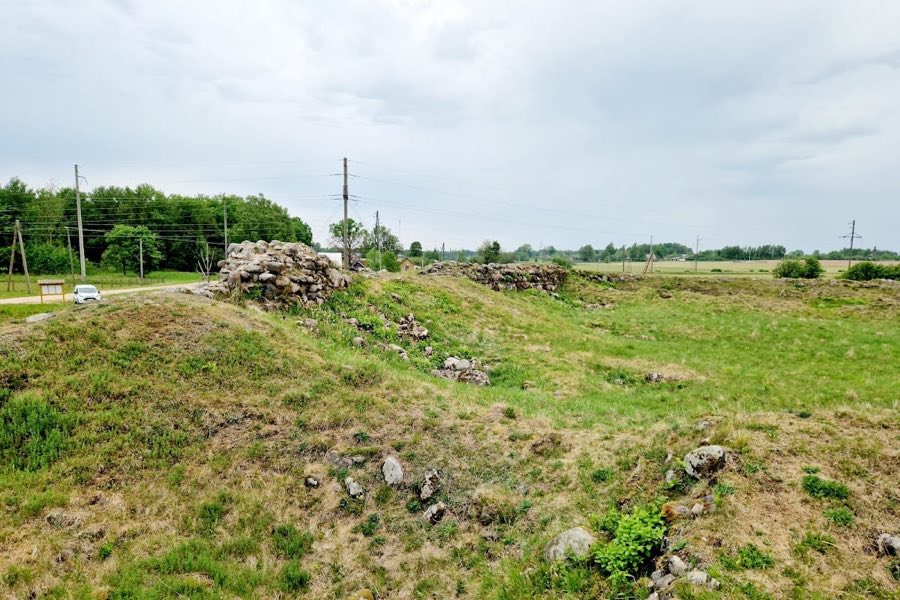
Rūjiena Fortress is a castle in Latvia with origins associated with the 13th century.
See all castles in LatviaRūjiena Fortress is located in the municipality of Rūjiena in modern-day Latvia. It was constructed by the Livonian Order, a branch of the Teutonic Knights active in the Baltic region. The fortress was established in the mid-13th century, with construction taking place approximately between 1257 and 1263, though some sources suggest the year 1272 for both the castle’s foundation and an associated church.
Serving as a small but important stronghold, Rūjiena guarded the border between the lands controlled by the Livonian Order and the neighboring Archbishopric of Riga. It played a role among a series of fortifications, including castles at Karksi, Trikata, Asti, and Helme. Together, these castles functioned as defensive points as well as storage sites for grain, supporting the fertile areas of the historic Sakala and Talava regions.
The fortress first appears in written records during the early 14th century and remained mentioned in various documents through the 15th and 16th centuries. Throughout its history, it experienced several military confrontations. In 1481, forces under Ivan III of Russia attacked Rūjiena, causing damage. During the Livonian War (1558–1583), the fortress suffered repeated occupations and was looted and burned multiple times. Russian troops notably destroyed it in 1560, reflecting the intense regional conflicts of the time.
Control over Rūjiena shifted between the Livonian Order, Polish rulers, Swedish administrators, and Russian forces during the 16th and 17th centuries. By 1582, its military importance had greatly diminished, and records describe it as mostly ruined or without a roof. The castle was granted as a feudal holding, first to Georg Fahrensbach and later to officials under Swedish rule. In 1704, during the Great Northern War, Rūjiena Fortress was finally demolished and never rebuilt.
Interest in the site dates back to at least the 18th century, when drawings from 1790 captured walls still standing up to three meters tall. Since 1922, the location has been protected as a cultural monument under Latvian state ownership.
Rūjiena Fortress was built in the Mantelmauer style, a defensive design characterized by a thick, continuous outer stone wall. Positioned on an elevated hill along the right bank of the Rūja River, the fortress made use of the natural land contours, resulting in an irregularly shaped enclosure. Surrounding the hill were deep defensive ditches and a water defense system nourished by a nearby mill dam, which enhanced protection against attackers.
The fortress was enclosed by a stone curtain wall approximately two meters thick, constructed largely from fieldstones. This heavy and solid masonry gave the castle a robust appearance. Along the north side stood a single square tower that leaned against the outer wall, enhancing the defensive coverage of that sector. Additionally, a large semicircular tower measuring about eight meters in diameter was built outside the northern curtain wall during the period when gunpowder firearms became common in warfare.
The main entrance was initially located on the western side, within the ring wall, but was later supplemented by an outer gatehouse to strengthen access control. Inside the fortification’s walls, three stone buildings took shape over time, with walls roughly 1.3 meters thick. These structures were expanded as the needs of the fortress evolved.
The castle stood on an oval-shaped hill, surrounded by a deep moat that was crossed via a bridge leading to the west gate. On the southern side, a smaller exit directed towards the mill pond adjacent to the river, likely allowing controlled access to the water source. In the late 18th century, traces of battlements and wall fragments were still visible, with some walls reaching up to two or three meters in height.
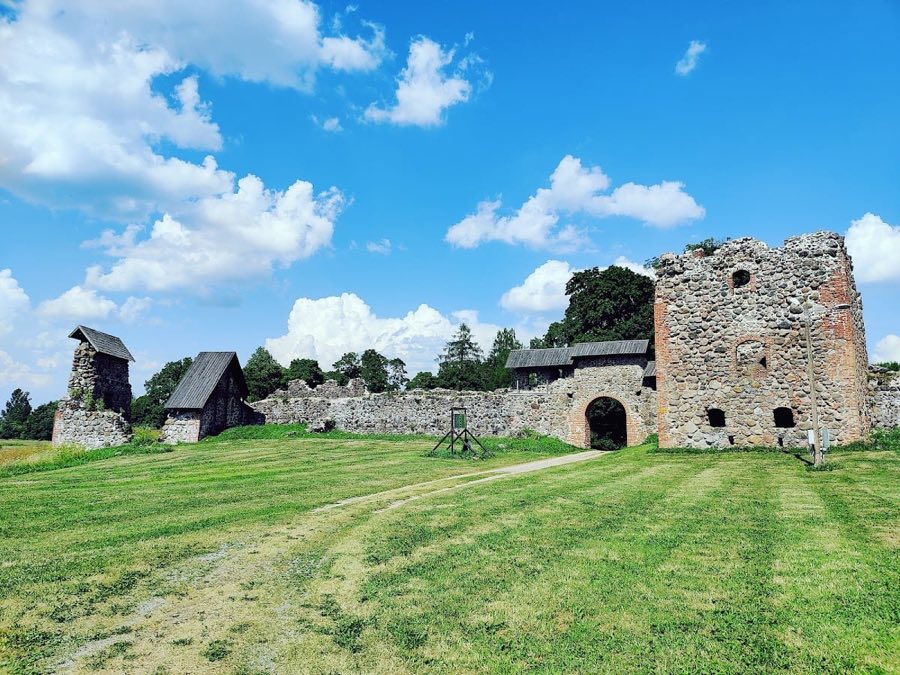
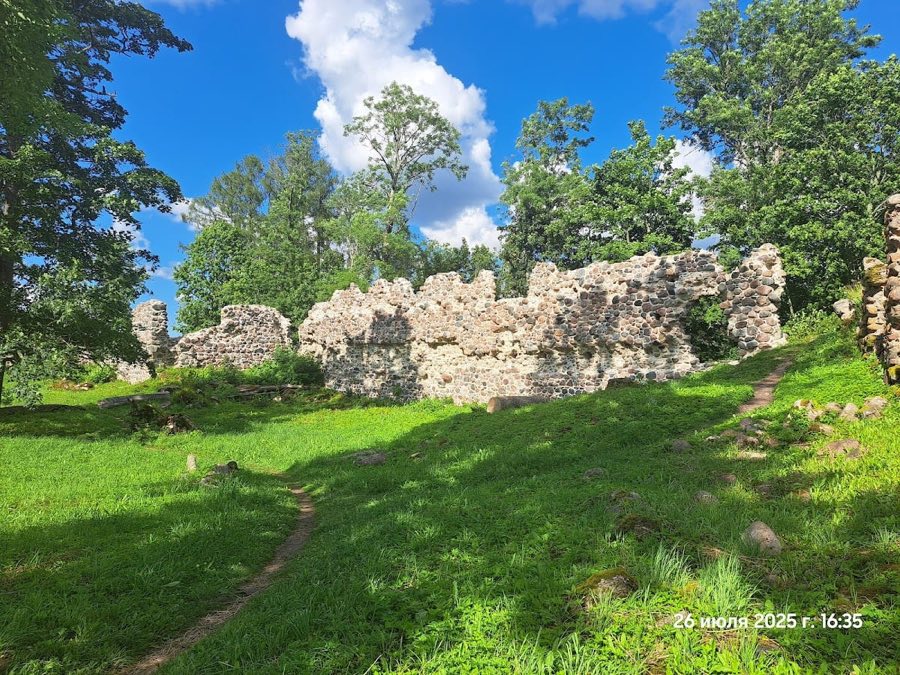
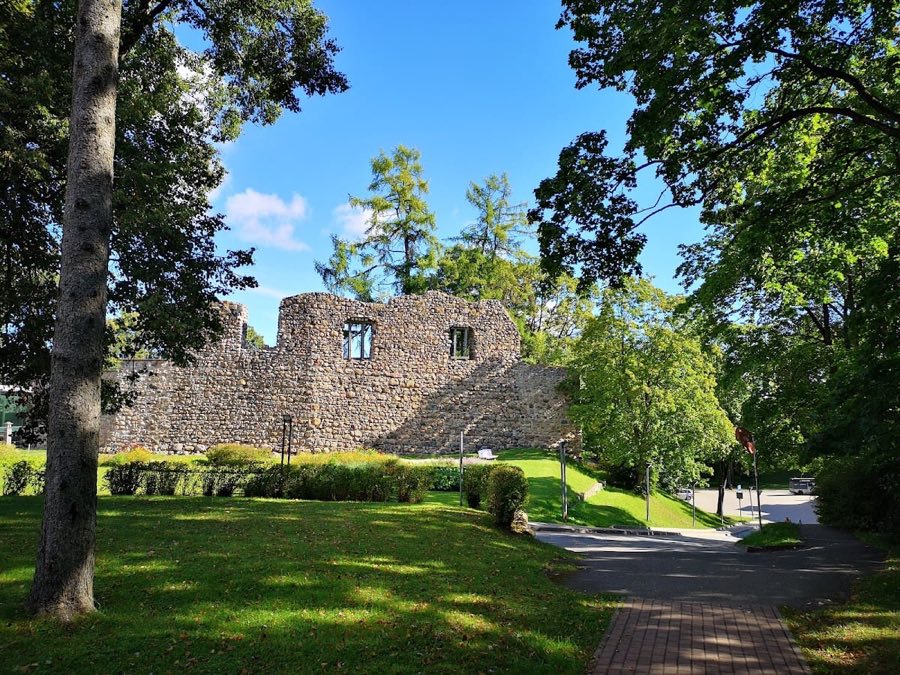
Many stones from the castle ruins were later repurposed by locals, including material used in constructing a mill dam. Today, the site remains open and covered by sparse woodland. Earthworks and the remnants of the walls mark the location, though much of the original structure lies in ruins beneath fallen rubble. The surviving features provide insight into the castle’s role as a defensive and economic center in medieval Livonia.
No. 44174
No. 39876
No. 34324
No. 13635
Comments
Comments for Rūjiena Fortress will require a verified account before posting.
We'll send a verification link before your first comment is published.