No. 39876
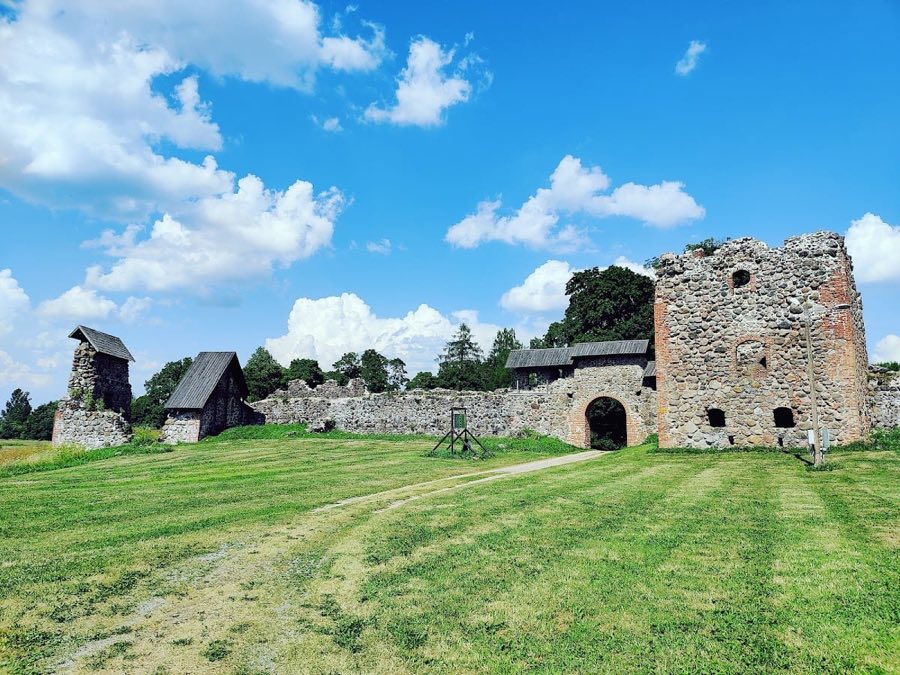
Karksi Castle
Estonia
CastleRuin13th century
No. 34324
Castle · Estonia
No. 34324 · 58.017 N, 25.880 E
Quick summary
Helme Castle is a castle in Estonia with origins associated with the 14th century.
See all castles in EstoniaHelme Castle is a medieval fortress situated in Helme borough, within Tõrva parish in modern Estonia. It was constructed by the Livonian Order, a crusading military organization active in the region during the Middle Ages.
Before the arrival of the Livonian Order, the site was likely already fortified by the Sakalian people, an ancient Estonian tribe. This earlier stronghold occupied the natural promontory where the castle stands, reflecting its longstanding strategic importance. In the early 14th century, the Livonian Order built the stone castle, establishing their presence along a key route that connected the historical provinces of Sakala and Ugandi.
The fortress is historically documented from at least 1412, when Master Konrad von Feitinghof of the Livonian Order issued a signed document, confirming administrative activity at Helme. During the Livonian War (1558–1583), the castle saw military action, remaining intact after the nearby 1560 Battle of Härgmäe, but it fell to Russian forces following a siege in July 1575.
Following the war, Helme became part of the Polish-Lithuanian Commonwealth and served as the administrative center of the Helme starosty within the Pärnu voivodeship. During King Stefan Batory’s reign, the estate was owned by the Nonhart brothers, indicating its importance in regional governance.
The castle survived the subsequent Polish-Swedish conflicts from 1600 to 1620, yet its fate was sealed during the Russo-Swedish War in 1658. Swedish troops deliberately destroyed the fortress by blowing it up before abandoning it, ending its military role. Since then, Helme Castle has not been rebuilt, gradually falling into ruin.
Local legend adds a poignant layer to the castle’s story, telling of a girl named Anne who was walled into the fortress to protect it. The tale holds that when her name was revealed, the castle was doomed to fall. This story inspired literary works, including the ballad “Ohver” by Lehte Hainsalu, preserving the myth in Estonian cultural memory.
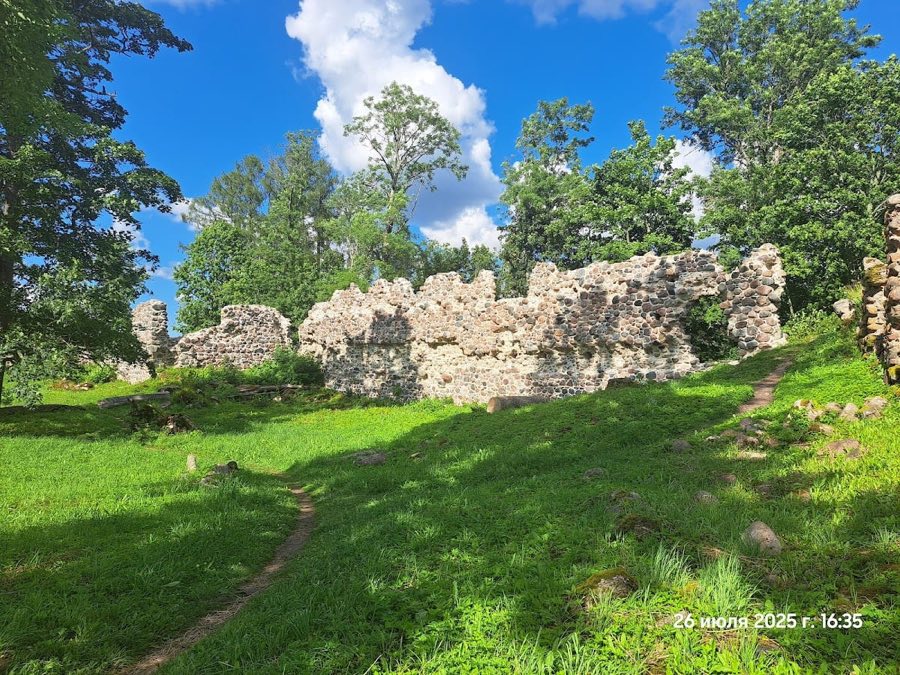
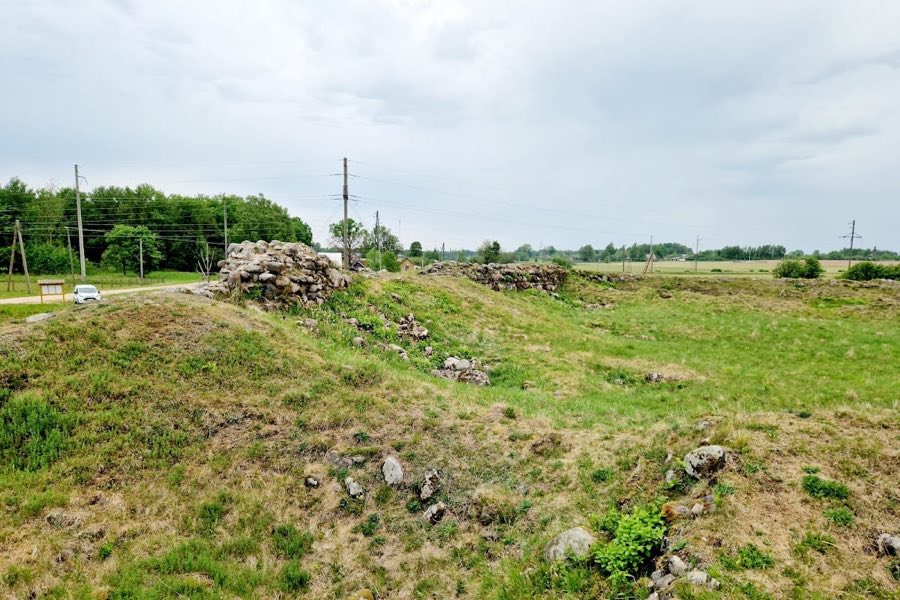
The ruins of Helme Castle occupy a naturally defensible promontory overlooking a river, cut off from surrounding land by two deep moats that enhanced its security. The layout follows the uneven shape of the ridge, forming an irregular oval approximately 116 meters long and 70 meters wide, aligned along a north-south axis to suit the terrain.
The fortress featured thick stone walls enclosing a series of chambers arranged continuously along the inner side of its perimeter. Among these, a central tower-like structure stands out as the oldest and most significant building within the enclosure, highlighting its role as both keep and stronghold.
The castle’s main entrance was positioned on the southern end, protected by a moat and an additional defensive section known as the forecastle or Silla- (meaning “bridge”) or Keldrimägi (meaning “cellar hill”). A wooden or stone bridge connected this outer fortification to the main gate, controlling access across the moat.
Built on a promontory rising up to twenty meters above the riverbank, the castle enjoyed a commanding defensive position that leveraged natural geography for protection. By the 18th century, large stretches of the walls remained standing, many retaining window openings in good condition, as captured in detailed drawings by Johann Christoph Brotze from that period.
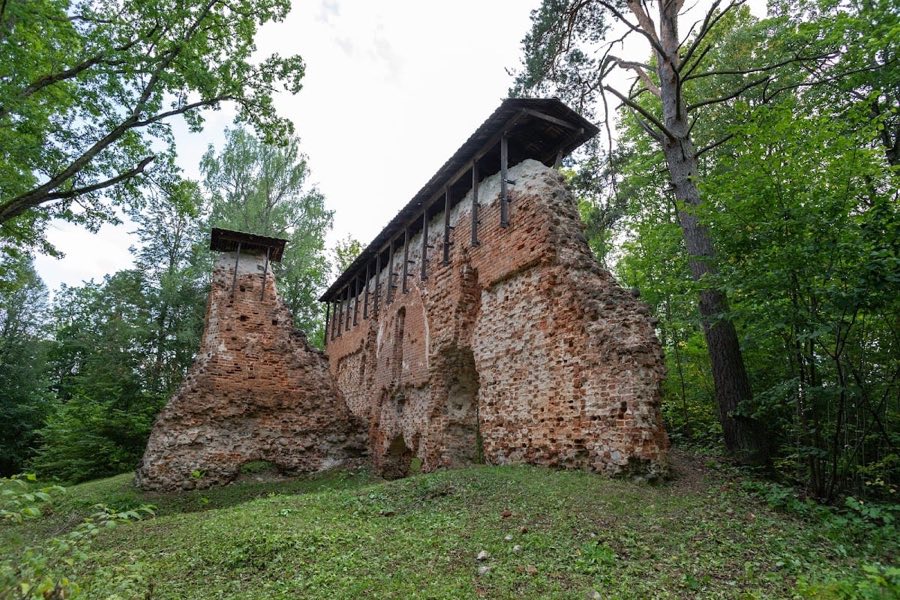
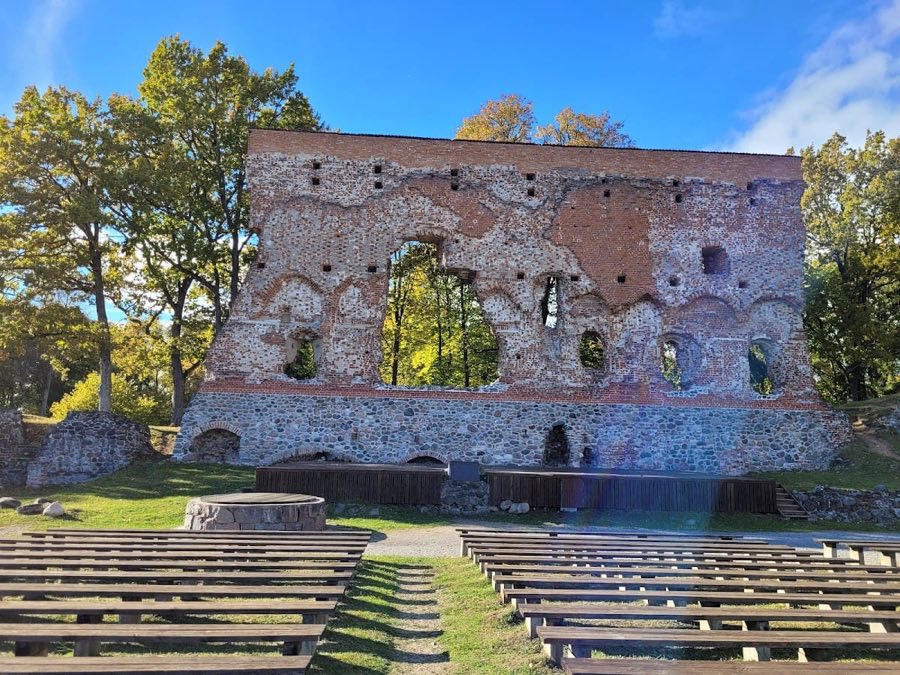
Today, the ruins have been cleared of vegetation, making their overall layout visually accessible while fragmentary sections of walls and a few towers survive. Conservation efforts beginning in 2011 have focused on stabilizing portions of the roadside stone walls, helping to preserve what remains of this once-formidable medieval fortress for future study and appreciation.
No. 39876
No. 16146
No. 31292
No. 58198
Comments
Comments for Helme Castle will require a verified account before posting.
We'll send a verification link before your first comment is published.