No. 82669
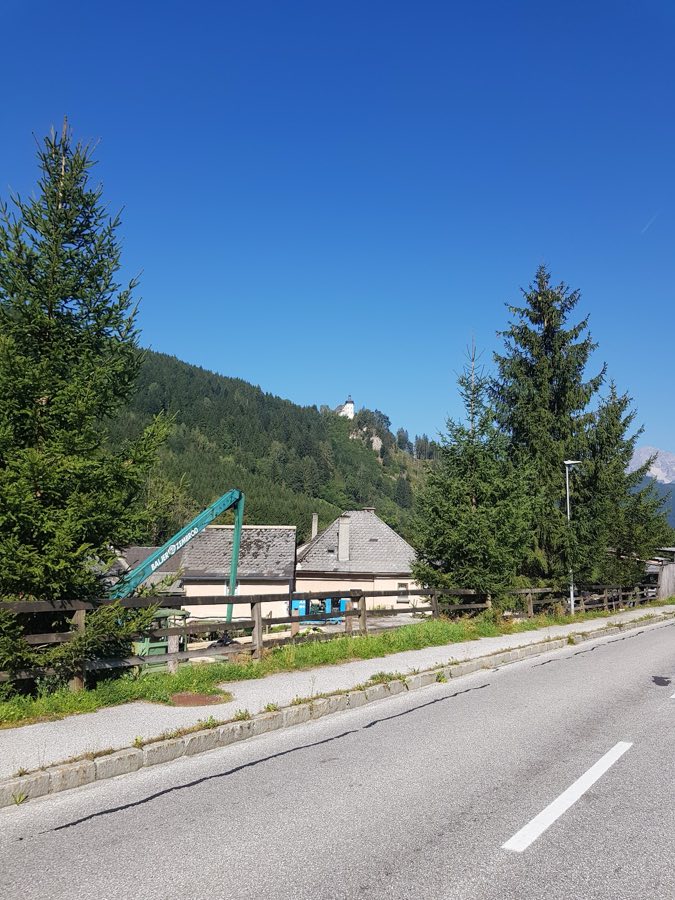
Admontbichl Castle
Austria
CastleIntact14th century
No. 16275
Manor house · Austria
No. 16275 · 46.984 N, 14.781 E
Quick summary
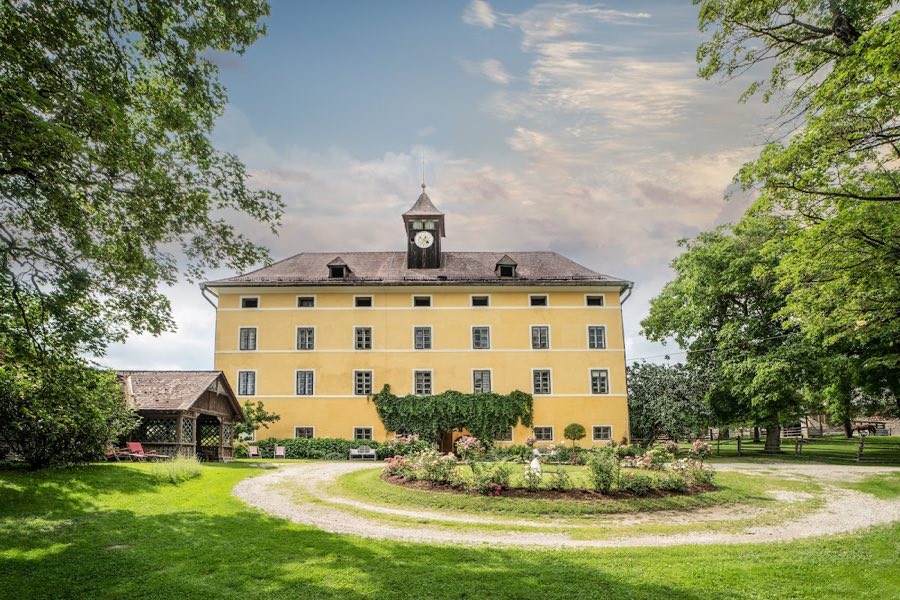
Schloss Lichtengraben is a manor house in Austria with origins associated with the 16th century.
See all castles in AustriaSchloss Lichtengraben, Bad St. Leonhard im Lavanttal, Austria, is a Renaissance palace erected by the von Pain family in the 16th century. Dated on the building fabric to 1544, the house was raised as a replacement for the older Painburg (also called Painhof) and reflects the wealth the family had gained from mining and metalworking. The site mattered locally as the von Pain residence and later as an estate owned by industrial and noble interests; its long sequence of owners and repeated alterations record shifts in regional economy and society from the Early Modern period into the industrial age.
The castle was commissioned by Siegmund von Pain in the mid-1500s. Members of the family began to associate themselves with the local place-name by the 1560s, appearing in records as von Lichtengraben. The family reused movable fittings from their former dwelling when constructing the new house. Around 1579 Siegmund also had Schloss Wiesenau built, showing continued investment by the family in local estates.
Financial collapse affected the estate in the early 17th century. In 1615 Seyfried von Pain went bankrupt after unsuccessful investments, and shares in the property passed to Melchior Putz von Kirchheimegg, the mint master of Carinthia, and to Hans Christoph von Pain. Hans Christoph died in 1652, recorded as the last of his line, and the castle then passed through several hands over the following decades.
In 1711 Franz Josef Freiherr von Teuffenbach, a colonel associated with Trenck’s Pandour regiment, purchased the property; the Teuffenbach family kept it until 1839. That year the estate transferred to Eugen Ritter von Dickmann, an iron industrialist who carried out significant enlargement works. Ownership moved into corporate hands after about 1870, when the Hüttenberger Eisenwerksgesellschaft and later the Alpine Montangesellschaft held the property.
Karl Neufeld, described as Royal Norwegian consul general, acquired the castle and estate in 1886; his family retained it into the mid‑20th century. Since roughly the 1990s the Rittler family has been the owner, operating an orchard and trout farming on the grounds and letting the principal residence for private functions on request. The building underwent enlargements in the 17th and 18th centuries and an 18th‑century rebuilding that altered the interior arcades. The Republic of Austria has placed Schloss Lichtengraben under legal monument protection, inventory number 75701.
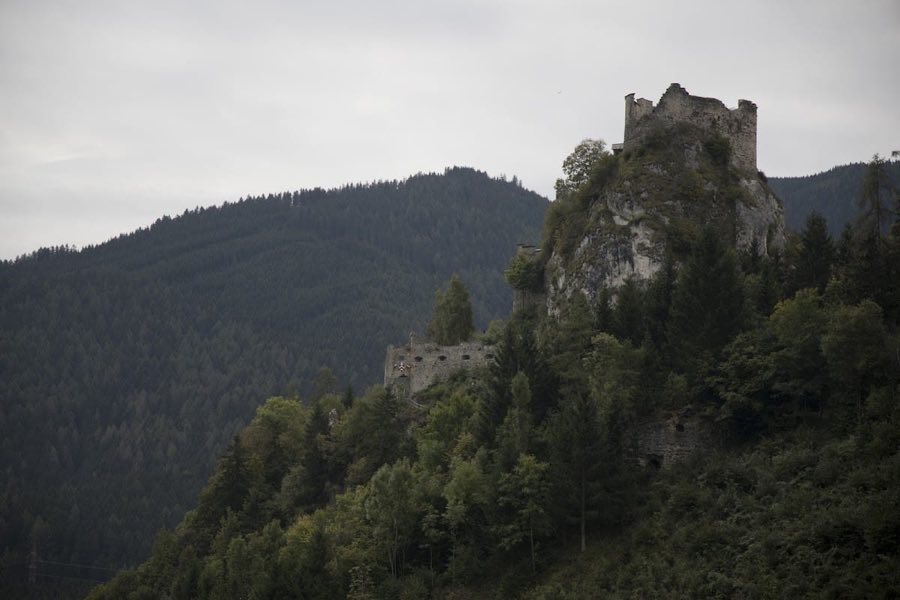
The palace stands on a square plan in a side valley on the left bank of the Lavant River, positioned roughly two hundred metres below the ruin of the older Painburg. The main block rises three storeys with an attic, and the internal arrangement centres on a courtyard. The exterior principal front faces southeast and carries the carved date 1544 in the fabric, marking the building’s sixteenth‑century origin.
The principal entrance is set in a roughly textured stone doorway, and a small clock turret sits on the roofline of the main façade, the turret being a compact tower with a clock. The inner courtyard once featured arcades of three levels, an arcade being a covered walkway formed by a series of arches. During an eighteenth‑century renovation the upper arcade levels were filled in, while the ground‑floor arcade remains and preserves polychrome glazing, that is, stained glass panels with several colours.
Carved decorative elements survive on the courtyard walls. Several circular marble reliefs are embedded in the masonry; three of these show a mermaid motif, and one relief bears the inscription year 1544. At the entrance a sculpted arched support displays two men armed with daggers holding the head of a bovine, a fitting believed to have been taken from the earlier Painhof. The courtyard staircase seen today was inserted in 1920, replacing an earlier vertical connection.
On the first floor in the north‑east corner a two‑storey former palace chapel is identifiable by its narrow round‑arched windows; that room was later used as a library. The attic and parts of the structure have been repaired and reorganised several times since the sixteenth century, and the building survives in preserved condition under state protection, inventory number 75701.
No. 82669
No. 77755
No. 24357
No. 47451
Comments
Comments for Schloss Lichtengraben will require a verified account before posting.
We'll send a verification link before your first comment is published.