No. 93845
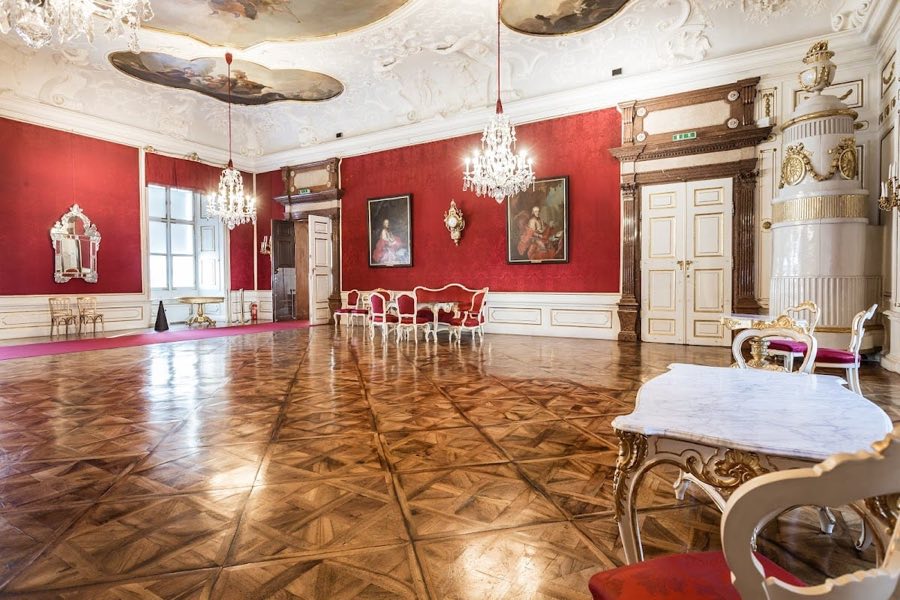
Salzburg Residenz
Austria
PalaceRestoredFor events18th century
No. 35699
Palace · Austria
No. 35699 · 47.804 N, 13.036 E
For rent
Schloss Mönchstein is marked for bookable castle accommodation. Nightly pricing, sleeps count, stay rules, and amenities are displayed only when public operator data is available.
Rental type: Hotel / bookable stay, Short-stay rental
Short-term availability: Bookable accommodation signal
Quick summary
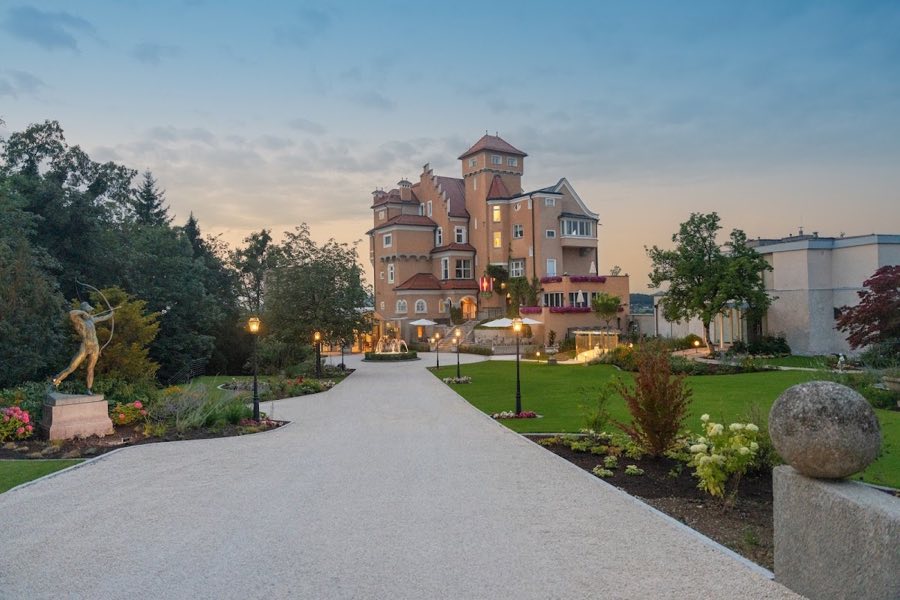
Schloss Mönchstein is a palace in Austria with origins associated with the 14th century.
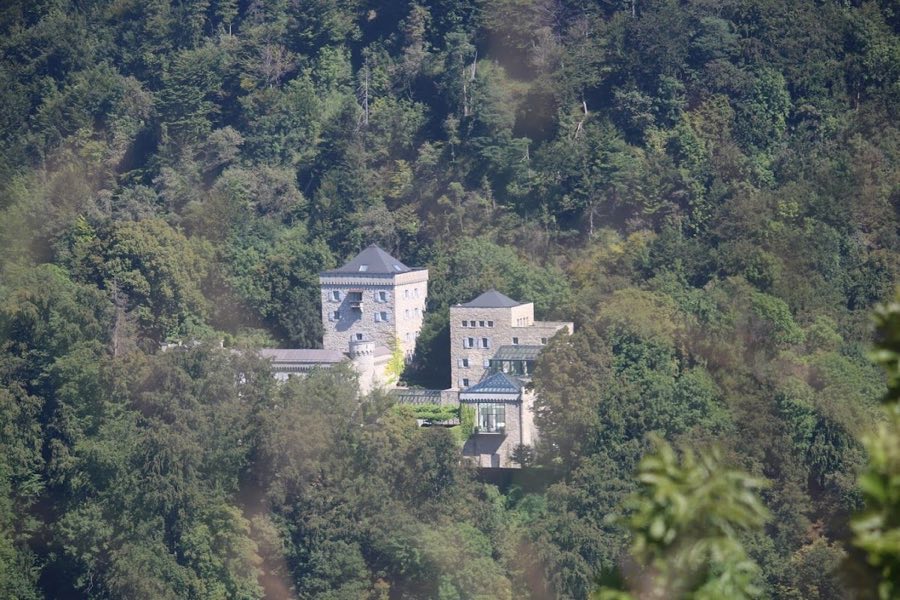
See all castles in AustriaSchloss Mönchstein in Salzburg, Austria, is a historicist palace with documentary roots reaching back to the mid‑14th century; over many centuries the place developed from a small fortified tower into a pleasure estate, an academic retreat, and finally a luxury hotel, making it a persistent feature of the city’s built landscape. The structure as seen today reflects late historicist tastes, but its documented importance lies in a long sequence of private, monastic, and university uses that connected the site to Salzburg’s civic and scholarly life.
The earliest references name a fortified tower around 1350, associated with the Tetelhaimer noble family. From 1419 until 1565 the tower belonged to the Fröschlmoser family. In 1531 Virgil Fröschlmoser added a pleasure house, a steward’s dwelling, stables and a cistern, and a chapel was established soon afterwards; that chapel received a formal re‑consecration on 3 August 1661 to Saints Mary, Anna and all holy monks. In 1565 the estate passed out of the Fröschlmoser line by sale to a citizen of Salzburg, and during the seventeenth century ownership moved to first a nearby monastery and then to the Benedictine University.
Following its purchase by the Benedictine University in 1654, the grounds were adapted for academic use. A small palace for professors was erected as a fresh‑air retreat and a separate house served students. A southward tower used for astronomical observation, known as the Mathematical Tower, stood close by until its demolition around 1780. The Enlightenment chronicler Lorenz Hübner lived for a time in the professors’ house before 1800. Political change came in 1810 when the Bavarian administration abolished the Benedictine University as part of the wider territorial reorganizations of the Napoleonic era.
After the university’s suppression the estate was sold at auction in 1813 to a state official who set about renewing the neglected property and placed it in the hands of a local merchant for management. That merchant and his descendants retained ownership through the early nineteenth century, adding garden statuary acquired after the 1818 fire at another Salzburg palace and inscribing those pieces for the gardens. In 1887 a banker purchased the grounds and, during the 1890s, introduced electric public infrastructure to the hill, including an electrically powered lift and access roads, together with a terrace and paths to improve approach. The estate passed to new private owners in the early twentieth century and was substantially enlarged in 1919, after which the name Schloss Mönchstein became customary. Royal visitors from the Romanian court frequented the house during festival seasons.
In 1948 the property was organized as a hotel company and converted into a luxury hotel. Ownership and operating partners changed several times in the second half of the twentieth century. After a bankruptcy in 2003 the estate was bought in 2005 by a private investor who carried out a comprehensive renovation and enlargement. Further rebuilding in 2017–2018 added a modern glass‑and‑steel dining and bar pavilion. The palace continues to operate at a high level of hospitality and its restaurants have received national and international gastronomic awards, including a Michelin star for one dining venue in 2020.
The site occupies a prominent position on the northern rim of the Mönchsberg plateau above Salzburg and preserves layers of features that reflect its changing use. The earliest built element recorded is a small defensive tower mentioned around 1350 and shown in period city views on the rise southwest of the Augustiner Gate. This tower served as the focal point for subsequent additions that turned a fortified spot into a domestic and leisure complex.
Evidence from the sixteenth century details a cluster of service and pleasure buildings installed in 1531: a pleasure house for recreation, a steward’s or manager’s dwelling, stables for animals, and a cistern for water storage. A chapel was added to the complex soon after and was solemnly re‑consecrated on 3 August 1661 to Saints Mary, Anna and all holy monks, indicating a formal liturgical function attached to the estate. Later garden statuary, brought from another Salzburg palace after an 1818 fire, became part of the cultivated grounds and were given inscriptions by the nineteenth‑century proprietor.
The mid‑seventeenth‑century phase under university ownership produced two distinct houses on the site: a modest palace intended for professors and a separate dwelling for students. Nearby stood a south tower used for astronomical observations, the so‑called Mathematical Tower, which was taken down around 1780. Nineteenth‑century infrastructure works altered access to the hill, including the installation of an electrically powered lift in 1890, a connecting road from the lower quarter, and the opening of a terrace and footpath to improve the approach up the slope.
Twentieth‑ and twenty‑first‑century interventions transformed the property for commercial hospitality while retaining the historicist main building. In the early 2000s the house was enlarged to a compact hotel plan with about two dozen guest rooms and suites and a wellness wing of roughly 300 square metres that includes an outdoor infinity pool. The most recent construction added a contemporary glass‑and‑steel pavilion that accommodates a restaurant and a bar, integrated with the historic palace and its gardens. Overall, the historicist building survives and continues in active use, while earlier documentary elements such as the medieval tower, the sixteenth‑century pleasure compounds, the university houses and the later terraces mark the site’s long sequence of adaptation.
No. 93845
No. 55579
No. 43886
No. 68646
Comments
Comments for Schloss Mönchstein will require a verified account before posting.
We'll send a verification link before your first comment is published.