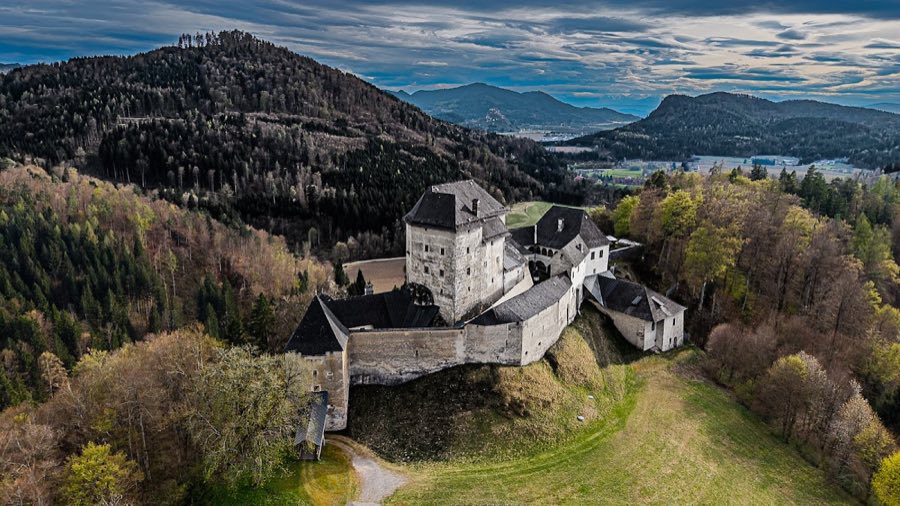
No. 68883
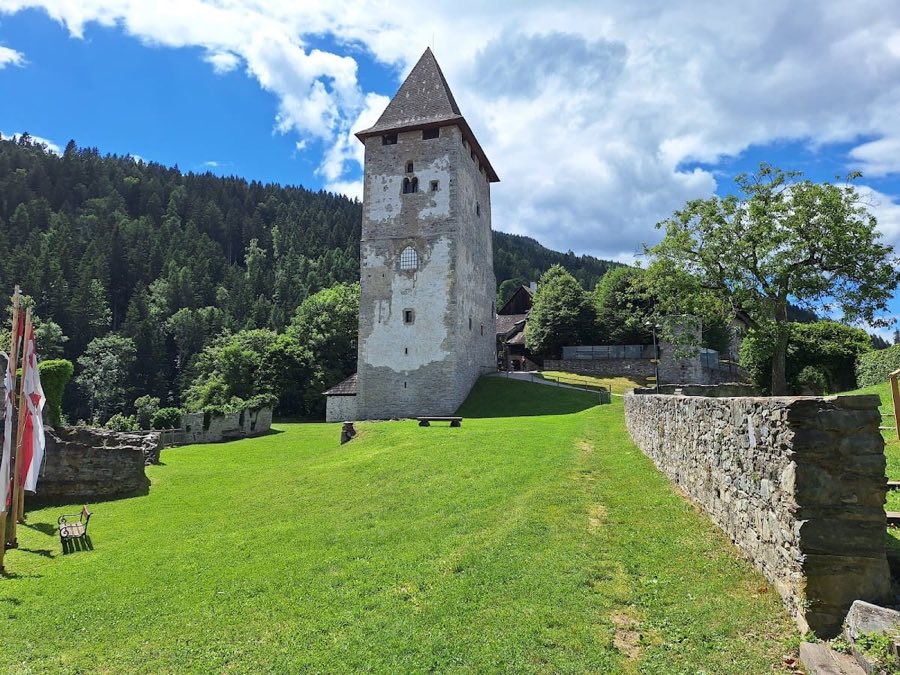
Schloss Mannsberg
Austria
CastleRuin12th century
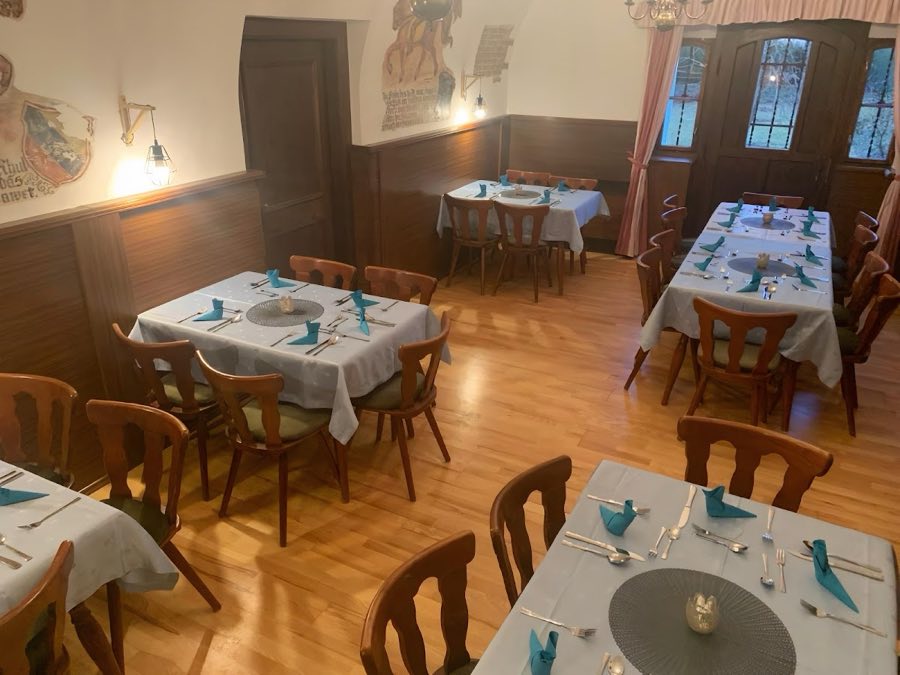
No. 64222
Manor house · Austria
No. 64222 · 46.851 N, 14.492 E
Quick summary
Schloss Silberegg is a manor house in Austria with origins associated with the 13th century.
See all castles in AustriaSchloss Silberegg in Silberegg, Austria, is a historic manor originally tied to medieval and early modern European nobility, with principal construction dated to the late medieval and early Renaissance periods. The site has deeper roots: a Roman-period settlement once occupied the place, and the locality’s name and early records connect it to silver mining and the trade in that metal. The estate played a continuous local role from the Middle Ages into the modern era, serving as a noble residence, a centre for local industry, and later as a mixed-use commercial and residential property.
Settlement and medieval era: occupation at the site goes back to Roman times, where building remains and numerous finds attest early habitation. The village appears in written records in 1202 and 1285. A medieval fortress is named in 1274, associated with a local lord Meinhalmus of Silbereke, but the exact location of that early stronghold cannot now be identified. By the later Middle Ages the place developed into the residence that became Schloss Silberegg.
Fifteenth and sixteenth centuries: sources give two slightly different traditions for the standing manor house, placing its origins either in the early 1400s under Bernhard Khulmer zum Rosenbichl or at the beginning of the 1500s. Ownership during this era included the local Silberegg family; Hans von Silberegg remained proprietor until his death in 1543, and his gravestone stands in the parish church of St. George. The estate passed through several noble hands in the later sixteenth century, including the Schönaich family, Andreas von Pongenstein, and Jakob von Windischgrätz, who held the property in 1572.
Seventeenth century and religious politics: in 1629 Hans Leonhard Freiherr von Windischgrätz sold the estate to Georg-Sigmund von Ambthofen during the period of the Counter-Reformation. In 1632 a formal concession connected to the property permitted either the erection of a chapel for the castle or the establishment of a smelting works at Silberegg; the concession is linked in records to that year. Georg-Sigmund von Ambthofen was active in regional affairs, entering the Carinthian estate assembly in 1641, and he died in 1649.
Ownership through the modern period: the estate moved by marriage and sale into the von Gaisruck family and then through a succession of owners including Josef Gassarister von Pfeilheim, Karl Anton von Mayerhofen, Martin Liebmann, and Franz von Knappitsch and his heirs through 1890. In the second half of the nineteenth century Max Thaddäus von Egger held both the manor and the smelting works. Major restructuring and modernization of the buildings took place at the end of the nineteenth century, and ownership changed frequently in the early twentieth century. A family recorded under the name Gegenbauer (sometimes spelled Gegenbaur) owned the property from about 1930 until roughly 1980.
Industrial and later uses: a brewery known as Silberbräu operated on the site until it closed in 1929. A distillery also functioned at the complex and continued production until 2008. The building and its outbuildings underwent comprehensive restorative work after a purchase in 1996, including repairs from the cellar to the roof, recovery of historic interior color schemes and finishes, and other conservation interventions in the 1990s. In the twenty-first century the main building has been adapted for commercial use and divided into multiple apartments and hospitality spaces. The Republic of Austria protects the property as a listed monument under protection number 34420.
The site presents a layered compound that combines a three-storey, three-winged manor set around a square courtyard with adjacent groups of farm and industrial buildings. Archaeological evidence shows Roman-period building remains and numerous finds from that earlier phase of occupation. The standing manor reflects long-term adaptation: it retains a horseshoe plan that encloses a central courtyard and originally included four square corner towers, while the nearby economic buildings once housed a brewery and later distilling facilities.
Two of the original corner towers survive on the west-facing elevation; a third tower was heightened in the nineteenth century and later used as the complex’s clock tower, while a fourth tower was removed in the twentieth century to make room for an economic building. The roofs are steep and hipped and were originally covered with stone shingles; these have been replaced by tiles in later repairs. The principal exterior façades were extensively altered in 1870 and have since displayed restrained ornament, while the south-west face contains a Renaissance-style marble entrance with pilasters topped by acanthus-leaf capitals supporting a horizontal entablature.
Inside, the ground floor contains a transverse corridor with a barrel-vaulted ceiling and groin-vaulted lunettes, groin vault (a vaulted ceiling formed where two barrel vaults cross) being used to create intersecting vault profiles and space for clerestory openings. A lateral stair rises from this corridor to the principal floor, where a first-floor hall features a baroque stucco ceiling. An eighteenth-century checkerboard-pattern stone floor survives in part of the ground level, and elaborate parquet floors in the first-floor rooms were restored during late-twentieth-century interventions.
The economic complex beside the manor reflects the site’s industrial uses across centuries. Outbuildings once accommodated the Silberbräu brewery, which closed in 1929, and a distillery that continued operations into the twenty-first century. The whole property shows significant alteration: two corner towers were lost, roofing materials were changed, nineteenth-century façade and tower modifications remain visible, and comprehensive restorations carried out in the 1990s repaired interior finishes and historic color schemes while adapting the structure for contemporary use.
No. 68883
No. 83822
No. 32569
No. 28334
Comments
Comments for Schloss Silberegg will require a verified account before posting.
We'll send a verification link before your first comment is published.