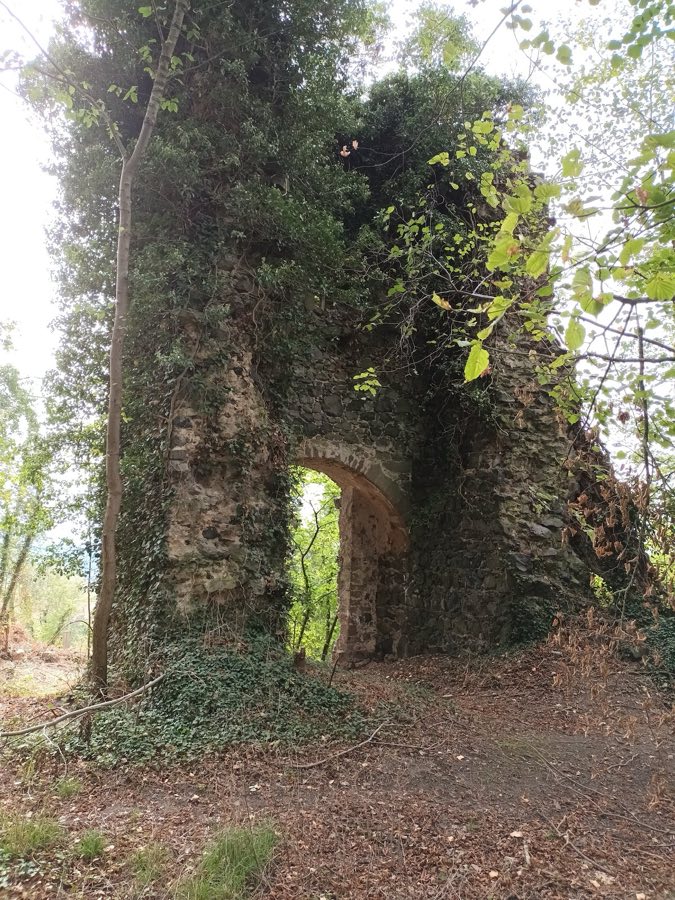
No. 37766
Ruine Falkenberg
Germany
CastleRuin5th century
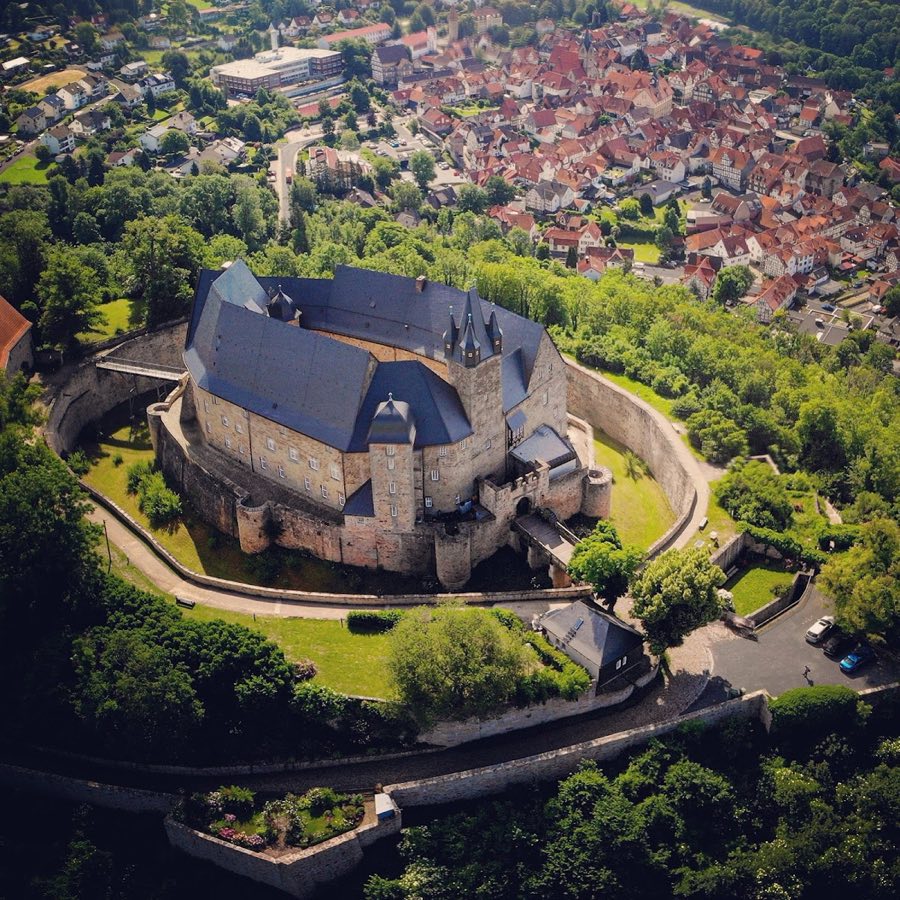
No. 91127
Castle · Germany
No. 91127 · 51.119 N, 9.662 E
For rent
Spangenberg Castle is marked for bookable castle accommodation. Nightly pricing, sleeps count, stay rules, and amenities are displayed only when public operator data is available.
Rental type: Hotel / bookable stay, Short-stay rental
Short-term availability: Bookable accommodation signal
For events
Spangenberg Castle is marked as a château or castle venue lead. Capacity, indoor/outdoor spaces, catering rules, and accommodation options are published only after public verification.
Event types: Private events, Cultural gatherings, Filming and photography
Accommodation: Accommodation signal present
Quick summary
Spangenberg Castle is a castle in Germany with origins associated with the 11th century.
See all castles in GermanySpangenberg Castle in Spangenberg, Germany, began as a medieval stronghold built by the Thüringen‑origin lords von Treffurt in the early 13th century. The site grew around a fortified residence and by the mid‑1200s the settlement below the hill was described as a city; the community received town rights in 1309 under Lippstadt law. From its founding the castle stood at the centre of a small lordship and later became a key estate of the Hessian ruling family, serving both as a princely residence and as a defended place for archives and valuables.
The first named owner was the knight Hermann von Treffurt, known from 1235, and the Treffurt family later used the name “von Spangenberg.” Members of the family, including brothers Hermann and Friedrich, appear in records as troublemaking knights in 1327. In 1350 Ritter Hermann IX sold the castle, the administrative district and the town to Landgrave Henry II of Hesse, called “the Iron,” for 8,000 marks of silver. From that sale Spangenberg passed into the possession of the Hessian landgraves.
Over the next two centuries successive Hessian rulers kept Spangenberg as a residential site and hunting lodge. Several landgraves are linked with the castle, among them Henry II, Otto II, Hermann II, Ludwig I called “the Peaceful,” William I, Philip the Magnanimous, and William IV the Wise. Under Ludwig I the fortress received significant strengthening, including additional round defensive towers and deeper exterior ditches; during the 1400s the castle’s secure position made it a repository for money and official records.
The arrival of gunpowder weapons led to a major reworking of the defences in the 16th century. Under Philip the Magnanimous engineers added earthen ramparts with enclosed gunrooms, and a very large circular artillery tower, about twenty‑two metres across, was built to guard the north‑east approach; a network of underground passageways from this phase survives. Between 1580 and 1636 new living and command buildings were raised and, by 1636, a system of projecting gun platforms on the west side had been laid out. During the Thirty Years’ War the fortress remained in Hessian hands under the regency of Amalie Elisabeth (regent from 1637 to 1650) while the nearby town suffered partial destruction in 1637.
After the peace of 1648 the castle’s role shifted away from primary princely residence to that of a secondary fortress garrisoned largely by military invalids. In the Seven Years’ War French forces under Louis de Crillon seized the place on 9 November 1758 in a surprise attack after the drawbridge failed to be raised; the captors took eighteen cannons, 307 muskets and forty‑four powder barrels. From 1763 the complex was adapted as a state prison for officers, with large chambers subdivided into cells. A guardhouse was built outside the outer ditch in 1840, and during the constitutional struggles in the Electorate of Hesse many political detainees were held there in the 1840s through the 1860s.
Prussia’s annexation of Kurhessen in 1866 ended the official prison function and upkeep was reduced; the site was used to hold French prisoners of war in 1870–71. In 1907–08 the castle became a Prussian forestry school, training roughly 1,200 students over thirty‑two years; Emperor Wilhelm II visited on 15 June 1913. Training ceased at the outbreak of the Second World War and did not resume. During that war the buildings served as Oflag IX A, a prisoner‑of‑war camp for British officers. After those officers were moved away the complex burned following American air attacks at the end of March 1945, leaving mainly the outer walls standing.
Local campaigning led the state of Hesse to undertake reconstruction in the 1950s under building official Dr. Textor. Restoration work rehabilitated the exterior and by the mid‑1960s the castle was reopened for new uses. A thirty‑metre wooden frieze by sculptor Wilhelm Hugues was installed in 1966–67. From the 1960s the restored complex was put to commercial use as a high‑standard restaurant and hotel with conference facilities. The former armory, rebuilt in 1983, now accommodates a hunting museum.
Spangenberg Castle was originally built as a rock castle, utilizing a sandstone outcrop situated at about 249 meters elevation on the northwest spur of the Schlossberg, itself rising to 343.2 meters. This elevated position offered commanding views over the Speyerbach valley, serving strategic defens
No. 37766
No. 70040
No. 80710
No. 28768
Comments
Comments for Spangenberg Castle will require a verified account before posting.
We'll send a verification link before your first comment is published.