No. 28768
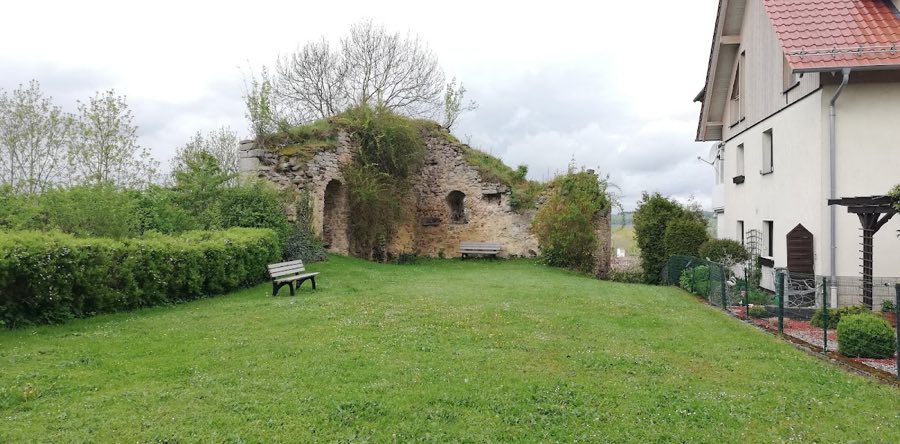
Castle Ropperhausen
Germany
CastleRuin13th century
No. 37766
No. 37766 · 51.073 N, 9.396 E
Quick summary
Ruine Falkenberg is a castle in Germany with origins associated with the 5th century.
See all castles in GermanyRuine Falkenberg stands above the municipality of Wabern, Germany, and was established by local medieval German nobility.
The site first appears in surviving records in 1250, when a deed of Count Gottfried I of Ziegenhain names the place as “Valkenberc” and lists Konrad von Hebel as the primary witness. The upper castle was erected around the middle of the thirteenth century, probably under Konrad von Hebel, at a commanding point on the road linking Hersfeld with Fritzlar, Gudensberg and Kassel.
By about 1270 Konrad’s descendants adopted the surname von Falkenberg. During the fourteenth century the Falkenberger lineage divided into three branches associated with Falkenberg, Densberg and Herzberg. In 1309 Johann and Konrad von Falkenberg formally rendered the castle and several villages to Landgrave Johann of Lower Hesse and received them back as a fief. At the same time the lower castle remained a fief held from Hersfeld by the lords of Hebel.
From 1321 members of the Falkenberg and Hebel families served as hereditary castellans of Fritzlar, and on several occasions the castle was placed at the disposal of the Archbishopric of Mainz, with those arrangements renewed in 1322, 1336 and 1338. The stronghold became a focus of contest between the Landgraviate of Hesse and the Archbishopric of Mainz during the fourteenth century. Military activity is recorded in 1358, and in June 1364 Heinrich von Hanstein occupied the site.
The Falkenberg family took an active role in regional alliances and office. They joined the Sternerbund in 1372–1374; Werner II of Falkenberg was appointed senior administrator for Mainz in 1374; and four members of the family were among the founders of the Benglerbund in 1391. A dramatic personal crime tied to the family occurred on 5 June 1400, when Konrad, known as “Kunzmann” von Falkenberg, took part in the murder of Duke Friedrich of Brunswick-Lüneburg near Kleinenglis.
Fighting and private feuds inflicted substantial damage on the castle over time. Major repairs and strengthening works were carried out between 1437 and 1454. After the Falkenberger family came to occupy a newly built Schloss Falkenberg, constructed about 1510 roughly 500 metres to the south, the older fortress declined; the family inherited the older site around 1521 and the ruin was demolished after 1621. During these centuries a village grew up beneath the castle.
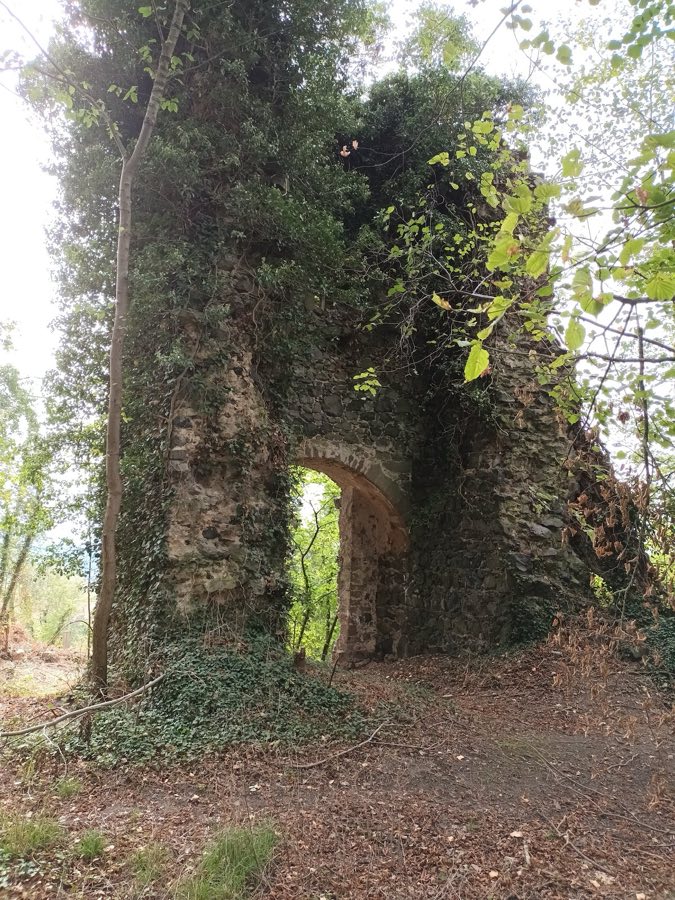
The ruin occupies a hilltop position at 255 metres above sea level on a basalt knoll and is set within a protected stand of elm trees. The medieval castle was laid out on a steep conical hill; the surviving archaeological evidence reflects the compact, defended core typical of a small hilltop fortress.
The most substantial remnant is the square base of a principal tower dating to the mid-thirteenth-century phase of construction. This foundation belongs to a tower that resembles a bergfried, a tall defensive keep, and represents the residential and defensive heart of the upper castle. The substructure survives in fragmentary form, preserved in its original location.
On the northeast side of the inner ward there are overgrown lengths of curtain wall that once enclosed the core of the castle. These wall traces belong to the same medieval building phase and now stand as ruinous, vegetated masonry. The site today is not accessible, and the visible fabric is limited to the tower base and the remnants of the inner enclosure.
No. 28768
No. 91127

No. 66618
No. 69244
Comments
Comments for Ruine Falkenberg will require a verified account before posting.
We'll send a verification link before your first comment is published.