No. 85930
Bergpark Wilhelmshöhe
Germany
PalaceRuinFor events19th century
No. 70040
Castle · Germany
No. 70040 · 51.311 N, 9.644 E
Quick summary
Burg Sensenstein is a castle in Germany with origins associated with the 14th century.
See all castles in GermanyBurg Sensenstein is located in the municipality of Nieste, Germany. It was built in the 14th century by the Landgraves of Hesse as a strategic fortress.
Construction of Burg Sensenstein began around 1372 under Landgrave Hermann of Hesse, who governed jointly at the time. The fortress was established on the Gerholdsberg hill to serve as a defensive border post, aimed at protecting Hessian lands from raids conducted by forces of the neighboring Duchy of Brunswick. The castle’s position near the disputed frontier made it an important military installation during this period.
The earliest written mention of the castle dates to 1438, when Landgrave Ludwig I of Hesse granted it as a fief to the knight Sittich von Berlepsch. In 1461, von Berlepsch exchanged Burg Sensenstein for another estate, Schloss Berlepsch. Following this transfer, the castle’s function shifted from a military stronghold to a hunting lodge for the Landgrave, emphasizing its location within the Kaufunger Forest, favored for hunting pursuits.
Between 1483 and 1561, the castle and its lands were once again held as a Hessian fiefdom by the Counts of Berlepsch. During this time, the estate saw gradual decline in importance. Repeated changes in ownership contributed to the deterioration of the site, and the castle eventually fell into disuse and ruin.
By 1585, only a manor farm associated with the remnants of Burg Sensenstein remained. This farm continued in operation until 1626, after which the estate was abandoned for a period. In 1677, Count Dietrich von Kunowitz acquired the property, opting to demolish the decayed structures. At that time, the castle’s towering bergfried (a fortified central tower) standing approximately 22 meters tall, was demolished with explosives, marking the definitive end of the original medieval fortress.
The estate changed hands again in 1699 when it was purchased by Amalia of Courland and her son Maximilian. Later, in 1767, it came into the possession of Generalmajor Martin-Ernst von Schliefen. Eventually, ownership reverted to the Hessian state. The last tenant to reside on the estate departed in 1900, and thereafter the surrounding lands were cultivated from the nearby village of Windhausen.
Following World War I, a guesthouse was established on the site by an innkeeper from Kassel, who restored the manor house and operated it until the outbreak of World War II. From 1946 onward, the location became a hub for youth camps. Recognizing its potential for education and recreation, the Kassel district acquired the entire area in 1954 and founded the Jugendburg Sensenstein youth and sports education center. Officially opened in 1962, the facility has undergone expansions and modernization in the following decades.
The name Burg Sensenstein, along with that of the nearby Burg Sichelnstein, originates from a local legend reflecting the historic rivalry and border disputes between Hesse and Brunswick. According to the story, the two castles’ names, meaning “Scythe Stone” (Sensenstein) and “Sickle Stone” (Sichelnstein), symbolize this contested frontier, representing traditional farm tools as metaphors for their opposing sides.
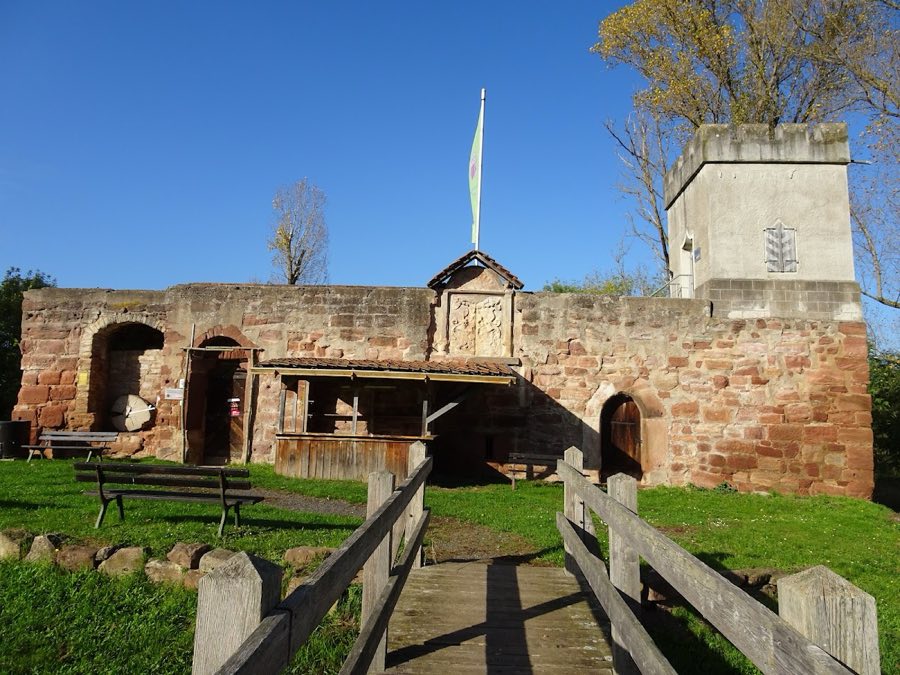
Burg Sensenstein was originally a hilltop fortress, or Höhenburg, situated atop Gerholdsberg hill at about 355 meters above sea level. It was constructed to take advantage of the commanding views over the surrounding landscape, including the Nieste valley and the Kassel basin beyond. Today, the main visible remains of the castle consist of earthworks forming high ramparts primarily located on the northwestern side of the former castle grounds. These earthen mounds outline the defensive perimeter and testify to the castle’s medieval fortifications.
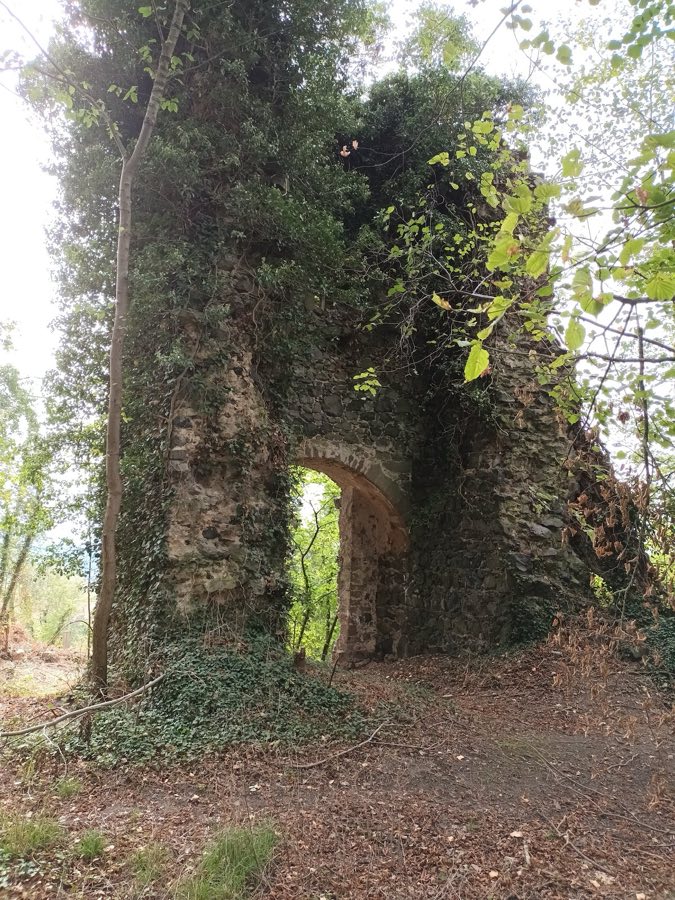
The original stone buildings of the castle no longer exist, having been demolished or decayed over centuries. The last significant standing structure was the bergfried, a large and tall keep which once rose 22 meters, but it was destroyed in 1677 by deliberate demolition. Consequently, no vertical masonry from the medieval fortress remains in place.
The site is legally protected as an archaeological monument known as a Bodendenkmal, recognizing its historical importance and the preserved ground features related to the former castle’s layout.
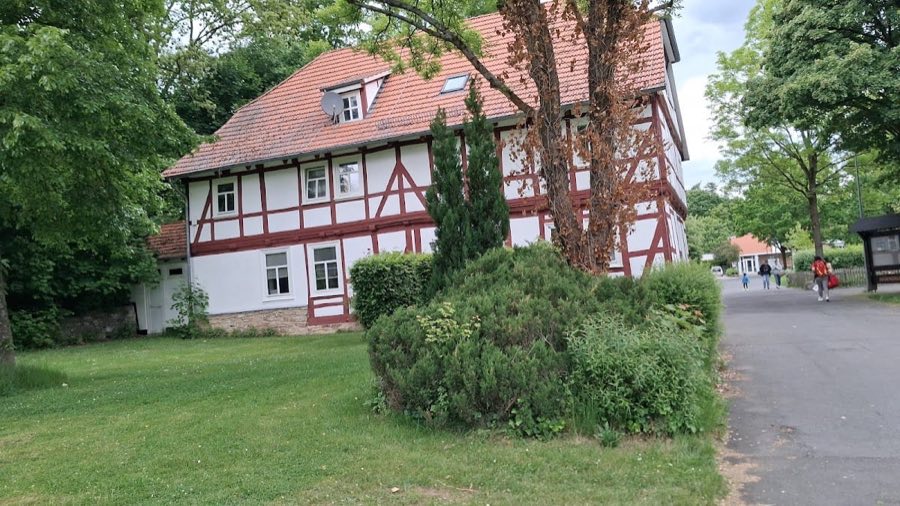
Adjacent to the ruins lies the Jugendburg Sensenstein complex, which occupies roughly 20 hectares within the castle’s vicinity. Among its buildings is a well-maintained half-timbered house that originally served as the guesthouse for visitors during the early 20th century and which now functions as the administration building for the youth center.
Modern facilities on the Jugendburg site include a gymnasium, a renovated swimming pool, multiple sports fields, guesthouses, and an auditorium, reflecting its role as an educational and recreational venue.
Artistic elements enhance the entrance area of the Jugendburg, including a striking metal sculpture over four meters tall entitled “Der Riese” (The Giant), created by artist Robert Colnago and installed in 2004. Nearby, a gate constructed in 2006 incorporates 250 kilograms of iron fragments sourced from old agricultural tools, linking the surroundings to the site’s rural heritage.
Access to the castle ruins and earthworks is controlled by the Jugendburg administration to ensure preservation of the site. From the elevated location, occasional views can be glimpsed through the forest toward the Kassel basin and the Kaufunger Forest, providing a sense of the strategic vantage the original castle once commanded.
No. 85930
No. 91127
No. 37766
No. 13909
Comments
Comments for Burg Sensenstein will require a verified account before posting.
We'll send a verification link before your first comment is published.