No. 62395
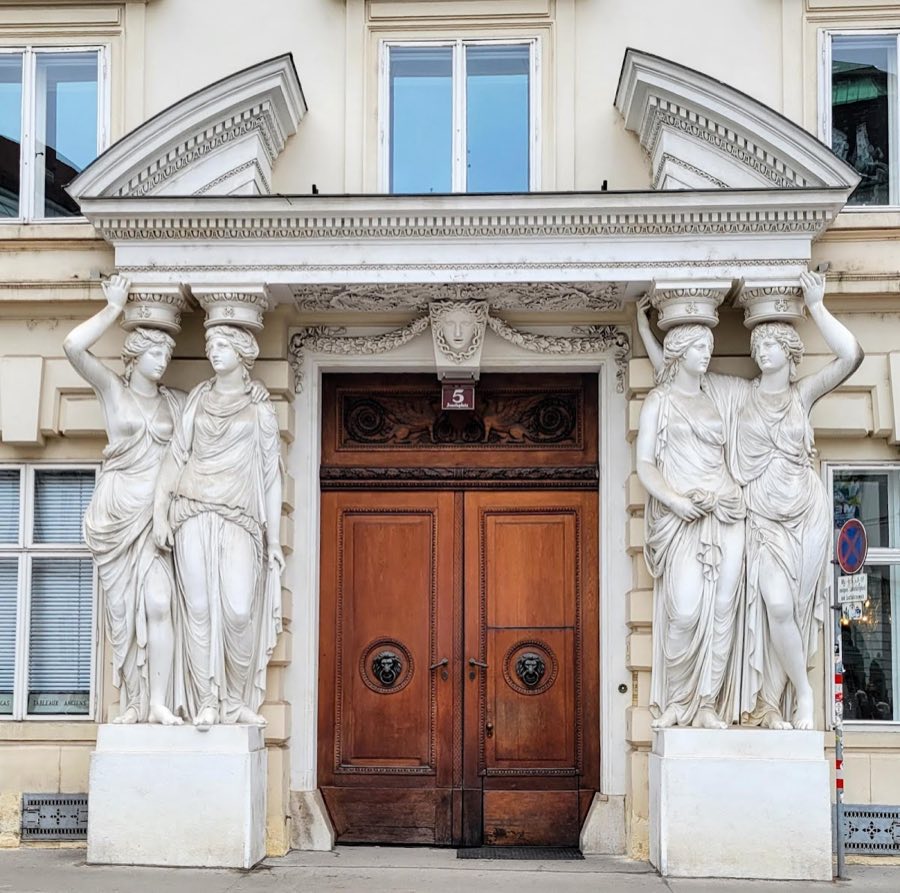
Palais Pallavicini
Austria
PalaceIntact18th century
No. 80446
Palace · Austria
No. 80446 · 48.207 N, 16.367 E
Quick summary
Stallburg is a palace in Austria with origins associated with the 16th century.
See all castles in AustriaStallburg is in Vienna, Austria, and it was built by the Habsburg dynasty.
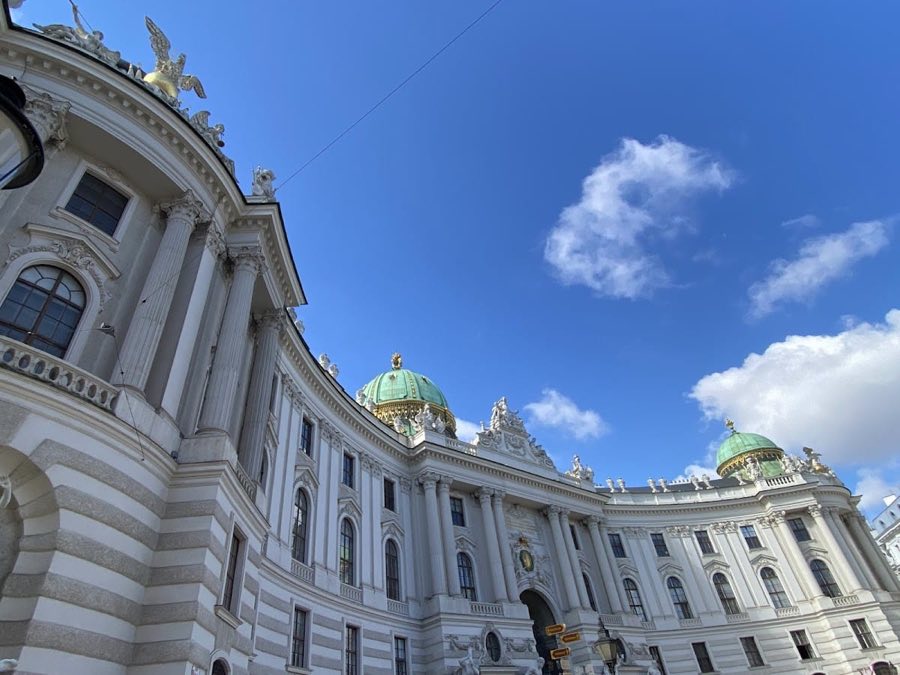
Construction took place around 1558 to 1565 when the building was raised as the residence and living quarters of Archduke Maximilian, who later became Emperor Maximilian II. From its completion the house formed part of the Hofburg Palace complex, standing between Josefsplatz and Michaelerplatz and linked to the main palace by a passage of arcades.
From 1659 until 1776 the Stallburg accommodated the art collection of Archduke Leopold Wilhelm. At that time the collection from Brussels occupied a substantial portion of the upper floor, with eleven rooms on the second floor set aside for display. David Teniers the Younger produced painted views of Leopold Wilhelm’s gallery, created miniature paintings to serve as models for engravers, and issued a pictorial catalogue called Theatrum Pictorium in the 1660s. In 1675 a fountain with wrought‑iron railings was installed in the centre of the courtyard.
During the early eighteenth century the building’s ground floor served the horses of the imperial household, and under Emperor Charles VI the animals were stabled there, giving the building its name and later leading to its use as the Imperial Stables. In the 1720s Anton Joseph von Prenner compiled an illustrated inventory of the Stallburg paintings, a project that incorporated works from the Naples collection of Charles VI; Ferdinand Storffer supervised the colour miniatures and engravings for this enterprise and the resulting four-volume work, titled The Newly Arranged Inventory of the Imperial Paintings Gallery in the Stallburg, appeared between 1720 and 1733. Francesco Solimena was commissioned by Charles VI to commemorate the gallery’s rearrangement.
The Stallburg suffered heavy bomb damage in 1945. Repair work took place in 1947 and 1948, and the passage between the Hofburg and the Stallburg was reopened on 1 July 1948. Later restoration work addressed the courtyard arches, with conservation of those Renaissance elements recorded between 1955 and 1960. Today the Stallburg houses the Lipizzaner horses of the Spanish Riding School; the stud associated with these horses is located in Piber in Styria, and a neighbouring Lipizzan Museum is recorded as closed. The second floor has been used for offices associated with the Austrian Parliament and with the Austrian Society for Foreign Policy and the UN, while the first floor contains a technical centre and other offices.
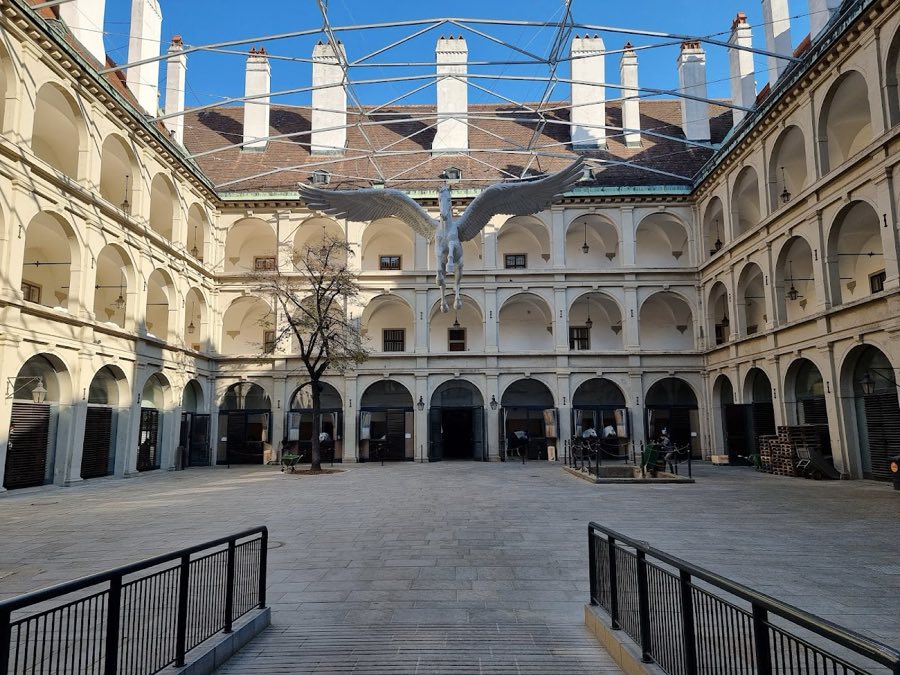
The Stallburg presents as a three‑storey, Renaissance‑style building organized around a central courtyard. The structure is integrated into the Hofburg Palace complex and is reached by a series of arcades that link it with neighbouring palace spaces; the courtyard can be seen from Reitschulgasse. The building’s plan and setting reflect its original function as a noble residence and its later adaptations for gallery display and stabling.
At the heart of the yard stands a fountain fitted with wrought‑iron railings, added in 1675, which remains a documented element of the courtyard ensemble. The courtyard is lined with Renaissance arches; those arches underwent conservation work in the mid‑twentieth century, with restoration recorded between 1955 and 1960. The arcaded passage linking the Stallburg and the Hofburg was repaired and reopened on 1 July 1948 following the wartime damage and immediate postwar repairs.
Interior arrangements show the building’s sequence of reuses. The ground floor historically functioned as stabling for the imperial horses, a role that gave the building its name and later established its identity as imperial stables. The second floor was arranged for display of Archduke Leopold Wilhelm’s Brussels collection between 1659 and 1776, occupying eleven rooms for the gallery. The Stallburg was heavily damaged by bombing in 1945 and was restored in 1947–1948; following those repairs the structure survives in restored condition and continues in active use, including accommodation of the Spanish Riding School’s Lipizzaner horses.
No. 62395
No. 40528
No. 69057
No. 99382
Comments
Comments for Stallburg will require a verified account before posting.
We'll send a verification link before your first comment is published.