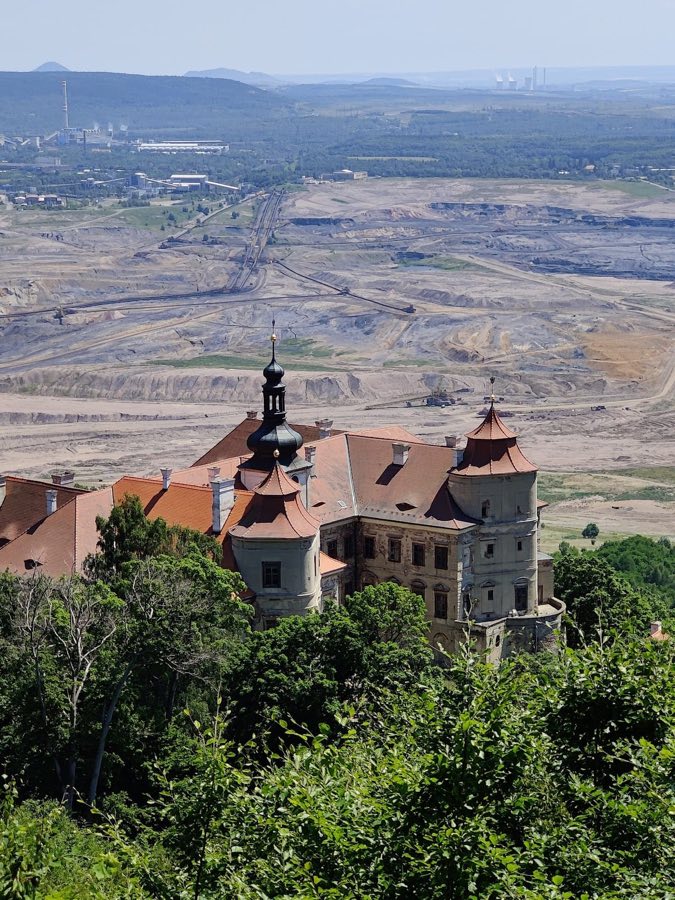
No. 27426
Jezeří Castle
Czechia
ChâteauRestoredFor events14th century
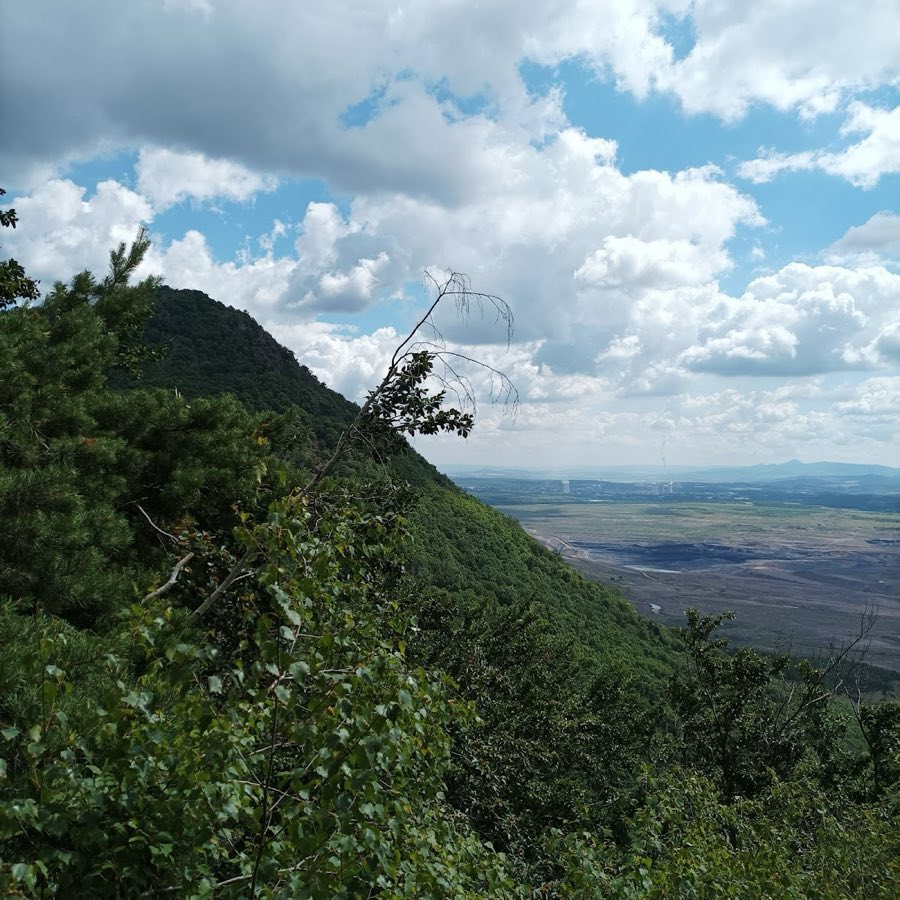
No. 63904
No. 63904 · 50.547 N, 13.483 E
Quick summary
Starý Žeberk is a castle in Czechia with origins associated with the 14th century.
See all castles in CzechiaStarý Žeberk occupies a wooded summit above the village of Horní Jiřetín in the Czech Republic and was raised by local medieval nobility, possibly the family known as the lords of Rvenice.
Construction of the hilltop fortress dates to the early 1200s, when a defensive site was established to command the slopes above the lake called Komořanské jezero, from which the castle took its name. The first written record appears in 1277, identifying Albrecht von Seeberg as the holder of the lordship. Albrecht is also documented as burgrave of Kaaden in 1272 and 1292 and is cited as a local lord in Kaaden, Tachau and Bilin.
The male Seeberg line ended with Albrecht’s death in 1321. Control of the lordship then passed to an Ottonian branch, the lords of Lobdeburg-Bergow. By 1327 Otto II of Bergow, married to Margarethe von Seeberg, is named as lord of Seeberg. During the second quarter of the 14th century the Bergow family decided to raise a new, larger stronghold about three kilometres to the northwest, later called Neu Seeberg. Following this work the original hilltop site came to be called Alt Seeberg.
Otto III von Bergow appears in records between 1374 and 1379 as the owner and as a patron of nearby village churches, and documentary evidence indicates that the older hill castle ceased to be used around that period. In 1383 Otto III sold the Seeberg lordship to Thimo VIII von Colditz; the deed to that sale refers only to the Alt Seeberg hill. At various times the family associated with Seeberg also held the nearby Egerberg castle. The surviving ruin lies in the cadastral area Jezeří and is set within the Jezerka nature reserve.
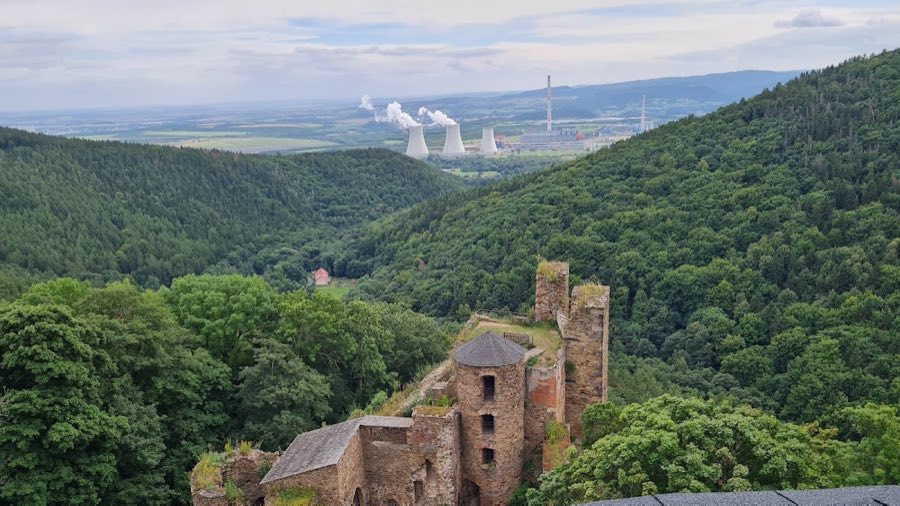
Starý Žeberk occupies the top of the Seeberg at roughly 707 metres above sea level and was sited to take advantage of natural defenses, with steep rock faces on three sides. The plan follows a roughly triangular arrangement, and the original approach led northward across the narrow ridge that links the Seeberg to the neighbouring Jánský vrch. The castle’s core stood on two rocky projections at the summit and contained a main living block or a defensive tower; no visible portions of those primary buildings survive today.
Earthworks and masonry fragments are the principal archaeological remains. Substantial ramparts and defensive ditches date to the castle’s medieval phase and mark the limits of the inner enclosure. Parts of the earliest inner ward survive as worn platforms and short lengths of wall, while only small pieces of the outer wall remain in place, preserved as ruined stonework among the roots and soil. Vegetation, especially beech trees, now covers much of the site.
The hilltop was later identified as Alt Seeberg after the family built a new castle elsewhere in the 14th century, a change reflected in documentary records and in the cessation of occupation at the older stronghold. In the surrounding landscape the valley of the Vesnický potok lies to the west with the Jezeří reservoir, the chateau Jezeří stands about 1.5 kilometres to the northeast, and to the east the former lake meadow has been altered by the ČSA open-cast lignite mine. The ruin remains fragmentary and overgrown, with its defensive earthworks and limited masonry the clearest evidence of the medieval fortification.
No. 27426
No. 81900
No. 75900
No. 77930
Comments
Comments for Starý Žeberk will require a verified account before posting.
We'll send a verification link before your first comment is published.