
No. 17993
Žumberk Castle
Czechia
CastleRuin14th century
No. 50553
No. 50553 · 49.870 N, 15.819 E
Quick summary
Strádov Castle is a castle in Czechia with origins associated with the 14th century.
See all castles in CzechiaStrádov Castle is located near the village of Nasavrky in the Czech Republic. It was built during the early 14th century, most likely by the noble Lacembok family of Chlum, a lineage associated with the region’s medieval elite.
The earliest recorded mention of Strádov dates back to 1374, naming Jaroš Lacembok of Strádov as the patron of the nearby church and monastery of St. Jakobus in the settlement of Práčov. This connection highlights the castle’s early importance in local religious affairs. In 1382, ownership passed to Jindřich Lacembok, Jaroš’s son, maintaining the estate within the family. By 1409, control of the castle had shifted to Bleh of Lipka and Strádov.
During Bleh’s tenure, Strádov experienced violent upheaval related to the Hussite Wars. In the spring of 1421, it is probable that Hussite troops seized the castle shortly after they destroyed the adjacent monastery of Práčov. This conflict may have significantly weakened the castle’s defenses and standing.
In 1438, Jan of Strádov pledged the castle along with nearby estates, including Nasavrky and nine villages, to Bleh of Lipka’s heirs. By 1444, the property was sold to Jan Slon of Seslavec. From this point, Strádov likely fell into disuse and was considered abandoned, a status first officially noted in 1457 when the castle returned to royal control under King Ladislaus Postumus.
Centuries later, during the late 18th century, the nearby Auersperg family integrated the ruins into their Slavická obora, a game reserve. In the early 19th century, a wooden bridge was constructed over the castle’s moat to provide access for hunting activities. The ruins were formally recognized as a cultural monument in 1958. Further changes in the 21st century reduced the size of the game reserve, allowing the site to be accessible throughout the year starting in 2014.
Strádov Castle occupies a commanding position atop a steep granite promontory rising roughly 70 meters above the junction of the Chrudimka River and the Libáňský potok valley. The location’s natural defenses include nearly vertical rock faces on the north and west sides, while human-made fortifications strengthened the more accessible southeast approach where the rocky spur meets the surrounding plateau.
The castle’s layout consists of two main sections: the outer bailey and the inner bailey, each enclosed by defensive walls. The outer bailey, serving as an economic and service area, was encircled by a curtain wall and separated from the inner bailey by a deep ditch carved into the rock on the northwest side. The main gate to this outer enclosure was located on the eastern side, likely connecting to a medieval route linking Nasavrky and Svídnice.
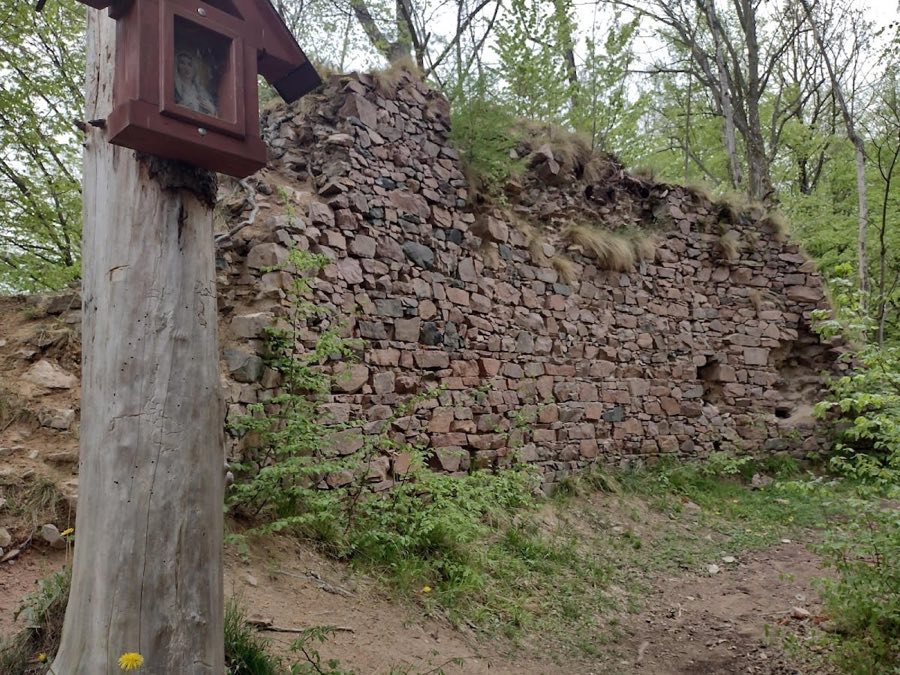
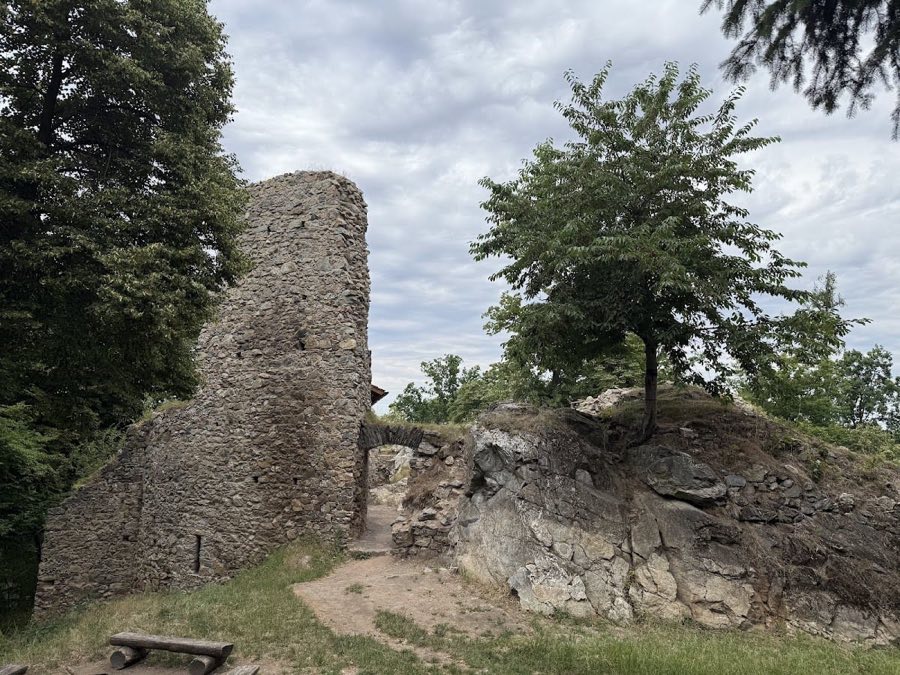
Access to the inner bailey was gained by crossing a bridge over an inner moat from the outer yard. The shape of this core area follows the uneven outline of the rocky terrain, forming an irregular trapezoid. A large rectangular tower, measuring about 8.5 by 11 meters, guarded the main entrance. This tower, with walls surviving up to 3 to 4 meters in height, featured living spaces on its upper floors and retained the original northern entrance portal.
Adjacent to this residential tower on the west was the palas, or main hall, used for habitation and gatherings. The palas and tower were connected by walls creating a small inner courtyard. Large sections of the northern outer curtain wall remain intact, standing as high as 11 meters and founded directly onto the bedrock, highlighting the builders’ adaptation to the natural landscape.
Evidence of the outer bailey includes visible floor depressions and the vaulted foundations of cellars, marking the locations of former economic buildings. The castle’s defensive enclosure roughly encircled the rocky tip of the promontory in a near-circular line. Near the eastern gate, the outer wall formed a flank protection angle around the tower, which likely replaced an earlier round defensive tower known as a bergfried.
Surrounding the outer bailey, double moats and earthen ramparts separated the castle from the plateau. The placement of the inner structures, set back slightly southwest from the spur’s point, maximized natural protection from cliffs and slopes descending toward the rivers, contributing to the castle’s defense strategy. The entire complex lies within the bounds of the Slavická obora nature reserve, integrating the remains into a natural and historic landscape.
No. 17993
No. 67748
No. 95052
No. 28417
Comments
Comments for Strádov Castle will require a verified account before posting.
We'll send a verification link before your first comment is published.