No. 69872
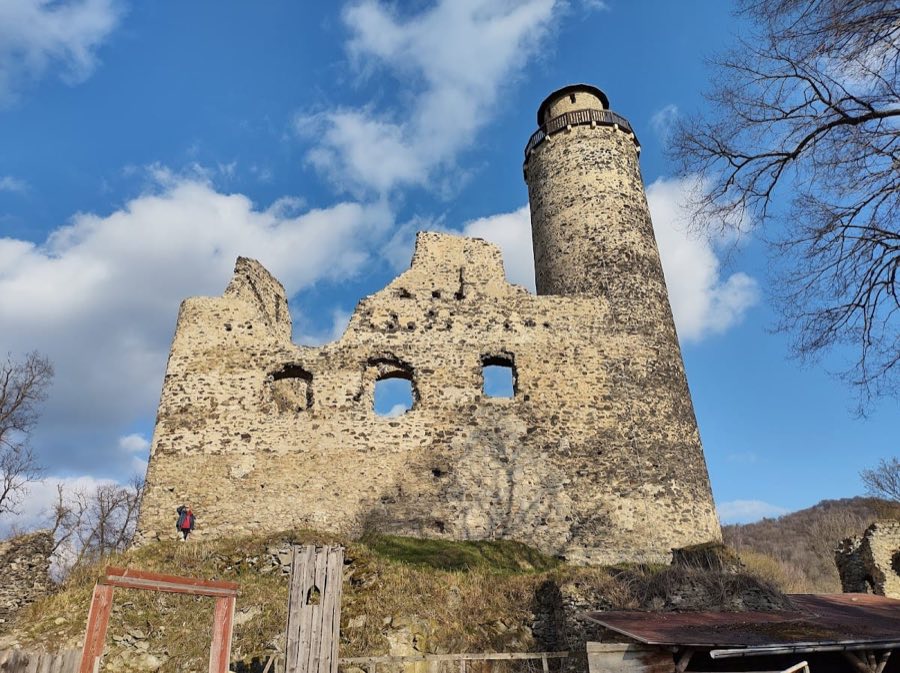
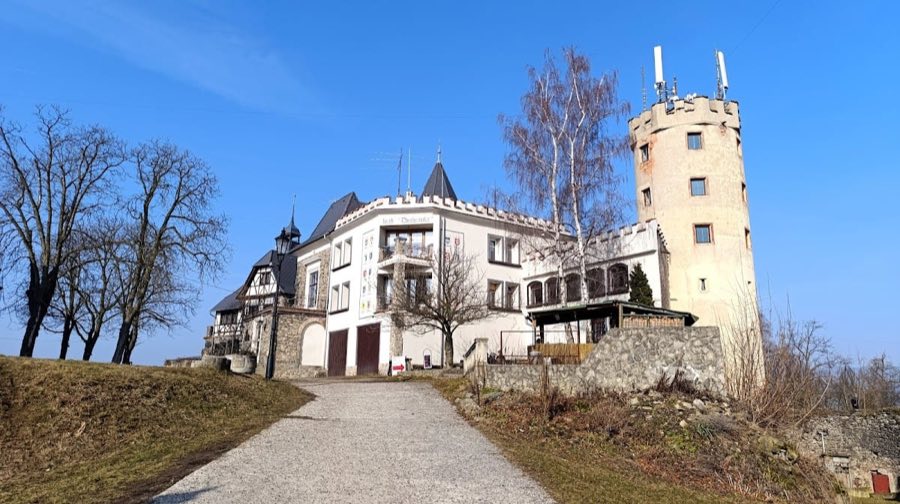
Kostomlaty Castle
Czechia
CastleRuinFor events14th century
No. 79396
Castle · Czechia
No. 79396 · 50.577 N, 13.812 E
Quick summary
Světec Castle is a castle in Czechia with origins associated with the 13th century.
See all castles in CzechiaSvětec Castle in Světec, Czechia began on the site of a medieval Christian monastic foundation established by a community of Canonesses associated with the Holy Sepulchre, and its recorded presence dates to the early 13th century. The place later took on a Baroque form in the late 17th to early 18th century, and it has served religious, episcopal and municipal functions, making it a long-lived focus of local administration and commemoration.
The earliest phase began in the high Middle Ages. A convent stood on the site by 1209 after the religious order arrived in Bohemia in the 1220s through the patronage of the Hrabišice family. The complex formed part of the landed possessions connected with the Archbishopric of Prague. Fighting in the region destroyed much of the settlement in 1278, and the religious community eventually left the place during the upheavals of the Protestant Reformation; the last traces of the medieval monastery had been removed by 1580.
From the late 1600s a new Baroque residence rose on the former monastic grounds under the auspices of the archbishopric. Construction campaigns are placed variously in the last quarter of the 17th century and in the early 18th century. The church hierarchy that owned the site also shaped the surrounding grounds over successive generations: one archbishop enlarged or laid out the formal castle park, and a later archbishop ordered further improvement of the grounds and a promenade that linked the estate with the neighboring heights, a nearby hill and watchtower carrying the later archbishop’s name.
In the 20th century the main house passed to civic use and became the seat of the municipal government. The building contains an exhibition and a ceremonial hall dedicated to Vojtěch Preissig, the Czech artist who resisted Nazi occupation and who died in Dachau in 1944. A reconstruction of parts of the complex took place in the early 21st century, and the whole ensemble is protected as a national cultural monument of the Czech Republic.
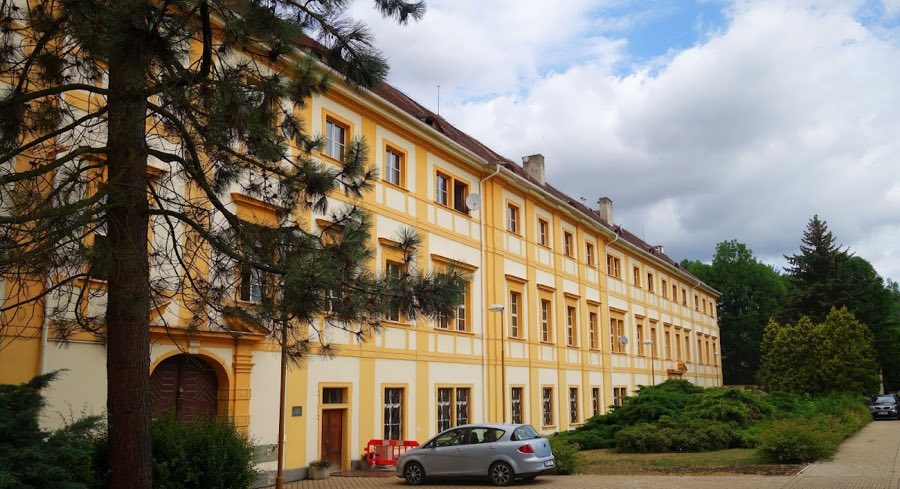
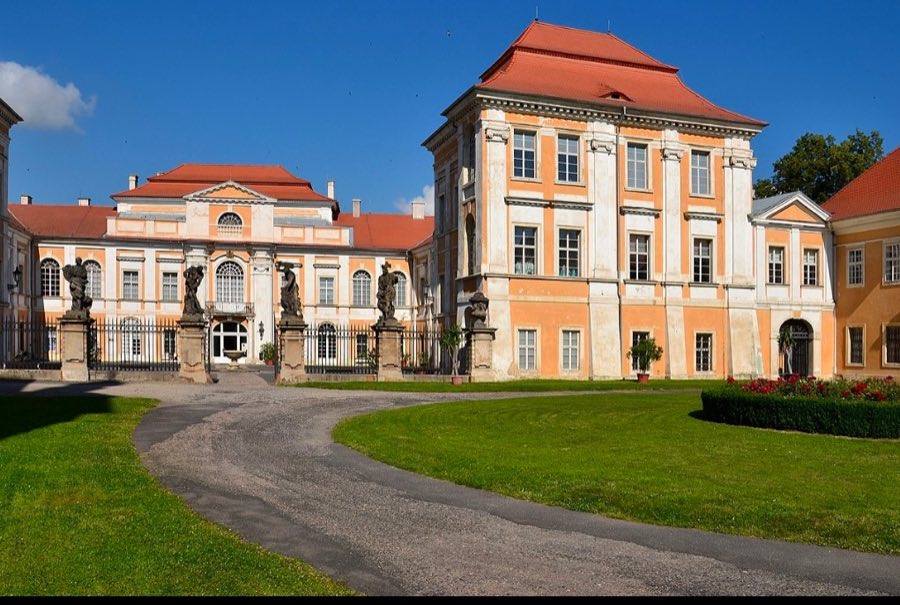
The site today presents an elongated Baroque residence set at the north edge of the village, with its main eastern front opening onto an honor court. The main block is described in surviving records both as a single-wing, two-storey building with two formal staircases and as a three-storey rectangular structure; these descriptions reflect the building’s long construction history and its clear Baroque character. The eastern façade is articulated by lesenes (pilaster strips) and cornices, and the principal entrance is topped by a perforated pediment (an openwork triangular gable), which frames the approach to the house.
Window arrangements show the building’s vertical hierarchy. Ground-floor openings are rectangular and fitted with shutters. The principal floor has larger windows, also shuttered and finished with a cornice and a parapet (a low protective wall) that carries a rectangular inset. Upper-floor openings are nearly square, with framed shutters and small parapets. Between the floors rectangular stucco panels run under the windows, providing a rhythmic surface decoration. The roof is a traditional two-sided pitched roof that completes the classic Baroque silhouette.
The castle stands beside the Church of St James the Greater, which abuts the complex on the south. Surrounding the house is a garden and a large park area bounded in places by low stone walls; the grassy park stretches to the west and northwest of the main building and in recent descriptions is overgrown in areas. A farmyard and an agricultural building form part of the ensemble immediately adjoining the residence, reflecting the estate’s historic role as both a seat of authority and a working property.
The interior now accommodates an exhibition and a municipal ceremonial hall honoring Vojtěch Preissig, which form part of the site’s contemporary function. The main building, the garden, the park with its low stone walls, and the agricultural building together constitute the protected ensemble registered as a national cultural monument of the Czech Republic.
No. 69872
No. 75900
No. 51324
No. 16953
Comments
Comments for Světec Castle will require a verified account before posting.
We'll send a verification link before your first comment is published.