No. 93286
Siesikai Castle
Lithuania
CastleRestored16th century
No. 50886
No. 50886 · 55.546 N, 25.139 E
Quick summary
Voruta is a castle in Lithuania with origins associated with the 13th century.
See all castles in LithuaniaVoruta is located in Anykščiai municipality, Lithuania, and was erected by the medieval Lithuanian polity during the thirteenth century.
The name Voruta appears in the Ipatiev Chronicle under the year 1251, which records that King Mindaugas defended himself there during a civil war against his nephews Tautvilas and Edivydas and against the duke of Samogitia, Vykintas. Other medieval mentions refer simply to a castle belonging to Mindaugas without giving a name or clear place, so the single 1251 entry is the principal recorded association of the site with Mindaugas and that conflict.
Archaeological investigation links human use of the place to two main spans. Occupation stretches from the second half of the thirteenth century through to the end of the fourteenth century. The hillfort appears to have been abandoned during the fourteenth century and then reconstructed at the close of that century, with renewed use in the early years of the fifteenth century. During the first half of the fifteenth century the lord’s residence reportedly moved to the nearby Anykščiai castle, while a village of serfs remained beside the hill and its burial ground continued in use until the eighteenth century. In 1910 Jonas Basanavičius examined twenty-six graves from that cemetery, which dated to the fifteenth through seventeenth centuries.
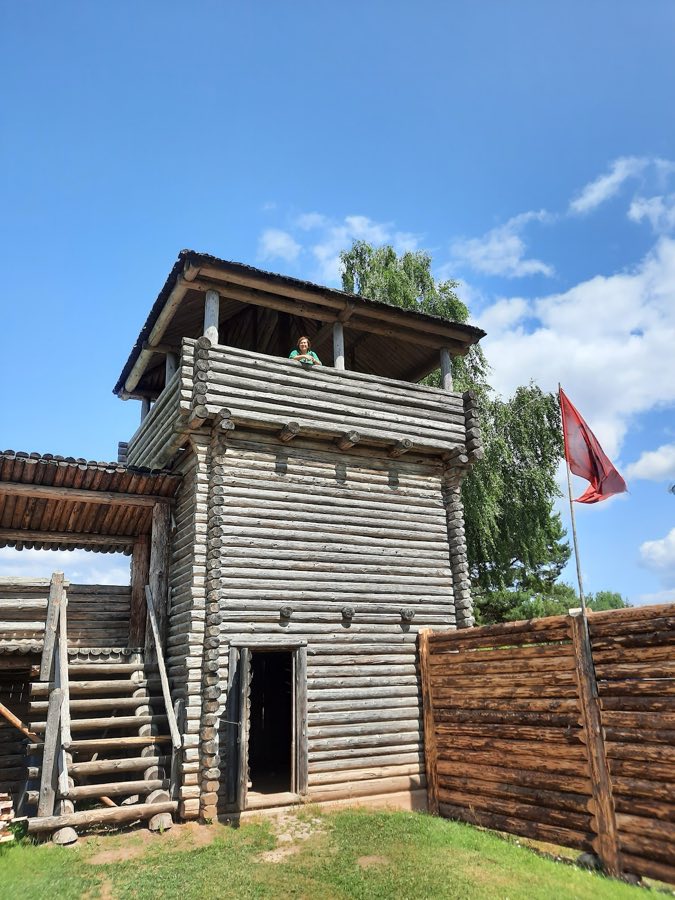
In 1923 relocation of the village and cultivation of the hill caused notable damage to buried fortifications and structures. From 1988 onward local volunteers carried out clean-up work, formal archaeological research began in 1990, and plans to rebuild a wooden castle emerged in 1997. A 1999 decree authorized works for a wooden reconstruction, a bridge over the Varelis stream was begun in October 2000 and opened on 6 July 2001, and a modern timber reconstruction was erected on the site. At least sixteen different places in Lithuania and Belarus have been proposed as Voruta since the late nineteenth century, and an alternative interpretation holds that the word voruta may have originally been a general term for “castle” rather than the name of a single fortress. The modern wooden structure built on the hill is one of the largest reconstructions of its kind in Eastern Europe and stands where the archaeological remains were investigated.
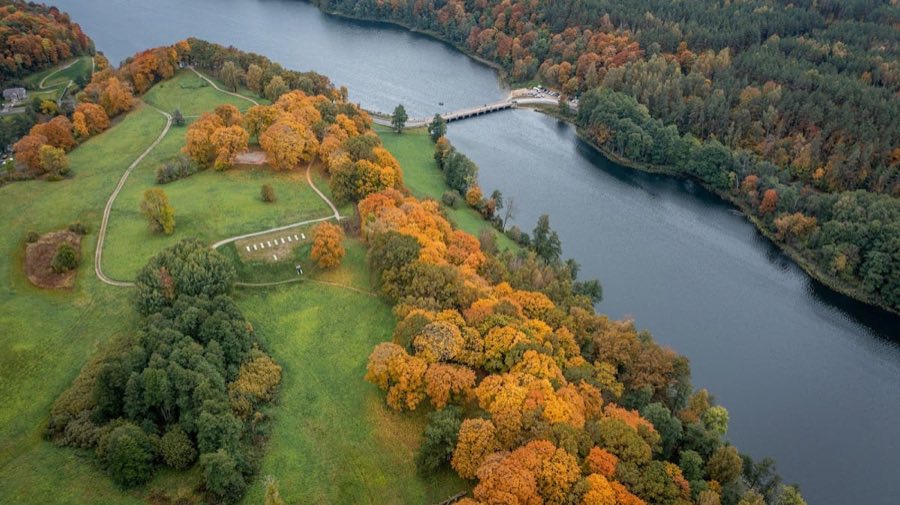
The hillfort occupies a promontory between two streams, the larger named Varelis and the smaller called Volupis, and the investigated complex covers 1,821 square metres. The settlement was laid out on previously uninhabited ground and the excavated plan shows an enclosed stronghold set on the sloping spur, with roads running around the defended area. Evidence indicates wooden defensive works that underwent burning during the site’s occupational history.
Archaeologists recorded more than one hundred and ninety individual artefacts and roughly eighteen hundred pottery fragments, together with fifty-six postholes that mark former timber buildings. Seven ovens were found within the enclosure, indicating domestic or craft activity. Structural traces include two fortified bastions that projected from the defences and a single-storey unfortified building within the interior; these elements survive as archaeological remains rather than complete standing walls. The wooden fortifications show clear traces of having been burnt, and material linked to the occupation of Mindaugas’s era survives chiefly as fragmentary contexts, damaged by later rebuilding episodes.
In its later phase the castle’s internal arrangement was divided into several sectors. The courtyard held wooden buildings grouped into two functional zones, one serving cleaning and maintenance personnel and the other used for ceremonial and public purposes. A cemetery lay adjacent to the hillfort and was used over several centuries; excavations in 1910 examined twenty-six graves dated to the fifteenth through seventeenth centuries, and the burial ground continued to be used until the eighteenth century. Twentieth-century cultivation and subsequent reconstruction works have altered and damaged some archaeological deposits.
Modern interventions at the place include the construction of a timber reconstruction on the hill and the erection of a symbolic bridge across the Varelis stream, opened on 6 July 2001. These interventions stand above the in situ archaeological remains, which today survive in varying condition from burned and fragmentary deposits to conserved earthworks and posthole patterns.
No. 93286
No. 51028
No. 76898
No. 34220
Comments
Comments for Voruta will require a verified account before posting.
We'll send a verification link before your first comment is published.