No. 76828
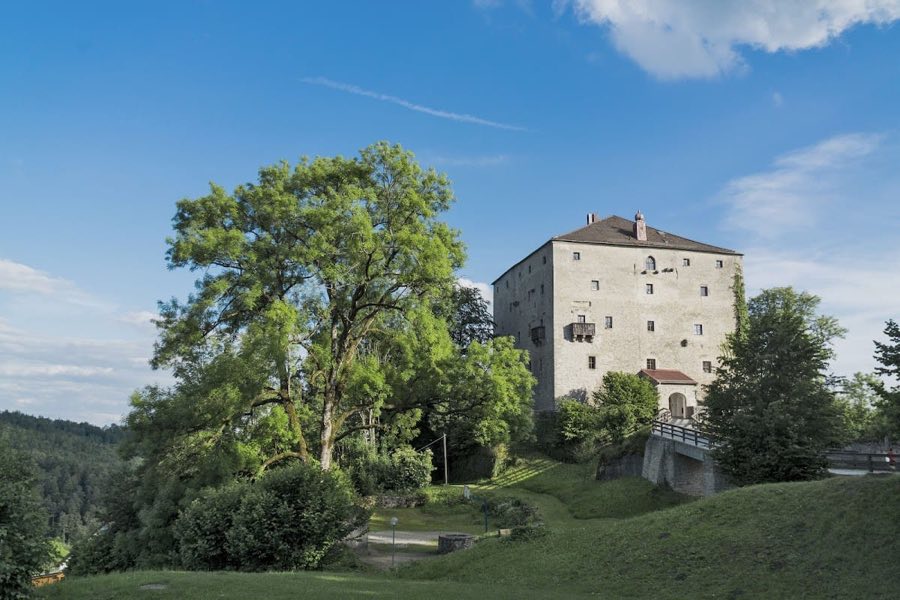
Burg Saldenburg
Germany
CastleIntact14th century
No. 16365
Castle · Germany
No. 16365 · 48.951 N, 13.141 E
Quick summary
Weißenstein Castle is a castle in Germany with origins associated with the 18th century.
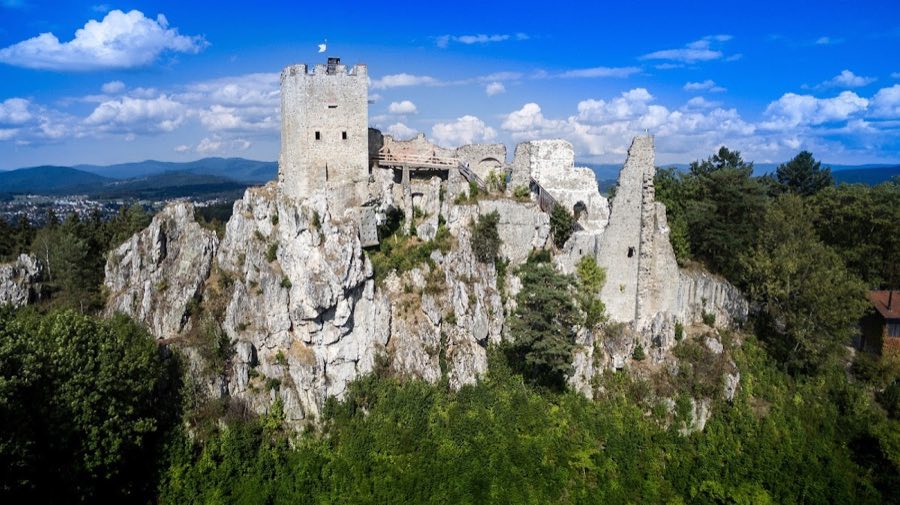
See all castles in GermanyWeißenstein Castle stands in Regen, Germany, and was built around 1100 by the Counts of Bogen, a medieval noble family.
The castle remained in Bogen hands until 1242, when that line died out and control passed to the Dukes of Bavaria. In 1308 Dukes Otto and Stephen of Lower Bavaria granted use of the site to Lord Eberwein of Degenberg, and by 1339–1340 the Degenberg family held the castle as their property.
On 9 December 1468, during the Böckler War, ducal forces commanded by Georg von Lerchenfeld appeared before the fortress. Those troops captured the stronghold and set it on fire shortly before Christmas of the same year. The Degenberg family rebuilt the complex and continued to occupy it until their line ended in 1602 with the death of Hans Sigmund von Degenberg. After that year the estate fell to Elector Maximilian I, who installed an electoral administrator there.
In 1633 Swedish armies ravaged the castle in the course of the Thirty Years’ War. Structural collapse occurred on the south side in 1740, and in 1742 Franz von der Trenck with his Pandurs dealt further destruction that left the castle in ruin. From the 18th century the main stronghold remained ruined while the official residence and the agricultural buildings were restored. A tower-like structure was added in 1762 to serve as a grain store for tithe collections.
In 1918 Siegfried von Vegesack bought the house and made it his home, reportedly accompanied by Clara Nordström according to one account; Vegesack later used the name “Das Fressende Haus” and published a novel with that title in 1932. Since 1985 the building known as the Fressende Haus has contained a museum and a literary archive devoted to Siegfried von Vegesack. The ruined castle underwent renovation between 1991 and 1995. Ownership passed to the town of Regen in 1996. The site appears in the Bayernatlas as archaeological monument D-2-7044-0039 and is entered as a protected historic building under D-2-76-138-112. The rocky area that includes the ruins lies within the Pfahl Nature Reserve, created on 18 April 1940, which covers six hectares.
Weißenstein sits as an elongated ruin on a rock terrace at 758 metres on the quartz ridge called the Pfahl. The castle complex occupies a narrow ledge of bedrock and the surviving fabric shows masonry set directly on the stone platform. The ruined defensive and residential area is physically separated from the adjacent domestic and farm buildings, which were restored in later centuries.
The most prominent structural survival is a square tower that served as the residential tower house. This masonry tower remains largely in situ and is the clearest element of the medieval ensemble. Other stretches of walling and stonework persist around the tower, their construction reflecting regular medieval masonry practice on a rocky spur. These stone remains show the sequence of damage and repair recorded in the castle’s history, with later interventions visible where the site was partly rebuilt after attacks.
A tower-like building added in 1762 stands among the ancillary structures below the ruin. Built to function as a grain box for collecting tithes, this later structure demonstrates reuse of the castle precinct for administrative and agricultural purposes; it survives as an 18th-century masonry building linked to the farm complex. The official residence and farm buildings themselves were repaired after the castle fell into ruin and remain distinct from the ruined castle above.
Below the rocky crest a chapel dating to 1836 stands at the foot of the hill. Inside the chapel visitors find a Baroque altar and numerous votive tablets, indicating continued devotional use of the site in the 19th century. The castle hill is noticeably more wooded than the surrounding Pfahl ridge, a condition produced by centuries of fertilization with waste, and recorded tree species on the Burgberg include sycamore (bergahorn), elder, birch and ash.
No. 76828
No. 96241

No. 77456
No. 57236
Comments
Comments for Weißenstein Castle will require a verified account before posting.
We'll send a verification link before your first comment is published.