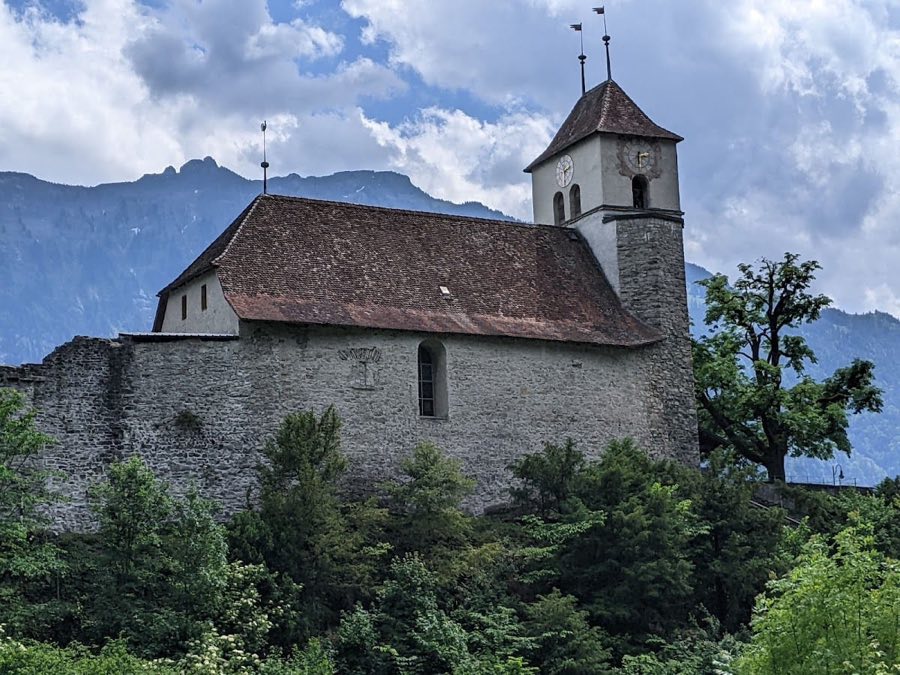
No. 13396
Ringgenberg Castle
Switzerland
CastleRuin13th century
No. 29416
Castle · Switzerland
No. 29416 · 46.670 N, 7.832 E
Quick summary
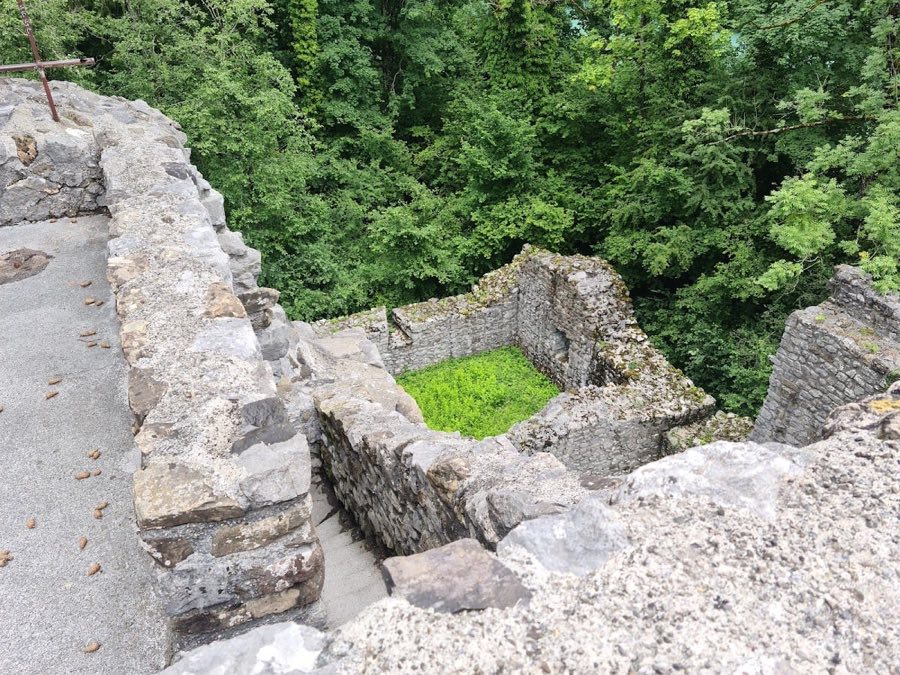
Weissenau Castle is a castle in Switzerland with origins associated with the 13th century.
See all castles in SwitzerlandWeissenau Castle is located in the municipality of Unterseen, Switzerland. It was originally built by medieval European nobility, most likely connected to local noble families active during the 13th century within the Holy Roman Empire.
The castle first appears in written records dated to 1298, where it is named “castrum Wissenowe.” Its initial construction may have been undertaken by the Lords of Rotenfluh from Unspunnen, with possession later passing to the Freiherr (baron) of Weissenau. Another possibility is that the Weissenau family themselves established the fortress to serve as the central seat for their estates. The castle was strategically situated on an island at the point where the Aare River meets Lake Thun. This location was selected to serve imperial interests by controlling trade passages through the Alpine region and supporting transportation along the waterways.
During the 13th century, the castle and its adjoining harbor were integral in securing and managing trade routes over the mountainous passes, key to regional commerce. However, toward the end of the century, the foundation of the nearby settlement Unterseen in 1279 caused a shift in economic activity, leading to a decline in the castle’s prosperity and influence.
In the early 14th century, around 1334, the Freiherr of Weissenau became involved in a coalition of local nobles resisting the territorial expansion of Bern, an increasingly powerful city-state. Following this conflict, the nobles were defeated, and the Weissenau family faced financial difficulties. As a result, they sold both the castle and the adjacent market town called Widen to the monks of Interlaken Monastery to repay their debts.
The monastery exercised control over these lands during the 14th century, and in 1365, it shifted Widen’s traditional weekly and annual markets to a location known then as Aarmühle, which corresponds to the present-day town of Interlaken. This relocation caused Widen to suffer a significant decline.
With the sweeping changes of the Protestant Reformation in 1528, the city of Bern secularized the holdings of the Interlaken Monastery, incorporating its territories—including Weissenau Castle and Widen—into the Bernese bailiwick (administrative district) of Interlaken. During the 16th century, the castle was repurposed as a prison under Bern’s authority. Over time, it was allowed to fall into ruin. Although there were plans to restore the structure in the mid-17th and early 18th centuries, these efforts never materialized.
Beginning in the late 20th century, Weissenau Castle’s remaining structures have been recognized for their cultural and historical value. Protecting the site as a heritage monument began in 1981, with conservation work carried out between 1988 and 1989 to preserve the ruins.
The archaeological remains of Weissenau Castle reveal a complex layout typical of a medieval fortress positioned on lowland terrain. The site retains parts of the residential quarters, defensive towers, sections of the main building, and segments of the enclosing curtain wall. These remnants provide insight into its role as a fortified noble residence and regional stronghold.
One prominent surviving feature is the castle’s tower, which would have served both defensive and lookout functions. Constructed using local stone and traditional masonry methods for the period, the tower remains partially standing and has been integrated into later conservation efforts. Visitors can ascend an observation platform reached by climbing 71 steps, standing 14.5 meters above the surrounding ground level. From this vantage point, important views extend across the Aare River, Lake Thun, and the nearby Niesen mountain.
Sections of the main residential building have been archaeologically confirmed, showing the layout of living spaces connected to the defensive structures. Adjacent curtain walls, which would have surrounded and protected the castle, survive in fragments that mark the perimeter and enclosure style used in the late medieval period.
The entire ruin rests on what was once an island at the meeting of the river and the lake. Today, this area is part of the Neuhaus-Weissenau nature reserve, which preserves both its natural and historical heritage. Among lowland castles in the Bernese Oberland, Weissenau is considered the largest and one of the best preserved, offering valuable evidence of medieval defensive architecture adapted to a water-bound site.
Conservation work has stabilized many of the remaining structures, allowing the ruins to be studied and appreciated as a cultural monument. The interplay of the surviving residential areas, defensive towers, and walls continues to reflect the castle’s historical importance in regional trade control and noble administration.
No. 13396
No. 29032
No. 80957
No. 23737
Comments
Comments for Weissenau Castle will require a verified account before posting.
We'll send a verification link before your first comment is published.