No. 17589
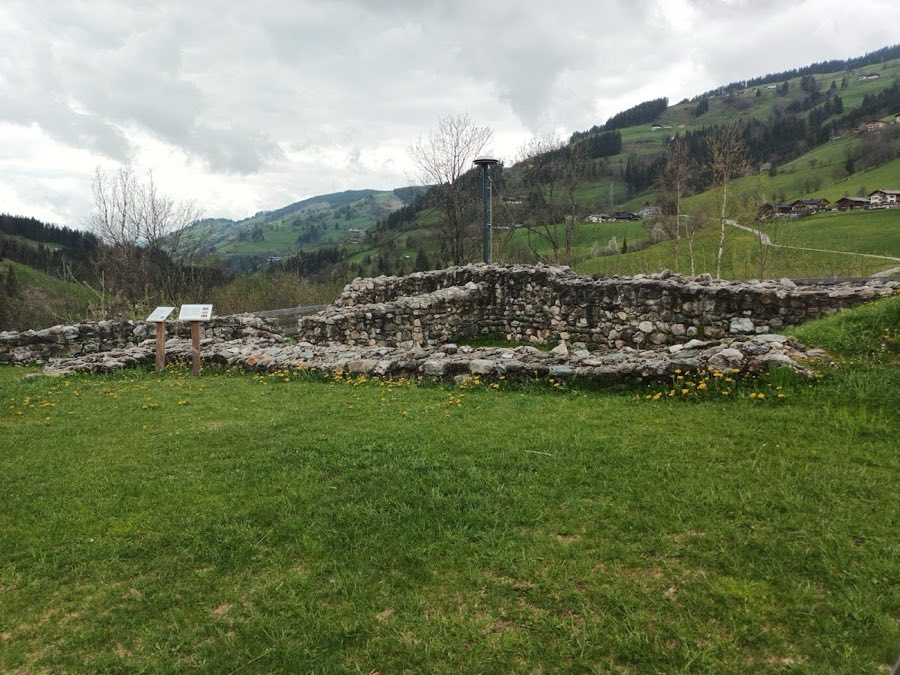
Burg Wagrain
Austria
CastleRuin14th century
No. 88422
Manor house · Austria
No. 88422 · 47.163 N, 13.100 E
Quick summary
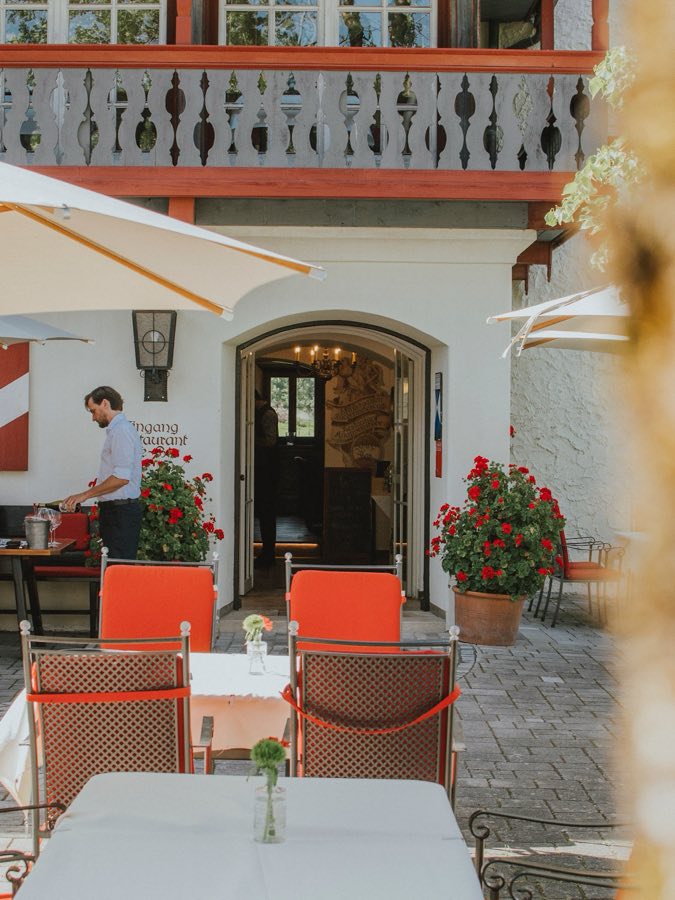
Weitmoserschlössl, Bad Hofgastein is a manor house in Bad Hofgastein, Austria with origins associated with the 16th century.
See all castles in AustriaWeitmoserschlössl in Bad Hofgastein, Austria, is a late-Gothic residence erected in the sixteenth century during the era of the Holy Roman Empire. The house emerged in a region shaped by mountain mining and local landed families, and its fortunes were closely linked to the Weitmoser family, whose activities in the sixteenth century made the site regionally important.
In the early sixteenth century Hans Weitmoser appears as a local propertyholder and agent in mining matters. He owned several holdings in the Gastein valley and in 1518 acted as a commissioner for the archbishop in a dispute over mineral rights. Hans also played a leadership role in the Salzburg Peasants’ Revolt, later performing penance and being restored to favour by the territorial ruler Matthäus Lang. He acquired shares and working tunnels on the Radhausberg, tying the family to the valley’s mining economy.
Christoph Weitmoser, born in 1506 and dying in Hofgastein in 1558, inherited his father’s holdings in 1526. Christoph began notable ore extraction around 1530 using an adit known as “to Our Lady.” He faced heavy inherited debts yet, by the mid-century, had become a highly productive miner and financier. Between about 1554 and 1560 his operations reportedly yielded roughly three hundred kilograms of gold and about twelve hundred kilograms of silver per year, and he provided credit to prominent rulers such as Archduke Ferdinand of Tyrol and Duke Ernst of Bavaria. Around 1538 Christoph added the Goldeckhof to his properties; that earlier building burned on 19 June 1553 and Christoph rebuilt the northern section within the following year. That rebuilt northern wing survives as part of the present complex.
After Christoph’s death in 1558 the estate passed to his children and the family’s wealth dispersed; his holdings were divided among three sons and four daughters from his marriage to Elisabeth Vötzl. A local popular tale preserves the arc of the family’s rapid ascent and subsequent decline.
The seventeenth and eighteenth centuries brought a series of owners and structural changes. Around 1603 the property belonged to Georg Leykofer, and by 1606 to Hanns Leykhofer; members of that family remained among proprietors in the decades that followed. From 1624 Hanns and Kunigund undertook masonry work and added two round corner bays to the eastern edges of the building. As a Protestant, a Leykofer later had to leave Salzburg and the estate was sold in 1625 to Leonhart Rainpacher and around 1626 to Alexander Hölzl of Sillian and his wife. In 1634 Johann Riept, a parish priest associated with Haus and Schladming, became owner and his heir Franz Kumminger held the property until his death in 1691. Subsequent owners recorded include Johann Pichler in 1701, Georg Stuchner in 1712, and Franz Benedikt Hasler in 1738.
Mid-eighteenth-century transfers placed the estate with Benedikt Niklas Scharfetter about 1752, and Josef Anton Trauner is named as proprietor in 1755. From 1796 Andrä Scharfetter took ownership, and the Gastein branch of the Scharfetter family has retained the property since that time. A southeast extension added after 1604 created the two-part arrangement seen today, and a chapel within the newer section received an altar and was consecrated in 1628, the same year that painted decoration by Ludwig Lindner was applied to the chapel walls.
During the nineteenth and twentieth centuries the building underwent further alteration and conservation. An extensive interior renovation in 1850 changed the interior substantially. Chapel frescoes were uncovered and restored in 1937. An exterior refurbishment in 1952 included the construction of a south-side terrace for café use. The building now houses the Restaurant-Café Weitmoser.
The complex stands as a two-part late-Gothic residence composed of an older northern three-storey section and a seventeenth-century annex to the southeast. The northern block contains a central vaulted corridor running through the plan, reflecting the building’s original sixteenth-century layout. The later southeastern addition provides the valley-facing elevation with a round stair turret and a rounded corner oriel, features added during seventeenth-century masonry campaigns.
A portion of the first upper floor functions as the castle chapel, set within the corridor zone of the newer wing. The chapel preserves fragments of wall painting executed by Ludwig Lindner in 1628, and the chapel altar on that floor dates to the same year; the painted decoration survives as restored work after conservation in 1937. An eighteenth-century crucifix remains in place within the chapel. A marble plaque mounted in the first-floor wall opposite the kitchen commemorates the fire of 1553 and is installed in situ.
On the second upper floor a room long associated with the Weitmoser name retains pine wall panelling and a coffered ceiling dated to the first quarter of the seventeenth century. These fittings reflect the tastes applied to the house during the early modern remodelling phase and constitute a well-preserved example of interior woodwork from that period.
Evidence of building phases is visible in masonry and the rounded bays added to the eastern corners during the early seventeenth century. A painted date “1400” appears above the entrance to the older portion of the house. Exterior work in the mid-twentieth century altered the southern elevation with the addition of a terrace. Overall, the site presents a layered sequence of sixteenth- and seventeenth-century construction, later interior refitting, and twentieth-century conservation interventions, with key decorative elements such as the chapel frescoes and seventeenth-century paneling surviving in situ.
No. 17589
No. 38873
No. 68030
No. 21268
Comments
Comments for Weitmoserschlössl, Bad Hofgastein will require a verified account before posting.
We'll send a verification link before your first comment is published.