No. 48168
Schochwitz Castle
Germany
CastleRestoredFor sale12th century
No. 88138
Castle · Germany
No. 88138 · 51.583 N, 11.811 E
Quick summary
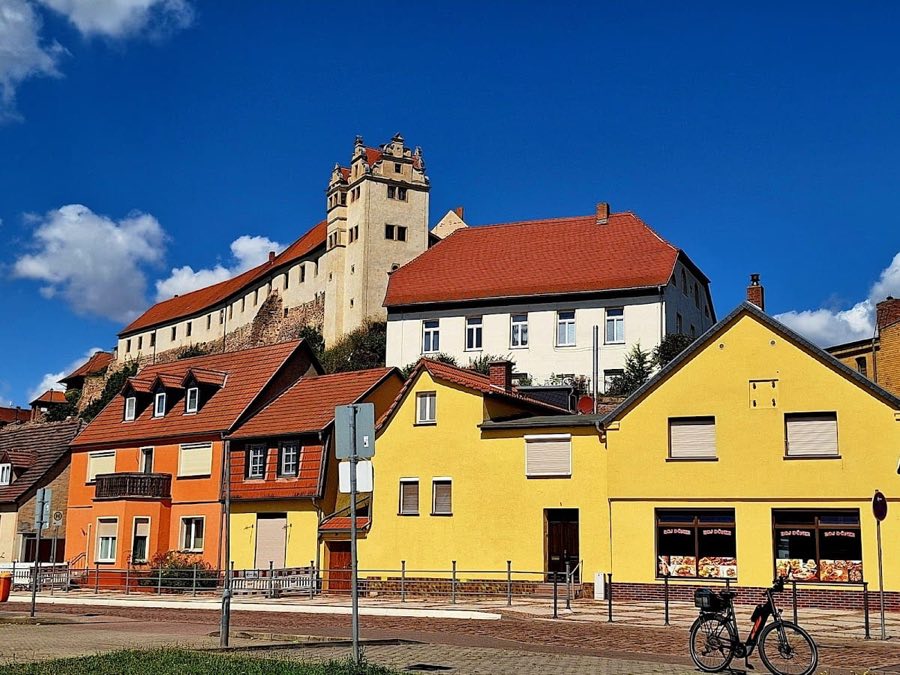
Wettin Castle is a castle in Germany with origins associated with the 10th century.
See all castles in GermanyWettin Castle is located in Wettin-Löbejün, Germany, and was originally established by Slavic peoples during the early medieval period. This fortress sits strategically on the Saale River, marking a frontier area between Slavic and Germanic tribes during the Carolingian era.
Archaeological and historical records show that the site functioned as a fortified Slavic settlement before becoming a center of political power for emerging medieval rulers. The first written mention of Wettin, referred to as “Vitin civitas,” dates back to a letter from Emperor Otto I in 961 AD, which identifies it as a castle district responsible for paying tithes to the monastery of St. Maurice in Magdeburg. By the late tenth century, Wettin was controlled by Margrave Rikdag and later transferred to his relative Dedo. This lineage continued through leaders such as Dietrich II and his son Thimo, with Thimo’s son Conrad later solidifying the castle’s political importance from 1091 onward.
Conrad “the Great” appointed officials known as ministeriales from the von Schochwitz family as castlekeepers in 1123. His son Henry lived at the site by 1156 and oversaw the construction of the Upper Castle, sometimes called the Oberburg. The original ruling family of Wettin ended in 1217, and control then passed to the Counts of Brehna. They sold the property to the Archbishop of Magdeburg in 1288, who converted it into an administrative center for the archbishopric.
Starting around 1300, the castle was divided into various fiefs, often changing hands among noble families, including the von Trotha and von Schraplau. The latter’s lands were later absorbed by Brandenburg in 1592. The Upper Castle suffered a destructive fire in 1660 and was partially dismantled by 1697. Meanwhile, the Lower Castle underwent major reconstruction around 1600 under Christoph aus dem Winckel and received further alterations in the early nineteenth century by Louis Ferdinand of Prussia.
Throughout the nineteenth and twentieth centuries, the Lower Castle found new purposes beyond defense or residence. It hosted industrial operations such as a brewery and distillery, which led to the removal of some medieval structures and construction of more functional buildings. During the Nazi period, the Lower Castle served as a party school for the NSDAP, with significant changes made to the gates in the early 1930s.
After World War II, the complex accommodated agricultural and agrochemical schools, eventually evolving into an engineering school in the late 1960s. New buildings, including dormitories and laboratories, were added during this time. Since 1991, the castle has been home to the Burg-Gymnasium Wettin, a boarding school with a focus on art history and practical art education, working closely with a nearby university in Halle.
Wettin Castle occupies a rocky promontory overlooking the Saale River and comprises three main sections: the Upper Castle (Oberburg), Middle Castle (Mittelburg), and Lower Castle (Unterburg). Each part has its own distinct historical background and structural features.
The Lower Castle is the oldest part, confirmed by archaeological excavations led by Paul Grimm in the 1920s and 1930s. At this site, investigators uncovered stone walls set in clay dating back to the tenth century, including a ring wall approximately two meters thick, which was dated to around 1100 AD based on pottery shards found nearby. This fortification marks the foundation of the original defensive structures protecting the settlement.
The Upper Castle once featured a tall main tower known as a bergfried. A 1640 engraving by Matthäus Merian depicts this tower, although by that time it was already in ruins and it was completely dismantled by 1697 following a fire in 1660. The Upper Castle also had a notable gatehouse built in 1565, which was lost with the castle’s decline.
By the mid-fifteenth century, the Lower Castle was divided between two noble families: the Ammendorfs, who controlled the riverside section, and the von Winckels, who held the side facing the town. In 1555, the von Winckel family acquired the full estate and carried out significant renovations around 1600. These included the addition of baroque gables to the Ammendorf house and the construction of the distinctive Winkelturm, a corner tower completed in 1606. Between 1768 and 1770, the von Winckel residence was remodeled in the Rococo style, highlighting changing architectural tastes.
In the early nineteenth century, Prince Louis Ferdinand of Prussia oversaw further rebuilding of the Winkelturm house and removed the northern gatehouse to widen access routes. Around 1830, the upper floors of both the northern and southern wings were also taken down. The St. Peter’s Church that once stood within the castle grounds was demolished in 1840. The medieval bergfried, having long been in disrepair, was fully dismantled in 1860.
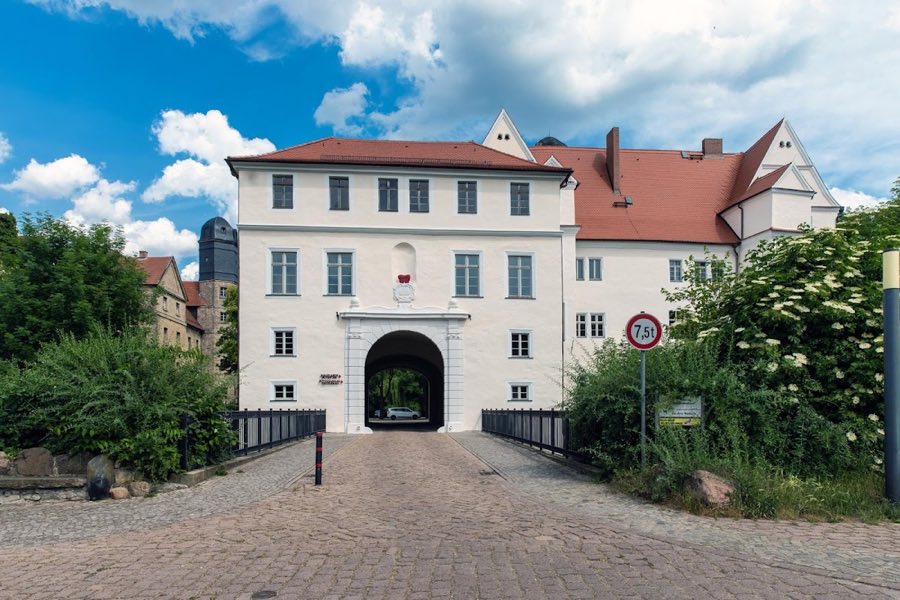
Later nineteenth- and twentieth-century developments included the construction of industrial and agricultural buildings within the Lower Castle’s area. These additions, often utilitarian in design, replaced parts of the medieval fabric and define the present-day appearance of the site. The fortified gate of the Lower Castle experienced significant alterations in the early 1930s to accommodate its role as a Nazi party school.
The Middle Castle area, lying between the Upper and Lower sections, became the location for educational buildings constructed during the twentieth century. Ongoing archaeological investigations, renewed since 2018 in connection with school expansion projects, have provided further details about the castle’s phased construction and evolving functions over time. These excavations continue to illuminate the complex history preserved within Wettin Castle’s remains.
No. 48168
No. 88152
No. 36976
No. 92810
Comments
Comments for Wettin Castle will require a verified account before posting.
We'll send a verification link before your first comment is published.