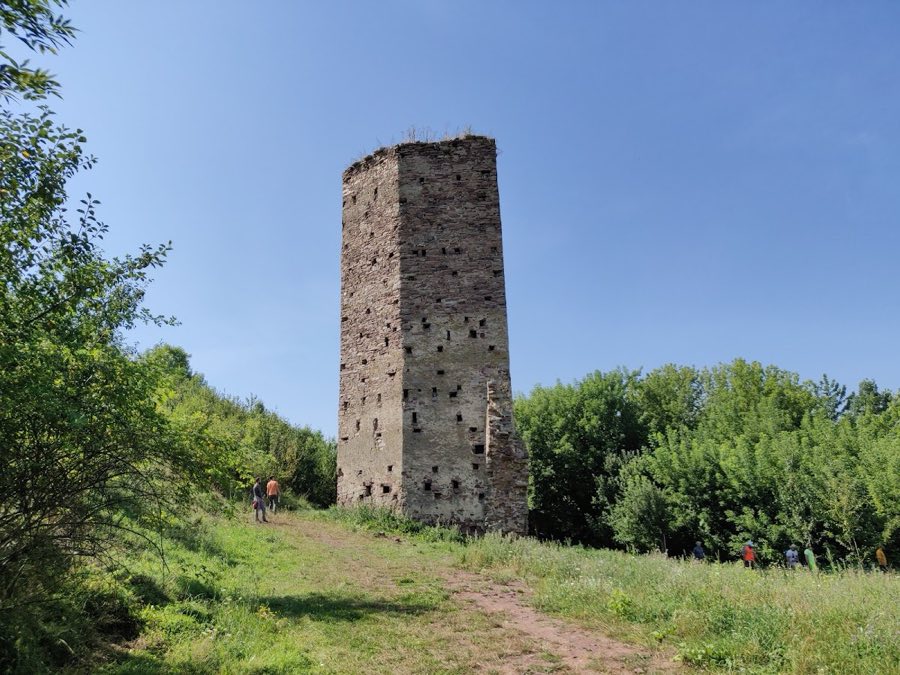
No. 71765
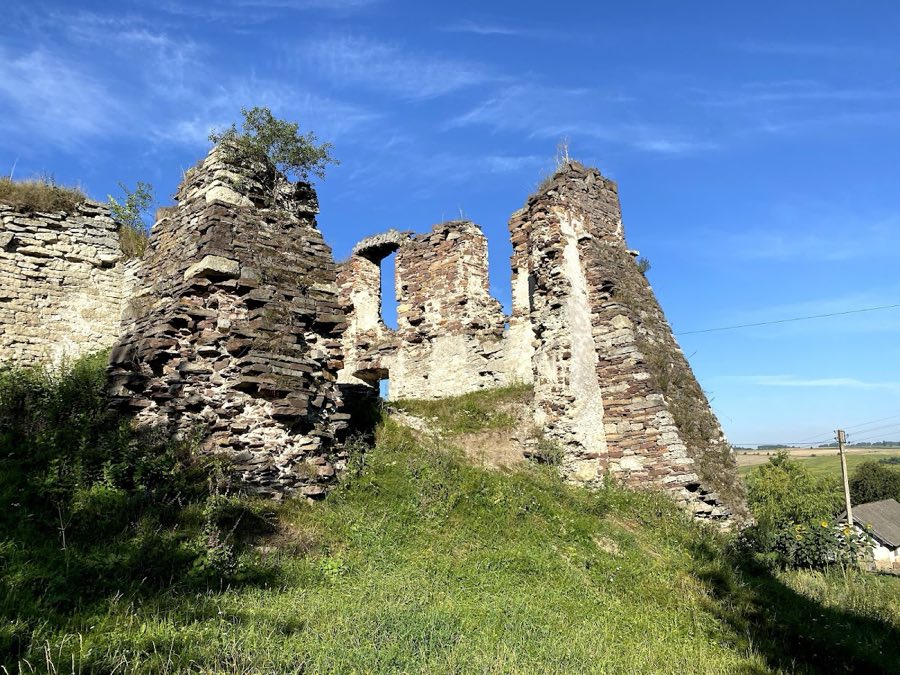
Bieniewski Castle, Rakovets
Rakovets, Ukraine
CastleRuin17th century
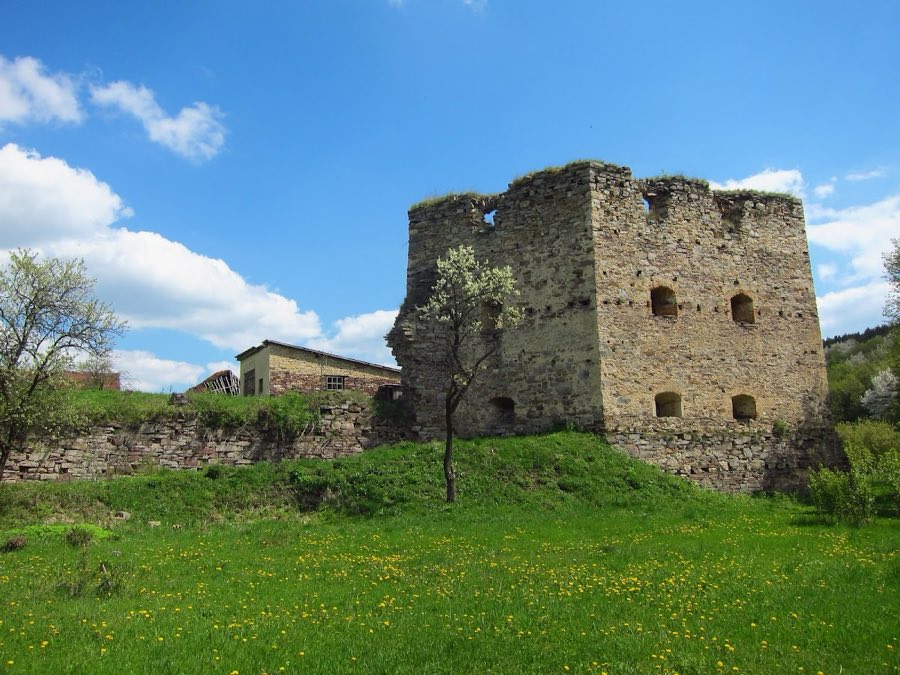
No. 23622
Castle · Ukraine
No. 23622 · 48.907 N, 25.338 E
Quick summary
Zolotyi Potik Castle is a castle in Ukraine with origins associated with the 17th century.
See all castles in UkraineZolotyy Potik Castle stands in Zolotyi Potik, Ukraine, and was built under the authority of the Polish crown.
Construction took place around the turn of the 16th and 17th centuries, financed by Voivode Stefan Potocki and his wife Maria Amalia Mohylanka-Potocka, and is said to have been erected by order of King Sigismund III Vasa following the period’s defensive planning practices. After completion the fortress became the preferred residence of Stefan Potocki and remained the family home of Jan Potocki’s household until the close of the eighteenth century.
The castle saw violent military action in the seventeenth century. In 1672 Turkish and Tatar forces serving Sultan Mehmed IV captured the stronghold after two days of resistance. On 4 and 5 September 1676 a Turkish–Tatar army under the beylerbey of Damascus, Ibrahim Pasha, known as “Sheytan,” took the castle again and inflicted severe damage. The main load-bearing wall was blown up, the complex was set on fire, the corner towers and the entrance tower suffered the greatest destruction, and those inside the walls were executed with their throats cut.
After the Ottoman forces withdrew the guardians of the underage owner, Stefan Aleksander Potocki, carried out partial reconstruction, work that reached completion at the beginning of the eighteenth century. Following the first partition of Poland in 1772 the locality passed to Habsburg Austria, yet the Potocki family kept ownership until 1838, when Alfred Potocki sold the estate to the Olszewski family. Around 1840 the new owner commissioned an Italian architect to convert part of the fortification into a palace; during those works sections of the bulwark were removed and carved stone elements were taken from the fortress and reused in the new residence. The nineteenth-century remodelling produced changes to the palace façade and interiors, introduced sculptural decoration including a bas-relief of Adam Mickiewicz, and saw landscaping such as the planting of lime trees. The site is now designated an architectural monument of national significance and is managed within a regional reserve for castles.
The castle occupies a compact, regular plan set at the centre of the settlement beside a small stream that feeds the Zolotyi Potik pond, with houses once clustered close to the outer walls. The defensive circuit originally comprised thick curtain walls and four multi-storey corner towers linked by the enclosing wall. Builders used local masonry, including sandstone and limestone together with broken fieldstone, and in some accounts a locally sourced granite-coloured field stone appears in the fabric.
The fortification’s towers and gate retain clear military features. Corner towers rose to three storeys and contained embrasures for firing; wooden soldier galleries ran along parts of the towers and walls. The main entrance stood in a north gate tower, also three storeys and square in plan, and the gate displays the Potocki Piława coat of arms. Descriptions record the corner towers with multi-faceted ground plans, variously rendered as six-sided or five-sided in different accounts.
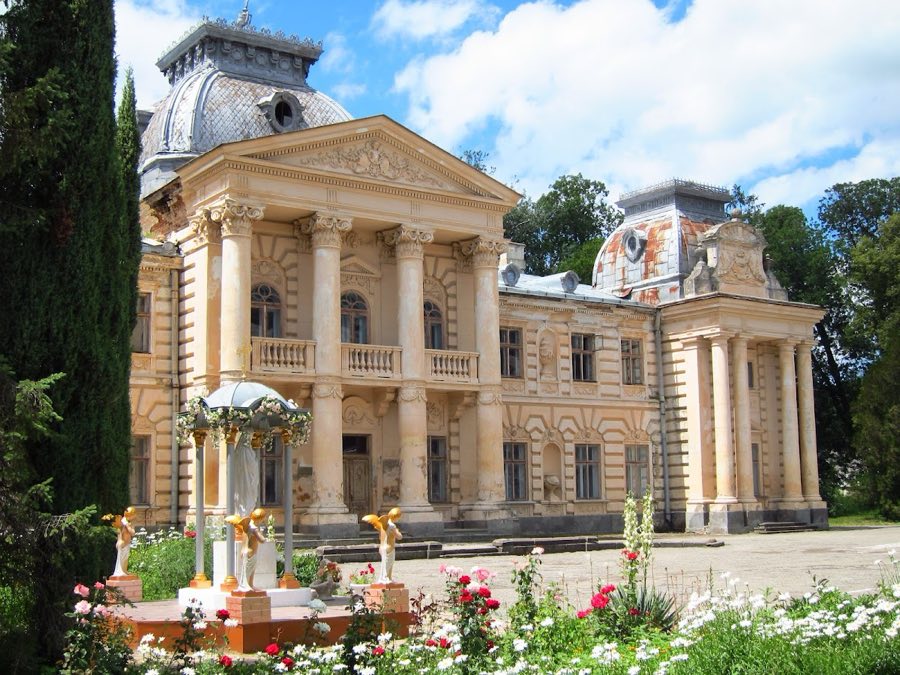
A residential palace adjoined the defensive line on the north and north-west side, lying rectangular in plan and built with walls recorded as up to 1.8 metres thick. The palace was originally a single storey with a later additional floor, and nineteenth-century remodelling converted part of the medieval fabric into a more domestic, stylistically altered façade and interior. Carved elements taken from the fortifications were reused in that conversion, and decorative additions from this period include sculptures and a bas-relief of the poet Adam Mickiewicz.
Defensive outworks once surrounded the main enclosure. Contemporary and later descriptions record ramparts and a water-filled moat encircling the site, loopholes throughout the walls, and dungeons beneath the complex. A well stood in the western part of the inner yard until the nineteenth century when it was removed.
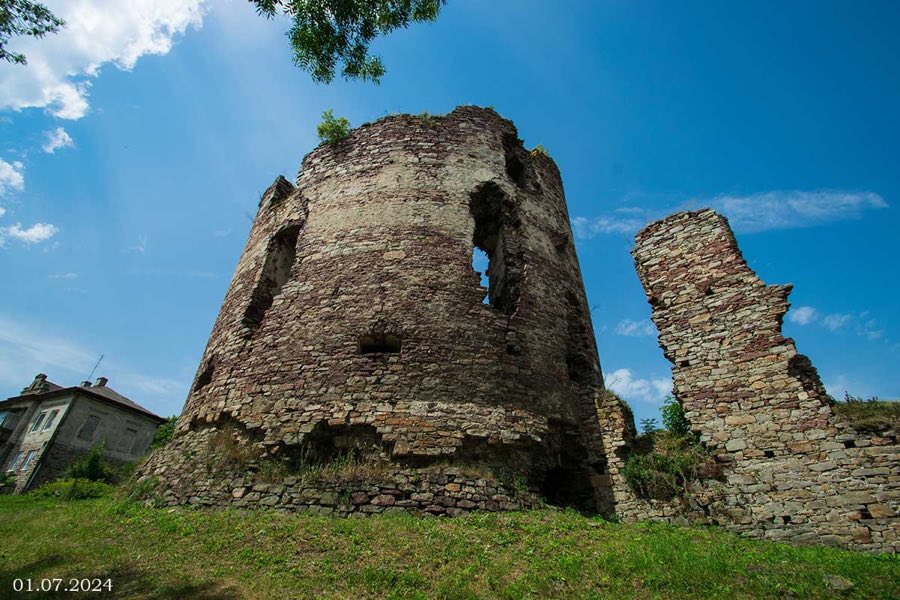
Today substantial lengths of the enceinte survive along with the gate tower and three corner towers, while other parts of the circuit and the palace are recorded as partly ruined. The western tower is noted as largely lost in some accounts. Overall the ensemble remains in partial desolation, with surviving masonry and reused carved details attesting to its long sequence of military use, damage, repair, and domestic transformation.
No. 71765
No. 89551
No. 46807
No. 38037
Comments
Comments for Zolotyi Potik Castle will require a verified account before posting.
We'll send a verification link before your first comment is published.