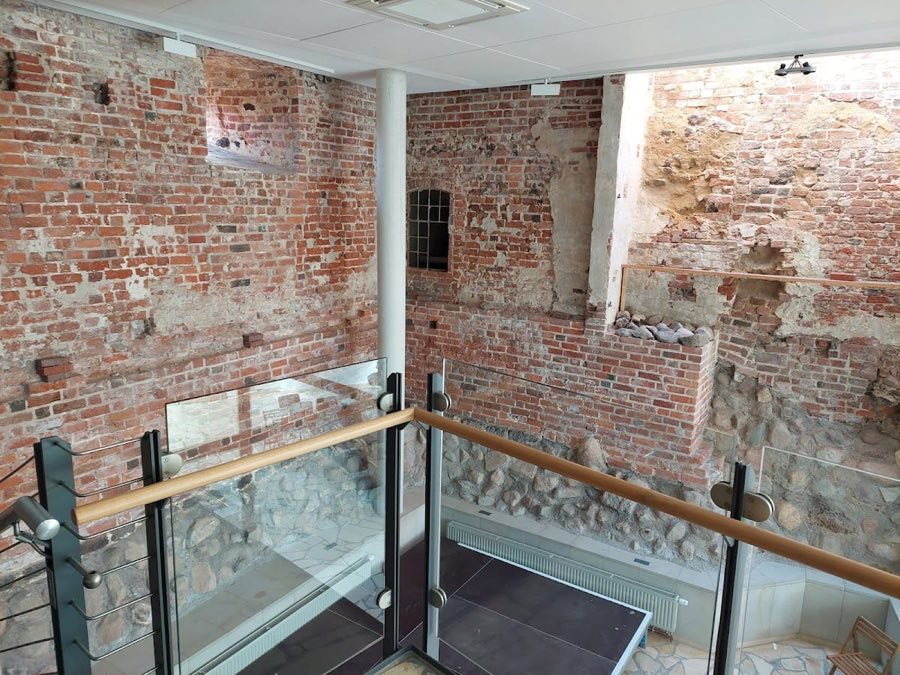
No. 71138
Burg Rethem
Germany
CastleRuin14th century
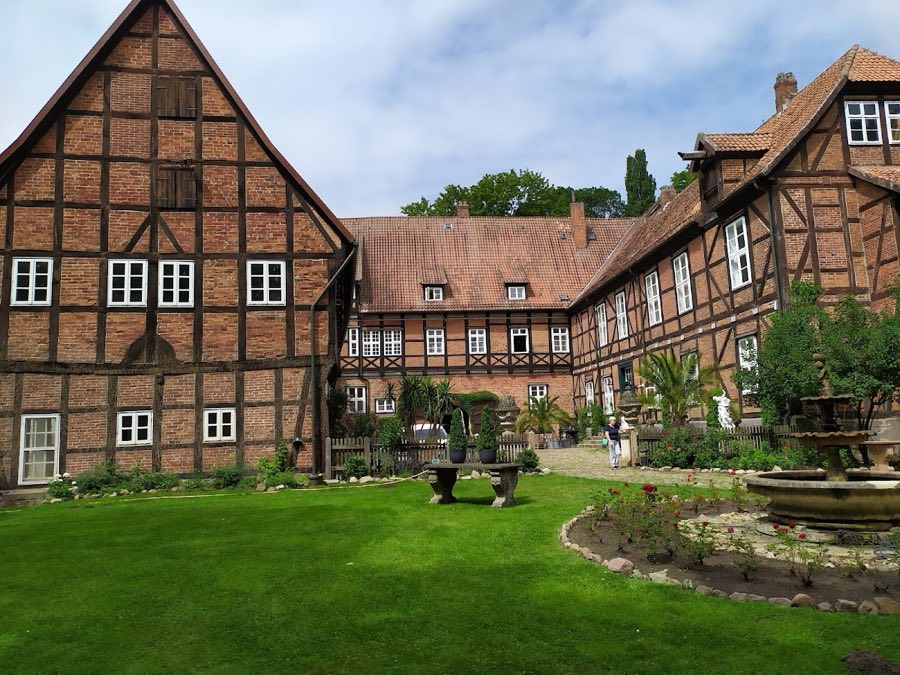
No. 76937
Castle · Germany
No. 76937 · 52.759 N, 9.558 E
For events
Ahlden House is marked as a château or castle venue lead. Capacity, indoor/outdoor spaces, catering rules, and accommodation options are published only after public verification.
Event types: Private events, Cultural gatherings, Filming and photography
Quick summary
Ahlden House is a castle in Germany with origins associated with the 16th century.
See all castles in GermanyAhlden House in Ahlden (Aller), Germany, is a mid-16th-century three-winged water mansion constructed under the German princely house of Brunswick-Lüneburg beginning in 1549, during the Renaissance period. Erected beside the river that then formed the defensive setting of a water castle, the house became a regional administrative center and later gained wider notoriety through its links to local rulers and to the imprisonment of a high-born duchess. Its long use for justice and governance made it one of the principal manorial seats in the area from the late medieval period into the modern era.
The site’s story begins earlier on the opposite bank, where a 13th-century fortification known as Bunkenburg stood before falling into ruin. A local noble family carrying the name Ahlden appears in records from the 13th century, and by 1433 the fortification that would become Ahlden House had belonged to the Diocese of Minden. In 1431 the lordship passed to the Duke of Lüneburg, and the princely administrative office for Ahlden was created that same year to manage the territory and exercise legal authority. From 1443 until 1575 the seat of Ahlden was held in mortgage by the von Mandelsloh family.
Work to replace earlier buildings on the riverbank began in 1549, producing the three-winged residence that occupies the site today. The south wing reached completion in 1579 under Duke William the Younger and displays an ornate Renaissance-facing toward the inner court. The principal west wing was added in 1613 for Duke Christian the Elder of Brunswick-Lüneburg by his seneschal Johann Behr; that campaign of building also produced features connected with the castle’s former water-defences. During the same year a roof timber became dislodged and seriously injured fourteen workmen.
Natural events altered the house’s setting in 1618 when a flood forced the Aller to shift its course eastward. Because an embankment downstream then diverted the Leine, the Leine flowed past Ahlden in the old Aller channel; by 1648 that channel had become a partly dried oxbow now called the Old Leine. In the Thirty Years’ War imperial troops under Count Tilly occupied the house after a one-day siege, and those garrisoned there repelled an attack by some eight hundred Danish assailants.
In the decades that followed the building’s role turned increasingly administrative. From 1726 it served as the residence of the state seneschals, and beginning in 1784 it underwent major alterations to make the rooms suitable for official business, with part of the complex also used as a prison. From 1884 the local princely office was dissolved and its responsibilities transferred to the Fallingbostel district; the house then hosted the district court until 1972. Legal proceedings at Ahlden have a long lineage, with justice being administered in the settlement since 1310.
One of the house’s best-known episodes began in 1694 when Sophie Dorothea of Celle, a former duchess of Brunswick-Lüneburg, was brought to Ahlden after her divorce and confined in the north wing until her death in 1726. Her presence inspired works of literature and film in later centuries, including treatments by Theodor Fontane and Arno Schmidt and a 1948 motion picture titled Königsliebe. A substantial program of renovation paid for with state funds concluded in 1975, after which an antiques and arts auction business acquired the property under the condition that the inner court remain open to the public during daytime hours.
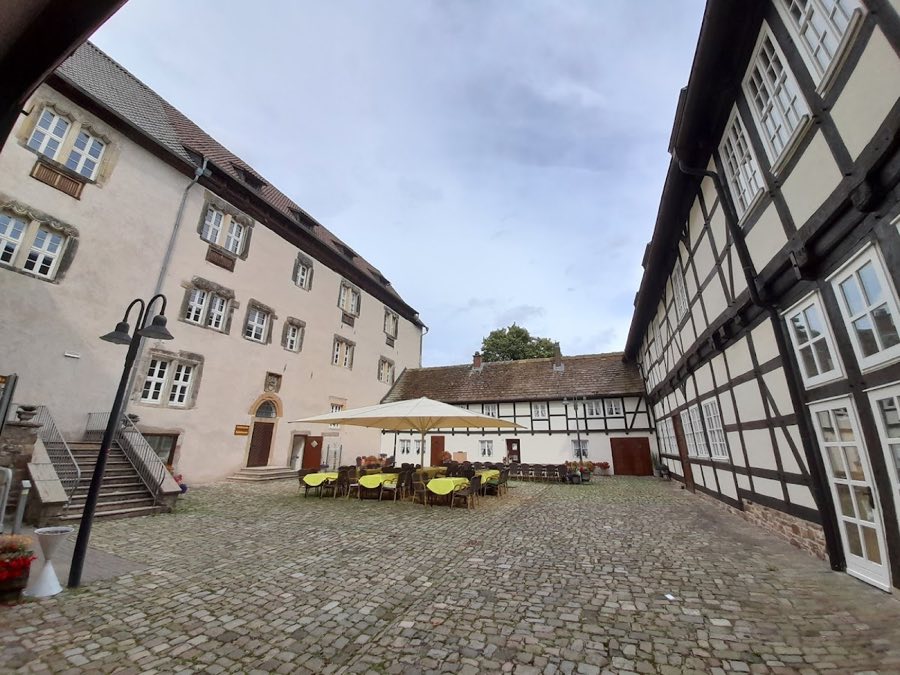
Ahlden House stands as a U-shaped, two-storey residence whose primary construction is exposed timber framing filled with brick. The complex was originally designed as a water-defended house on the riverbank, with three wings enclosing an inner courtyard. The west wing’s ground floor is built of brick while the upper structure follows the timber-frame method, reflecting building practice of the 16th and 17th centuries.
The south wing is the oldest surviving part of the present mansion, finished in 1579 under ducal patronage. It combines timber framing with brick infill and its interior-facing wall carries an ornate Renaissance frontage dated by an inscription on a beam. The west wing, completed in 1613, functions as the main range and retains evidence of its former defensive entry: recesses in the entrance passage mark where a drawbridge once fitted. During the west wing’s construction a heavy roof joist fell and seriously injured fourteen workers, an event that belongs to the building’s recorded history.
The north wing received a rebuilding campaign in 1705 to repair and update its fabric after a period of decay. Historically the three ranges housed both living quarters and service rooms, with stables and coach houses located within attached service ranges. Around the outer perimeter there was originally a gatehouse that controlled approach to the court; that gate structure appears as a separate building in a 1654 engraving and was probably removed about 1800.
Defensive earthworks shaped the site’s earlier appearance. A double moat and an earthen rampart surrounded the house, the rampart being levelled in 1690 when the embankment was reshaped as a French-style pleasure garden. The moats were progressively filled during the 19th century, though work has left fragments of the outer wall in the north and a surviving section of moat on the south and east sides. Today the property remains in private hands and serves as an antiques and arts auction headquarters, with the inner courtyard kept open to the public during daylight and limited interior access arranged when auction items are shown.
No. 71138
No. 79518
No. 30831
No. 96079
Comments
Comments for Ahlden House will require a verified account before posting.
We'll send a verification link before your first comment is published.