No. 76937
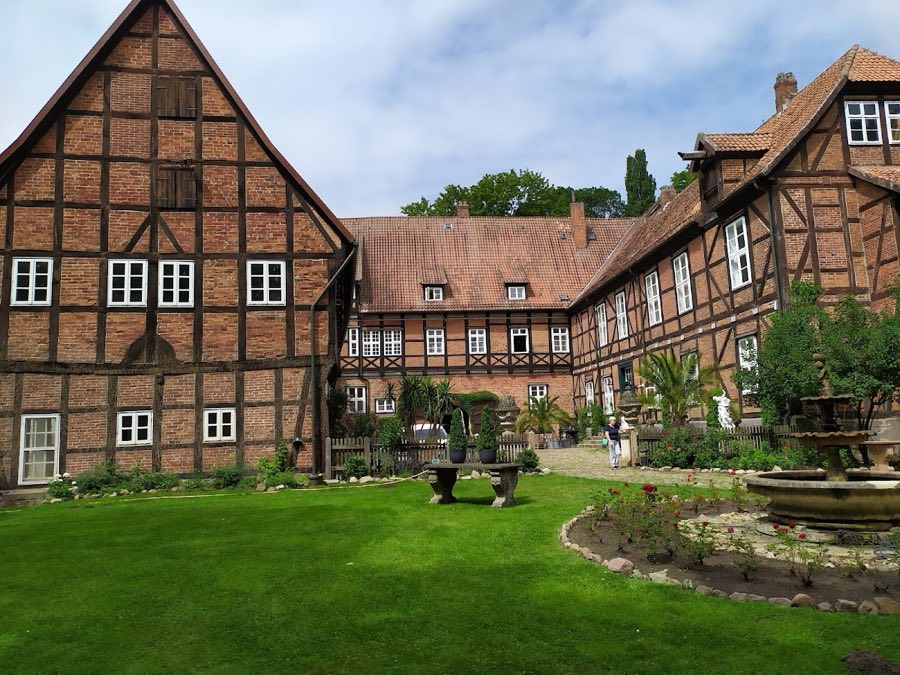
Ahlden House
Germany
CastleRuinFor events16th century
No. 71138
Castle · Germany
No. 71138 · 52.785 N, 9.386 E
Quick summary
Burg Rethem is a castle in Germany with origins associated with the 14th century.
See all castles in GermanyBurg Rethem is situated in the town of Rethem in present-day Germany. It was constructed in the early 14th century by the dukes of Brunswick-Lüneburg, a German dynasty, as a fortress marking the border against the counties of Hoya.
Before this castle, an earlier fortification named Altenburg existed around 1200. This older site was transferred by Duke Henry the Lion to the Counts of Wölpe and later granted as a fief to the local Rethem family. The 14th-century Burg Rethem took on an important role due to its position near a critical crossing over the Aller river, which was a key route for the regional salt trade from Lüneburg. Its location made it a defensive stronghold guarding against neighboring territories that also held castles in Hoya and Nienburg.
The castle appears in historical records from the early 1300s, with a 1311 mention of a castle captain and guards. In 1314, Duke Otto II used the site to host a meeting aimed at settling regional disputes. By 1371, the castle was temporarily pledged to the Bishop of Verden, who undertook construction work. During the turbulent period of the Lüneburg War of Succession, lasting from 1370 to 1388, Burg Rethem and its surrounding town suffered considerably. In that era, the imperial ban of 1371 affected the castle, and control shifted in 1373 when Duke Albert of Saxony took over. He operated from Burg Rethem as a base against local knights and the Count of Hoya. Records from 1383 mention significant stone construction efforts on the site.
Starting in 1386, the castle and town were placed under a long-term pledge to the city of Lüneburg, a period that lasted more than two centuries. Throughout this time, the castle’s role in protecting the crucial salt trading route remained vital. During the Schmalkaldic War in 1548, Burg Rethem was captured and plundered, experiencing damage to buildings and its bridge, though repairs followed shortly after. A 1552 sketch by Dietrich von Mandelsloh, who held the pledge then, shows details including a surrounding moat and bridge, an enclosed courtyard known as a zwinger, three towers, a smaller stone structure called the Reisigenstall, and a larger building serving both defensive and residential functions.
In 1565, the castle became the seat of the newly established Amt Rethem, an administrative district founded by Dukes Ernst and Wilhelm of Lüneburg. This Amt functioned until its dissolution in 1859. By the mid-1500s, the castle’s defenses were expanded with bastions, walls, ditches, and likely wooden palisades. However, by the mid-1600s, the structure had fallen into disrepair, prompting Duke Christian Ludwig to order repairs in 1661.
The 18th century brought significant changes. Older buildings were demolished to make way for a new administrative building, the Amtshaus, while the Reisigenstall was converted into stables. The main residential and defensive building was repurposed for storing the harvest and ultimately torn down in the early 19th century, signaling the end of the castle’s military role. After the administrative seat relocated in 1865, the castle site gradually declined and by 1874 consisted only of scattered buildings. Over the following decades, fires and war damage, notably in 1930 and 1945, reduced the ruins to a few wall fragments.
In 1974, the town of Rethem took ownership of the site, utilizing it for municipal storage and maintenance activities. Archaeological investigations took place in 2000–2001 before the construction of a cultural center. These excavations uncovered foundations and artifacts, which were preserved and integrated into the new building completed in 2005, known as the Kulturforum Burghof.
Burg Rethem was originally designed as a water castle, a type of fortress surrounded by water for defense. In the 16th century, its fortifications were enhanced with bastion-like structures, and it was enveloped by a moat that was crossed by a bridge. The castle featured a defensive enclosed courtyard called a zwinger, three towers, and two notable stone buildings: a smaller one called the Reisigenstall and a larger one serving as both a residence and a defensive stronghold.
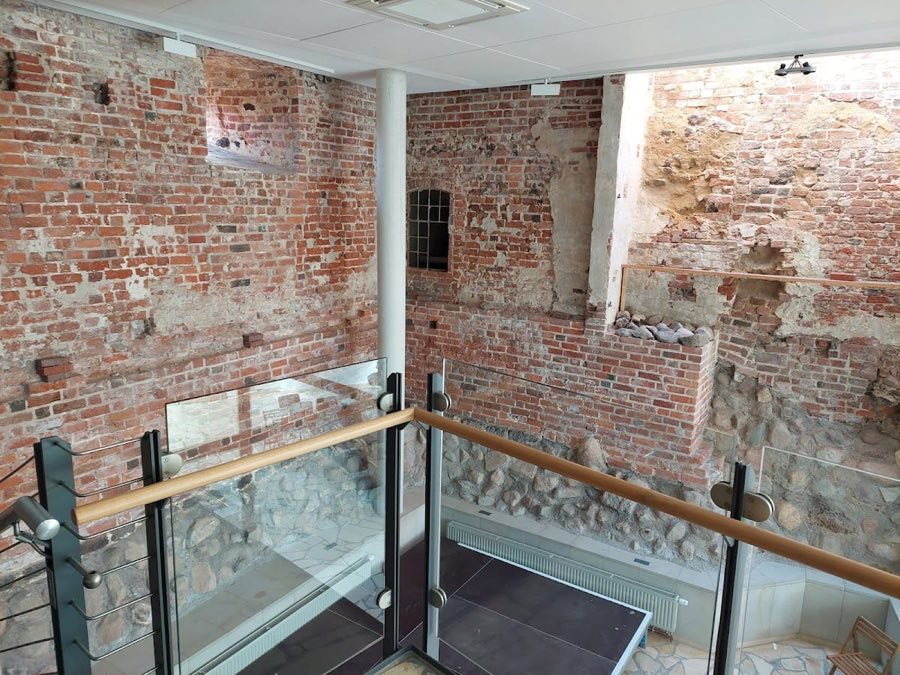
Archaeological excavations revealed substantial foundations approximately 2.4 meters wide constructed from large rounded stones known as glacial erratics. These supported the main residential and defensive building. Stone foundations and traces of brick walls from this structure have been preserved and incorporated into the modern cultural center that now occupies the site. Two oak timber samples recovered during the digs were dated by tree-ring analysis to have been felled in 1331 and 1337, supporting the early 14th-century construction phase of the castle’s earliest buildings.
Among the finds were old wells, fragments of late medieval pottery and glass, animal bones, roof tiles, and a crossbow bolt, illustrating aspects of life and defense at the castle. Beneath the Reisigenstall, which functioned as a stable, complete skeletons of horses were unearthed, alongside butchery waste from cattle, pigs, and poultry, attesting to the building’s use for animal husbandry and food preparation.
Before constructing the cultural center in 2004, a large ring wall was stabilized. This wall measured about 50 meters in length, up to 2 meters thick, and reached heights of up to 5 meters in places. It was reinforced through ground injections and repairs to the masonry to preserve its integrity. Portions of this ring wall remain visible today, incorporated into the fabric of the newer building.
The Kulturforum Burghof integrates several design features that reflect the castle’s historic architecture, such as a small observation tower crowning the roof, stepped gables reminiscent of traditional fortifications, battlement-like parapets, and corner accents made from natural stone. Historic emblems and old hollow roof tiles add further links to the medieval castle. The entire site occupies roughly a 50 by 50-meter area located about 50 meters west of the Aller river, with the main road and river crossing nearby to the north.
No. 76937
No. 79518
No. 98261
No. 30831
Comments
Comments for Burg Rethem will require a verified account before posting.
We'll send a verification link before your first comment is published.