No. 35130
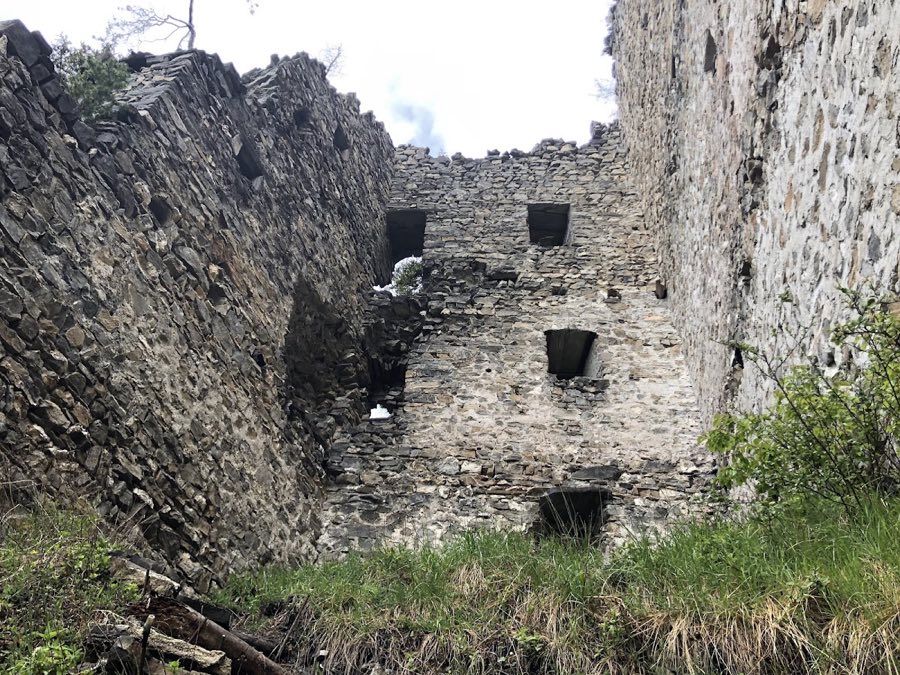
Burg Ober-Ruchenberg
Switzerland
CastleRuin13th century
No. 16338
Castle · Switzerland
No. 16338 · 46.913 N, 9.572 E
Quick summary
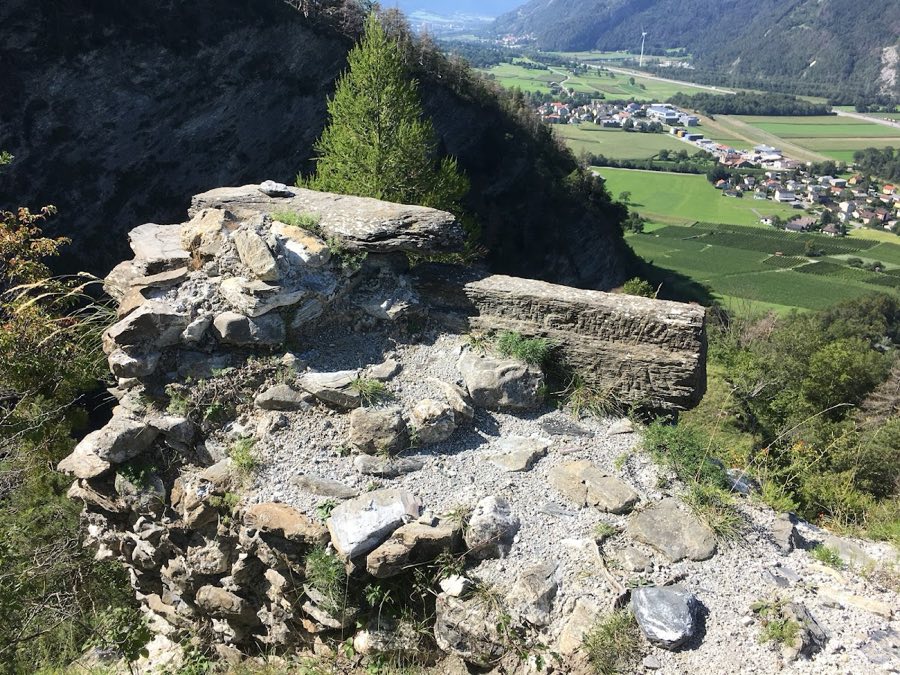
Alt Aspermont Castle, Trimmis is a castle in Trimmis, Switzerland with origins associated with the 12th century.
See all castles in SwitzerlandAlt Aspermont Castle was erected in the 12th century by the Aspermont family, who served as unfree knights under the Bishop of Chur. Members of the family appear in surviving records from the mid 1100s: individuals such as Ulrich and Schwicker are named by 1149, and a group including Swiker, Ulrich and Heinrich, together with Heinrich’s son Ulrich, is recorded as witnesses by 1170. The Aspermonts later established residences at Neu-Aspermont (now in Jenins) and Fracstein. During the later 13th century the hilltop stronghold at Trimmis passed into episcopal hands; Bishop Heinrich von Montfort (episcopate 1251–1272) is recorded as purchasing the site.
In 1275 the bishop granted the castle as a life fief to the Freiherren von Vaz. The Vaz retained the holding until the death of Walter IV von Vaz in 1284, though competing claims persisted and an arbitration in 1299 formally settled those disputes when Johann von Vaz renounced his rights. Across the 14th century the castle changed hands several times: in 1328 Bishop Johann pledged the property to Ulrich von Aspermont, and after Ulrich’s death in 1338 ownership passed to Ludwig and Walter von Stadion. The site was pledged again in 1354 to Heinrich and Martin Buwix, with further transfers occurring in later decades.
The castle became entangled in regional conflict during the Schamserfehde of 1452, when forces of the League of God’s House besieged the stronghold; an oath-bound settlement allowed the bishop’s garrison to withdraw unharmed. In 1496 the bishop sold the property to Ritter Hartmann Rordorff of Zürich, although episcopal officials continued to administer the place and used it at times as a local prison until about 1524. The Ilanz Articles of 1526 curtailed the bishop’s secular authority in the region and removed the need for an on-site bailiff; thereafter the castle was abandoned and began to fall into decay.
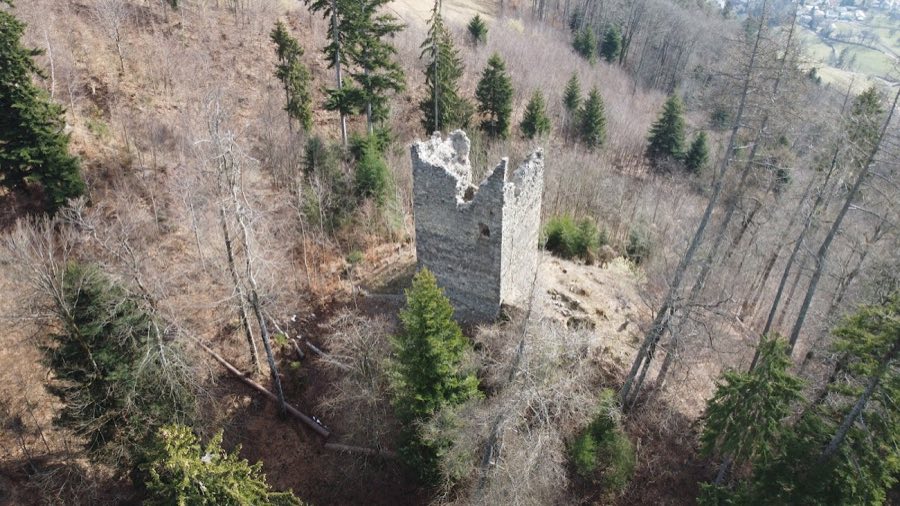
During the Bündner Wirren, in the course of the second Austrian intervention, Austrian troops occupied the ruin in 1622. Contemporary accounts note a skirmish between men from Zizers and Trimmis and identify the ground northwest of the ruin by the historic name Molinära. The main tower survived into the late 19th century but collapsed on 11 April 1878; an 1875 photograph shows the tower standing with three walls to about five storeys, the southern portion already slumping down the slope. In 1930 Erwin Poeschel recorded a cistern on a lower southwest terrace. Once described among the larger castles of the region, Alt Aspermont now survives only in limited ruinous fragments.
The castle occupies a rock spur above Trimmis at roughly 768 metres above sea level, sited on the highest point of a fortified promontory protected on the mountain side by a natural saddle-shaped ridge. The layout follows the typical medieval hilltop fortress model, concentrating vertical defences at the summit where the principal tower stood. Builders used local stone masonry set directly onto the rock outcrop, producing a compact defended compound that controlled the lower approaches and the adjacent manor ground historically called Molinära.
Archaeological and architectural traces on the highest point show the foundations of a rectangular tower. Surviving masonry reveals a sequence of building phases, with a clear joint indicating that the north-west wall belongs to an earlier construction phase than the south-west wall. The main tower remained visible into the late 19th century and appears in an 1875 photograph as three walls rising to about five storeys, the southern portion already having slipped down the slope before its final collapse on 11 April 1878.
On a lower southwest terrace a cistern was recorded by Erwin Poeschel in 1930. The extant walls and foundations are fragmentary, reflecting episodes of collapse and long-term decay; the remaining structural fragments are concentrated at the summit and on nearby terraces where the tower and ancillary masonry once stood.
No. 35130
No. 69913
No. 80132
No. 51041
Comments
Comments for Alt Aspermont Castle, Trimmis will require a verified account before posting.
We'll send a verification link before your first comment is published.