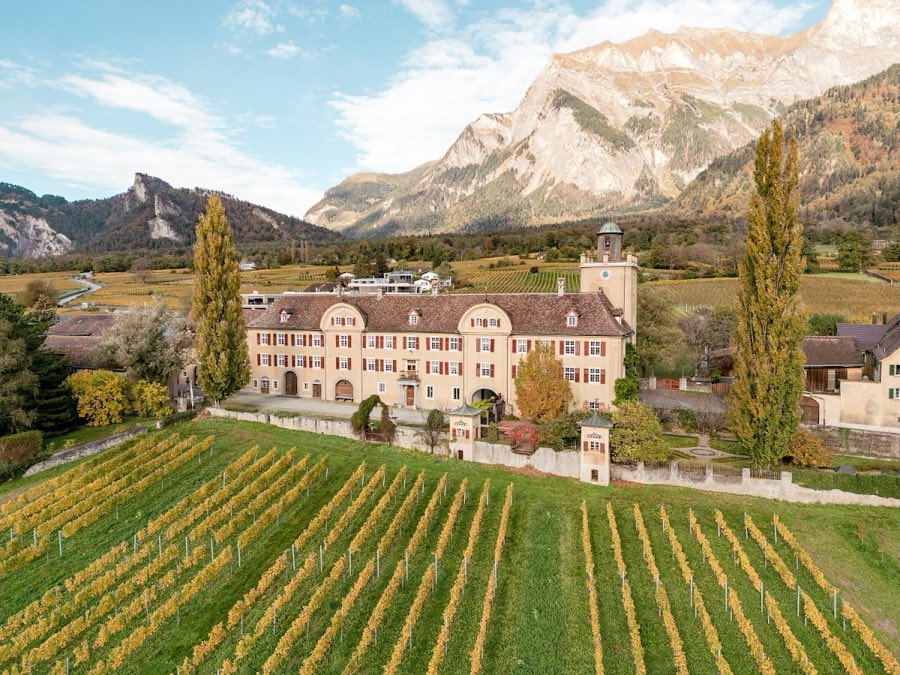
No. 37244
Salenegg Castle
Switzerland
CastleRestored19th century
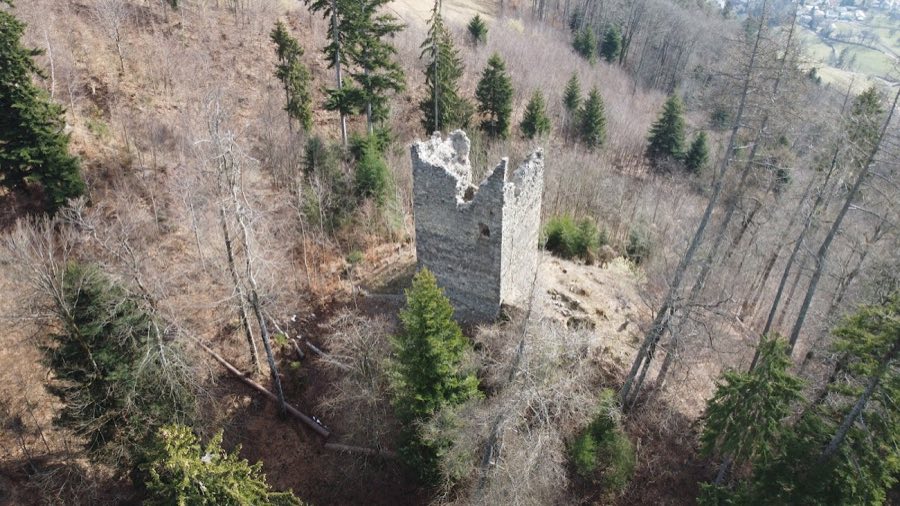
No. 51041
Castle · Switzerland
No. 51041 · 46.994 N, 9.580 E
Quick summary
Klingenhorn Castle is a castle in Switzerland with origins associated with the 13th century.
See all castles in SwitzerlandKlingenhorn Castle is a ruined medieval fortress in Malans, Switzerland, probably erected in the 13th century for the Lords of Vaz or for the Lords of Aspermont.
The castle was likely occupied early on by a ministerialis household, that is, by unfree knights serving a higher noble, who managed the site and its surrounding court. Ownership is uncertain in the first centuries but the settlement clearly belongs to the high medieval period of local feudal control.
By 1372 the von Matsch family held the property. On 12 March 1372 Ulrich von Matsch pledged the estate known as Klingenhorn together with the court of Malans to a Rudolf or Ulrich von Underwegen for a payment of 200 marks, while explicitly reserving the right for the Matsch family to access the castle. In 1420 the property belonged to Ulrich Seger, who served as vogt and judge over Malans, and at that date the castle was described as uninhabitable.
The structure was probably gutted by a fire, and by 1441 Klingenhorn is recorded as a ruin. Around 1470 the site passed into the hands of the Schlandersberg family. On 26 July 1497 Diepold (also written Deipold) von Schlandersberg and his wife conveyed their hereditary rights in the Klingenhornberg to Hans Sutter of Malans as a fief, with the condition that the hill be returned to the Schlandersbergs if they rebuilt the castle. The castle was never reconstructed and remained in ruin thereafter.
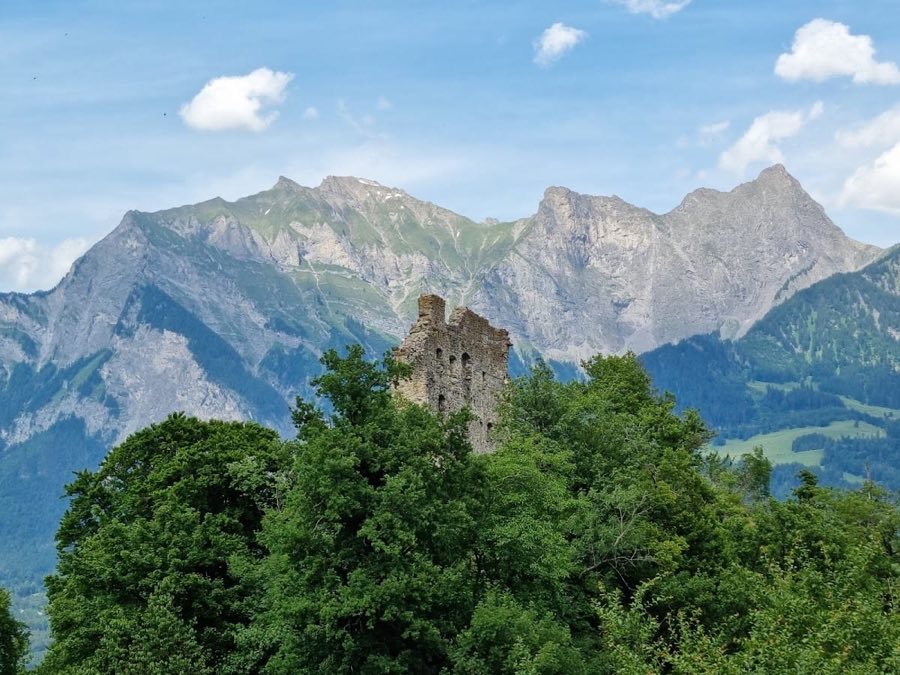
The castle crowns an elongated rock spur on the south side of the Ülltobel at about 934 metres above sea level, rising over 600 metres above the village of Malans with one flank dropping steeply into the Üllbach gorge. The site is set on a narrow hilltop separated from the slope by a neck ditch that may have been enlarged by human activity; a ditch encircles much of the summit and provided additional protection to the main tower and yard. The approach from Malans follows an unmarked forest path that takes roughly three quarters of an hour on foot; motor vehicles are not permitted.
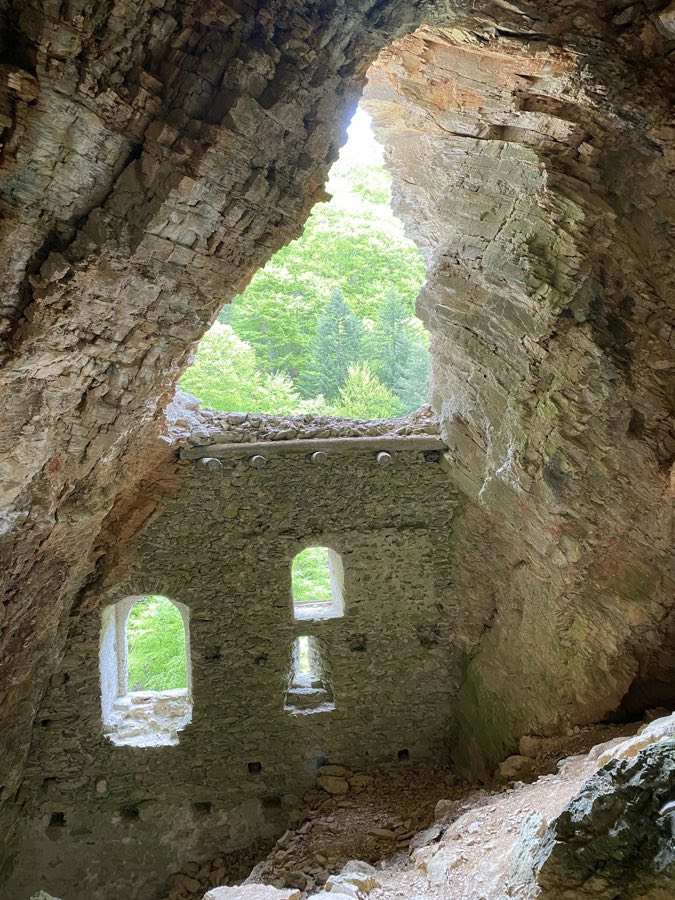
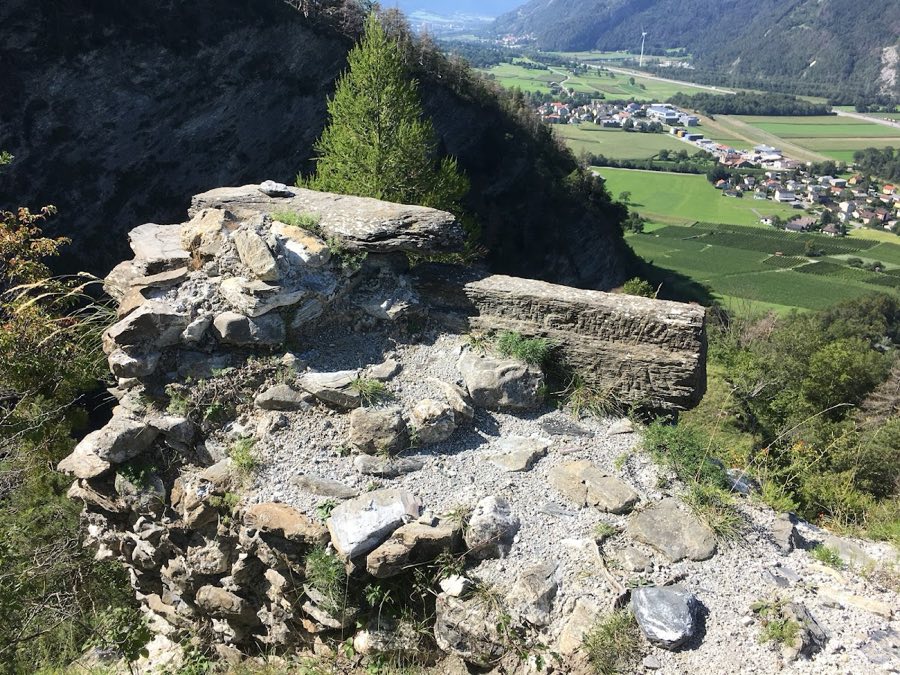
The main tower survives to the height of three storeys. Its upper portions are in poor condition and overgrown, while the interior is largely filled with rubble and plant growth. Traces of a lime-based plaster technique known as Pietra Rasa, with incised lines simulating masonry joints, remain on the tower exterior. Inside the tower, plaster fragments and sets of beam holes mark the original floor levels and make the former storey heights readable despite the collapse debris.
Access arrangements and openings in the tower show adaptation over time. A loophole in the first storey was later enlarged to serve as a narrow ground-level entrance, while the high entrance on the second storey was subsequently bricked up. Beside that second-storey entrance are two smoke outlets and a narrow arrow slit. An opening on the third storey survives but its original purpose can no longer be determined. Two fireplaces set into the walls are still visible, indicating hearths once used inside the defended core.
Adjacent building remains stand to the west of the tower and beam holes on the north side attest to additional timber-framed structures that once adjoined the stonework. A broad outer bailey occupied a lower terrace to the west, and sections of dry-stone walling survive in places. Remains of the enclosing ring wall are now difficult to discern, but the overall arrangement of summit tower, encircling ditches and terraces preserves the layout of a compact medieval hill castle.
No. 37244
No. 38942
No. 69913
No. 16338
Comments
Comments for Klingenhorn Castle will require a verified account before posting.
We'll send a verification link before your first comment is published.