No. 35729
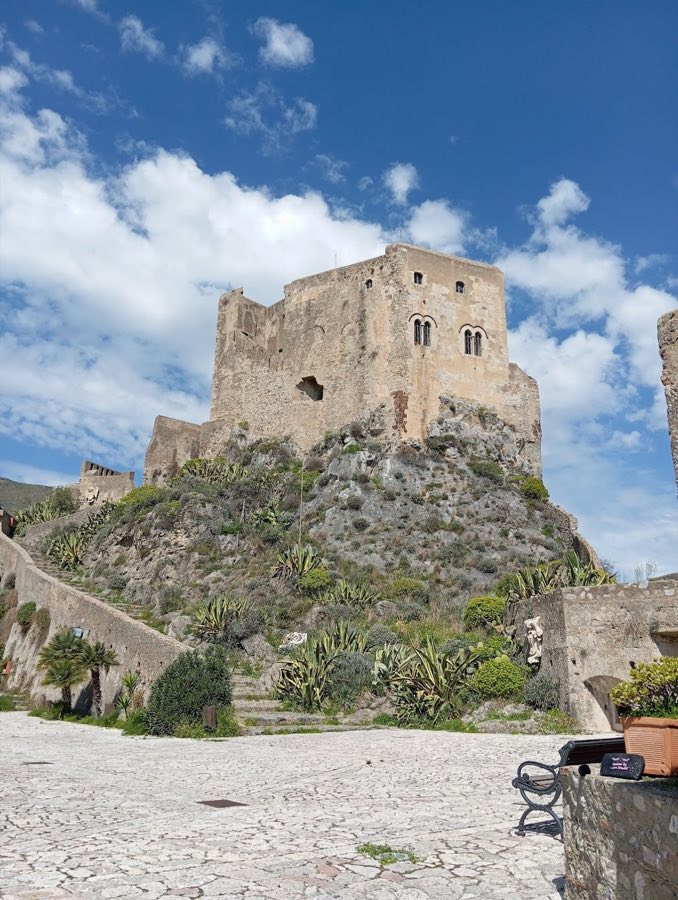
Castello Rufo Ruffo
Italy
CastleRuin13th century
No. 19073
Castle · Italy
No. 19073 · 38.106 N, 15.644 E
For events
Aragonese Castle, Reggio di Calabria is marked as a château or castle venue lead. Capacity, indoor/outdoor spaces, catering rules, and accommodation options are published only after public verification.
Event types: Private events, Cultural gatherings, Filming and photography
Quick summary
Aragonese Castle, Reggio di Calabria is a castle in Reggio di Calabria, Italy with origins associated with the 6th century.
See all castles in ItalyThe Aragonese Castle in Reggio di Calabria, Italy, was first established by settlers from the Greek city of Chalcis in the eighth century BCE.
As the ancient town expanded toward the sea, the hill served as the citadel during the Hellenistic period. During the Roman imperial era the walls and towers probably fell into disrepair and became ruins. In 536 the general Belisarius ordered the immediate rebuilding of stone walls during the Gothic–Byzantine conflicts, and a castle on the hill is documented from that year.
In 1059 control passed from the Byzantines to the Normans, who used the site as a stronghold and keep. Over the following two centuries the fortification was substantially rebuilt and enlarged, with major interventions under Emperor Frederick II of the Hohenstaufen dynasty. The Hohenstaufen phase produced a roughly quadrangular plan with strong corner towers, a form that survived until the earthquake of 1908.
After 1266 the castle came under Charles I of Anjou and underwent repeated strengthening during the struggles between the Angevin and Aragonese houses. Work is recorded in 1327, under Queen Joanna I, and in 1382 King Charles III of Durazzo assigned responsibility and funding for particular towers and the castle church. The site later passed into Aragonese and Spanish hands. In 1458 King Ferdinand I commissioned wide-ranging alterations supervised by Baccio Pontelli, which added two large crenellated towers on the south, an eastern ravelin, and a deep moat supplied by the Orangi stream.
In 1539 Pedro de Toledo reorganized the interior so the fortress could shelter roughly one thousand people. From then on the castle was repeatedly used as a refuge during Turkish incursions and was increasingly employed as a prison. The fortress largely kept the Aragonese form until it was converted into military barracks, and during the Risorgimento it served as a political prison and site of executions. Giuseppe Garibaldi captured the city and the castle in 1860.
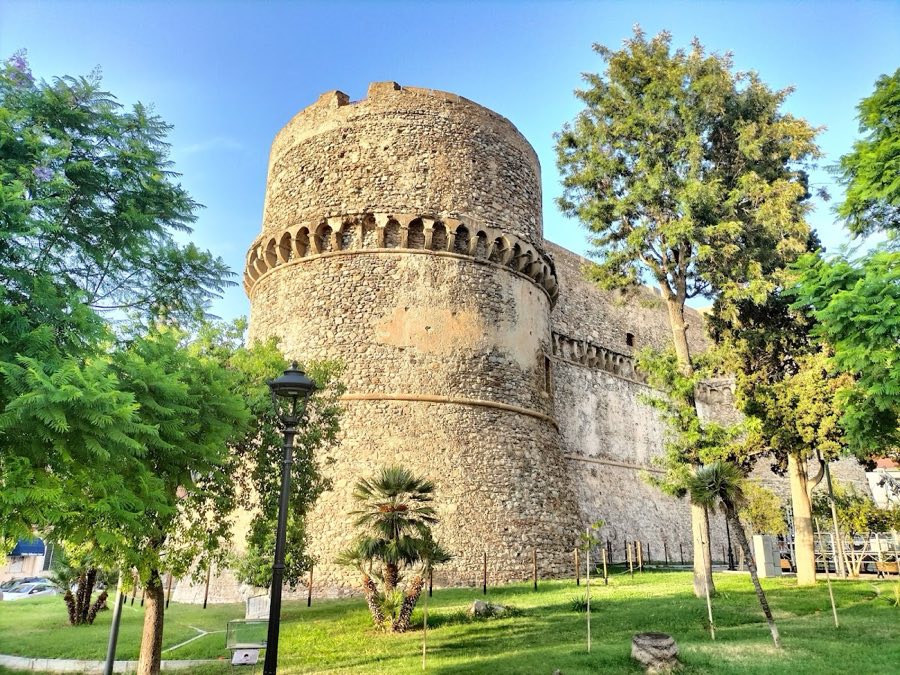
Municipal purchase for demolition was attempted in 1874 but met opposition. A provincial archaeological commission in 1892 ordered partial demolition while preserving two towers, and the castle was declared a national monument in 1897. An artillery brigade was stationed there in the early twentieth century. The earthquake of 1908 caused heavy damage but left two towers comparatively intact; large-scale removals carried out afterward cleared most fortifications to reorganize urban traffic, leaving the two southern towers and the stretch of wall that links them.
From 1956 the castle housed the observatory of the Istituto Nazionale di Geofisica, including seismic and meteorological centres. On 7 May 1986 a northwest wall section collapsed during inadequate restoration work, and subsequent years saw consolidation and repair of surviving walls and towers. In the late twentieth and early twenty-first centuries the site has been used for cultural and public events. Between 1983 and 1986 the circular hall of the southern tower was occupied by the environmental association KRONOS 1991 and by local cultural groups including the UNESCO Club of Reggio and ENPA. In 1981 the Italian Post issued a 70‑lire stamp depicting the castle.
The castle crowns a central hill at Piazza Castello and originally stood as an angular bastion of the town walls, guarding both the harbour and the mountain flank. The surviving record shows multiple building phases in stone, beginning with the early citadel traces on the summit and continuing through Byzantine, Norman, Hohenstaufen, Angevin and Aragonese campaigns of repair and alteration. Defensive masonry was renewed under Justinian and later altered to meet the requirements of artillery, with some walls raised to enable cannon fire.
The Hohenstaufen construction produced a roughly square keep with formidable corner towers built in dressed stone; this quadrangular layout and its towers are tied to the medieval rebuilding campaign led under Frederick II and his successors. Aragonese work in the mid-fifteenth century introduced two large crenellated towers on the southern face, and an external triangular earthwork on the east defended by a deep moat fed by the Orangi stream. Those Aragonese southern towers and the adjacent wall section are the principal surviving fragments after the twentieth-century demolitions.
Documentary records name a series of towers and subsidiary structures that frame the castle’s plan. The main tower called Magna de’ Cola, the Lombard tower, the Palombara tower, the Mese tower, the Santo Niceto tower, the gate tower, and the Malerba tower are all attested in historic orders; a castle church and nearby buildings are also recorded and were subject to specific funding arrangements in the late fourteenth century. Interior fittings documented in archives include rooms identified as kitchen and pantry, an oven, a large hall for gatherings, and entrance barbicans that protected the gate. Many of these elements underwent functional changes, for example when internal spaces were reorganized in 1539 to shelter up to about one thousand people and when the complex later served as a prison and barracks.
The site’s material fabric is principally stone masonry, with Byzantine repairs noted for their rebuilt stone walls. The 1908 earthquake left only two Aragonese towers and the stretch of wall between them in relatively good condition; a collapse of a northwest wall section on 7 May 1986 prompted further stabilization. Conservation work since that collapse has consolidated surviving walls and towers, and special stairways now provide access to ascend those preserved elements. Oral traditions and later commentary link specific towers to the documented medieval names, and the castle’s long sequence of adaptations records the transition from ancient citadel to artillery-era fortress.
No. 35729
No. 40413
No. 98643
No. 48700
Comments
Comments for Aragonese Castle, Reggio di Calabria will require a verified account before posting.
We'll send a verification link before your first comment is published.