No. 19073
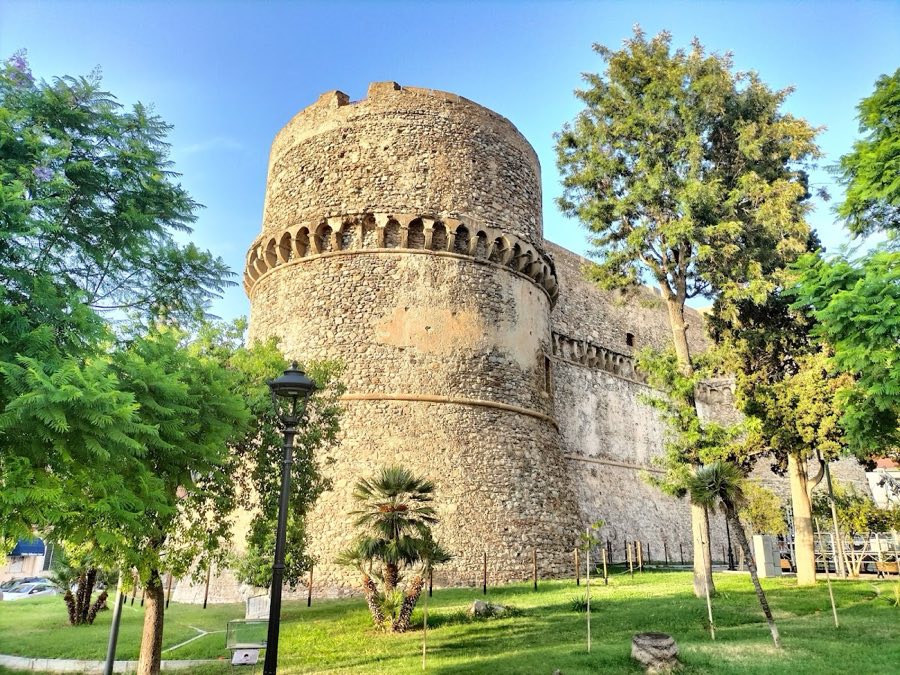
Aragonese Castle, Reggio di Calabria
Reggio di Calabria, Italy
CastleRuinFor events6th century
No. 48700
Castle · Italy
No. 48700 · 37.992 N, 15.898 E
Quick summary
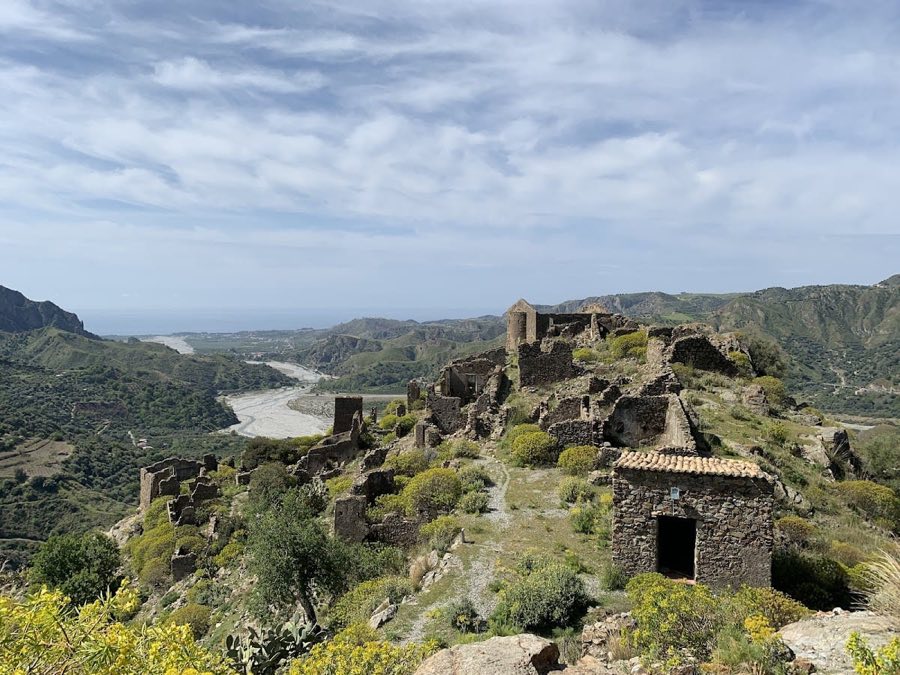
Castello Ruffo di Amendolea is a castle in Italy with origins associated with the 11th century.
See all castles in ItalyThe Castello Ruffo di Amendolea is a medieval stronghold located in the municipality of Condofuri, Italy. It was originally established by the Normans in the 11th century, with documented founding attributed to Riccardo di Amendolea, a Norman lord active in the region during that period. The castle’s construction likely evolved through several phases, reflecting the influence of diverse powers that controlled the area throughout the late Middle Ages.
During the Norman period, the castle’s strategic position in Calabria, a region historically marked by Greek cultural influences, allowed it to dominate the valley of the Fiumara Amendolea. This valley served as a significant boundary between the ancient city-states of Locri and Reggio Calabria, giving the fortress an important role in controlling access and movement along this frontier. The use of distinct construction techniques from the Norman era confirms the castle’s origin in that epoch.
In the 13th century, the castle experienced a notable event when Emperor Frederick II ordered a widespread demolition of fortifications in 1230. Evidence of this directive can be seen in the hammered masonry of the castle walls, suggesting partial destruction during this campaign. After this period, the fortress was rebuilt and subsequently became a focal point of regional conflict, frequently contested by powerful local noble families.
Among these families, the Amendolea lineage gave their name to the nearby village beneath the castle, but ultimately the Ruffo family gained control of the fief in 1624. The Ruffos maintained possession up to the abolition of feudalism in 1806. Throughout the 17th century, the castle was governed by three notable Ruffo bailiffs—A. Rebuffo, F. Polisteno, and G. Sangallo—who ruled the domain often with harsh measures. Their administration was supported by armed followers, including Albanian mercenaries and sporadically Saracen auxiliaries, enabling them to maintain their grip on power.
At its height, the castle community numbered about three hundred inhabitants, who gathered regularly in the chapel for worship. The long history of the Castello Ruffo di Amendolea thus reflects its evolution from Norman foundation, through imperial intervention and local noble rivalry, to a late feudal administrative center in southern Italy.
Today, the site of Castello Ruffo di Amendolea consists of surviving sections of its perimeter walls, a defensive tower, and the chapel once used by the castle’s population. The fortress was constructed using local materials, notably a mixture of boiled sulfur and iron extracted from rocks found beneath the structure. This unusual building material hardened over time to increase stability, although historic earthquakes in 1783 and 1908 inflicted significant cracking in the masonry.
Entry to the castle is gained via a long staircase leading upward from a nearby asphalt road, highlighting the elevated position of the fortress. Immediately to the right upon entering is a large chamber that functioned as a cistern, dedicated to collecting and storing drinking water. Despite the proximity of the Fiumara Amendolea river, water was not easily accessible, making this cistern a vital feature for sustaining the castle inhabitants.
The central area of the fortress was occupied by a large hall that now lies covered with grass and scattered rocks. On the eastern wall of this hall remain three sizeable windows, which were flanked by niches. These niches housed sentinels responsible for early surveillance, enabling the detection of approaching enemies and allowing warnings to be sent swiftly.
Surrounding the main hall were multiple towers designed for defense. One tower is especially notable for its entrance located on the first floor, accessible by a drawbridge—a defensive mechanism intended to impede enemy access. This architectural detail reflects the castle’s focus on protecting its occupants during attacks.
To the south of the castle’s core are residential buildings that once housed the community associated with the Amendolea family, as well as its principal religious structure, the protopapal or archpriest church. Archaeological discoveries within the church include a bas-relief uncovered in the 1990s and a Madonna statue attributed to the Sicilian sculptor Antonello Gagini. This statue originally lost its head, which was replaced by a left-facing one; the original, turned to the right, was later recovered and is now preserved in the newer church of Amendolea dedicated to the Annunciation.
These remaining features offer a glimpse into the castle’s role not only as a military fortress but also as a center of community life and religious practice over the centuries.
No. 19073
No. 35729
No. 66188
No. 40413
Comments
Comments for Castello Ruffo di Amendolea will require a verified account before posting.
We'll send a verification link before your first comment is published.