No. 49214
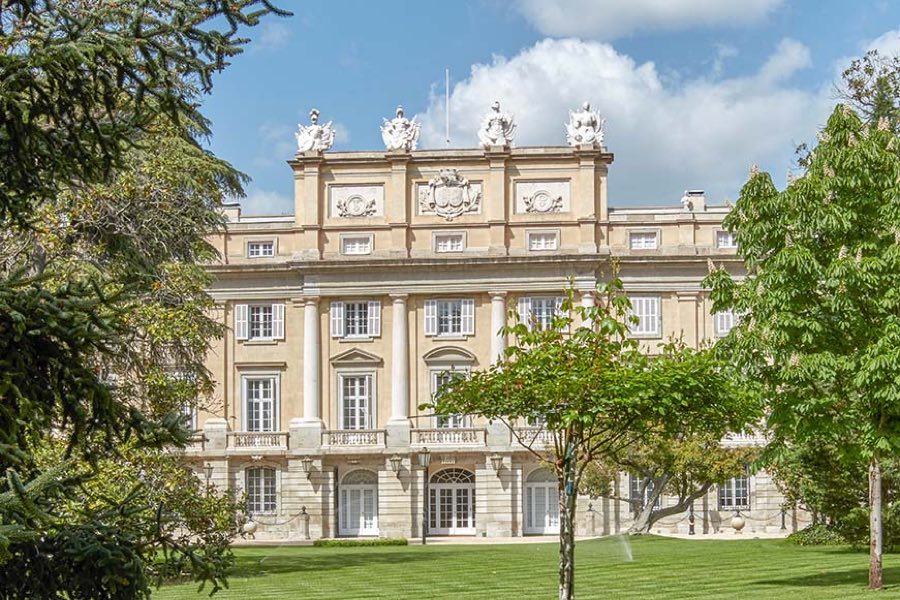
Liria Palace
Spain
PalaceRestoredFor events18th century
No. 19678
Palace · Spain
No. 19678 · 40.036 N, 3.608 W
For events
Aranjuez is marked as a château or castle venue lead. Capacity, indoor/outdoor spaces, catering rules, and accommodation options are published only after public verification.
Event types: Private events, Cultural gatherings, Filming and photography
Quick summary
Aranjuez is a palace in Spain with origins associated with the 16th century.
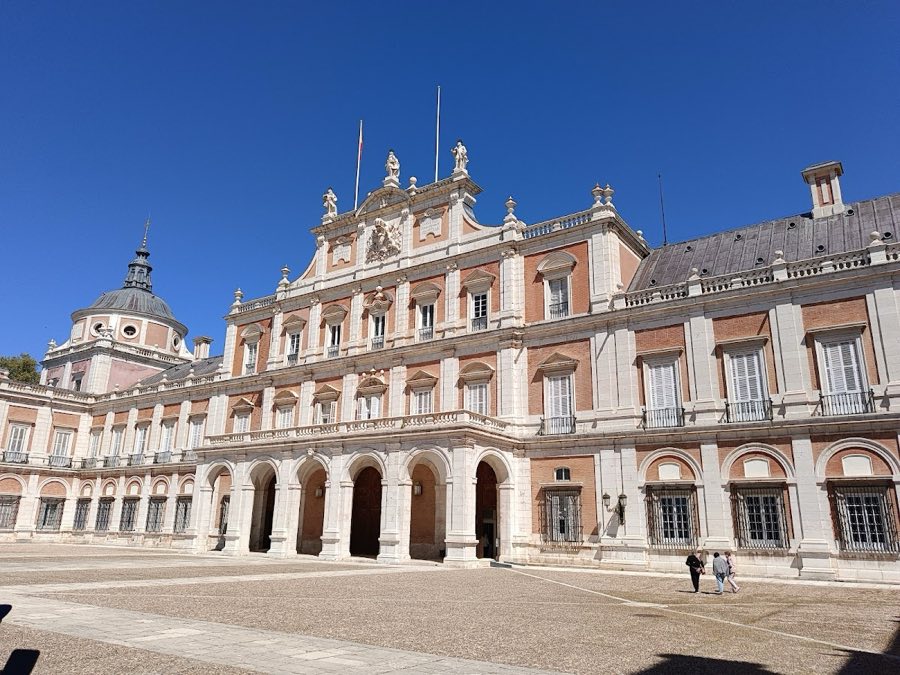
See all castles in SpainThe Royal Palace of Aranjuez in Aranjuez, Spain, is a royal residence created by the Spanish monarchy beginning in the 16th century, whose fabric reflects early modern planning and later 18th-century rebuilding. Founded as a hunting lodge and brought into the royal estate in 1523, the site grew into one of the principal seasonal seats of the Spanish court and played recurring roles in dynastic ceremonies and state events.
Work on a first palace began under the Habsburg kings and continued under Philip II, who commissioned the initial royal apartments and chapel. By Philip II’s death in 1598 only part of the intended complex had been completed, and construction halted amid the economic and political troubles that accompanied the final years of Habsburg rule. Building activity resumed with the arrival of the Bourbon dynasty after 1700, when a new tower and a completed western façade established the basic form that would guide later changes.
A severe fire in 1748 destroyed much of the earlier structure. Ferdinand VI ordered reconstruction that preserved earlier foundations but rebuilt interiors and elevations in an eighteenth‑century Baroque manner; a grand central stairway of Italian design was installed during this phase. Later eighteenth‑century reforms under Charles III transformed the palace further, adding two west wings that frame the main courtyard and giving the complex the three‑sided entrance court familiar today; a chapel and a planned theater were incorporated into the scheme.
Throughout its life the palace served royal functions beyond private residence. It hosted diplomatic agreements and funerary events for members of the royal family, including the deaths of Elisabeth of Valois (1568), Barbara of Portugal (1758), Elisabeth Farnese (1766), Maria Antonia of Naples (1806), Maria Isabel of Braganza (1818), and Maria Josepha Amalia of Saxony (1828). In March 1808 the Mutiny of Aranjuez produced the arrest and exile of Manuel Godoy and led to King Charles IV’s abdication in the palace Throne Room in favor of his son Ferdinand VII. Later that year, on 25 September, the Supreme Central Junta was formally constituted in the palace chapel as a national governing body.
After the Bourbon Restoration the palace became the residence for the household of the dukes of Montpensier, and a large temporary railway station was assembled near the Plaza de Armas for an 1878 marriage arrival. Under the Second Spanish Republic in 1931 the estate was declared an Artistic Historical Monument and opened to the public. From 1977 to 1983 the palace served as a state guest house for visiting heads of state. A museum dedicated to court dress opened in 1971, closed in 1983, and was reestablished in 1997 as a Museum of Life in the Palace; a museum now occupies rooms on the ground floor. In 2001 the palace, its gardens and associated buildings were inscribed as the Aranjuez Cultural Landscape on the UNESCO World Heritage List, and the property is managed by the national heritage agency.
The palace occupies ground close to where the Tagus and Jarama rivers meet, set between former kitchen gardens to the north and a trio of paved approach roads lined with noble houses to the east. The principal block presents two main storeys with a taller central section capped by a pediment that carries an honorific shield. Two long west wings close three sides of an internal courtyard and define the formal entrance court. The building is constructed mainly in red brick with contrasting white limestone detail drawn from nearby quarries, and the facades show ground‑floor round‑arched openings beneath upper‑floor balconies with iron railings.
The principal ceremonial approach lies to the west across the Plaza de Armas, where a central portico of five symmetrical arches frames the main entrance and is flanked by large terminal arches in each wing. A broad balcony with stone parapets tops the portico. Sculptural portraits of the kings who directed major building phases stand on the portico, and two Latin inscriptions in the pediment record the palace’s initiation and later completion under the mid‑eighteenth‑century monarch who finished the works, with the date given as 1752.
Passing through the portico leads into an interior hall and to the great staircase that rises to the principal reception floors. The staircase is notable for its ornate iron balustrade, gilded trim and a decorative tendency toward Rococo forms. Behind the main body an enclosed courtyard organizes the principal state rooms that open from galleries around it. Two small corner towers sit above the rear block, each topped by shallow domes on circular drums pierced with small windows, and one tower contains a clock that marks the roofline.
Several richly finished rooms survive and retain original fittings. A medium‑sized games chamber known as the Porcelain Room is lined with white porcelain plaques and chinoiserie reliefs made for the royal porcelain factory in the 1760s; these plaques are fixed to timber walls and the floor is marble, while a palm‑shaped porcelain lamp hangs from the ceiling. The Queen’s private oratory, rebuilt near the end of the eighteenth century, displays stucco and fresco scenes painted around 1791 that depict New Testament episodes. The chapel served as the location where the Supreme Central Junta was constituted in 1808. The Throne Room features a shallow dome decorated in a Pompeian style and walls dressed in red velvet above a stucco base fashioned to resemble green serpentine marble; it was used for formal royal ceremonies.
Decorative contents and movable fittings document changing tastes across centuries. The lobby contains three seventeenth‑century marble busts, and many halls preserve canvases and frescoes by several named painters, along with an important group of clocks collected by an eighteenth‑century monarch. Furnishings include Empire and mid‑nineteenth‑century pieces, a gilt bronze and crystal chandelier in the stair hall originating from a royal palace nearby, and an English olive‑wood piano presented to a queen in the nineteenth century. Mosaic tesserae donated from a papal workshop appear in the ante‑oratory.
Outbuildings grouped around the eastern Plaza de Parejas include a two‑storey Renaissance building that formerly housed court offices and now serves civic functions, while to the west lie service ranges that once contained storehouses, staff rooms and a separate kitchen block erected after the great fire. A house intended for a prominent minister faces the palace across a square. The ensemble of palace, gardens and dependencies survives as a conserved historic landscape under national care, with museum spaces on the ground floor and landscaped royal rides and formal lawns lying directly in front of the main facades.
No. 49214
No. 90900
No. 78392
No. 97891
Comments
Comments for Aranjuez will require a verified account before posting.
We'll send a verification link before your first comment is published.