No. 49214
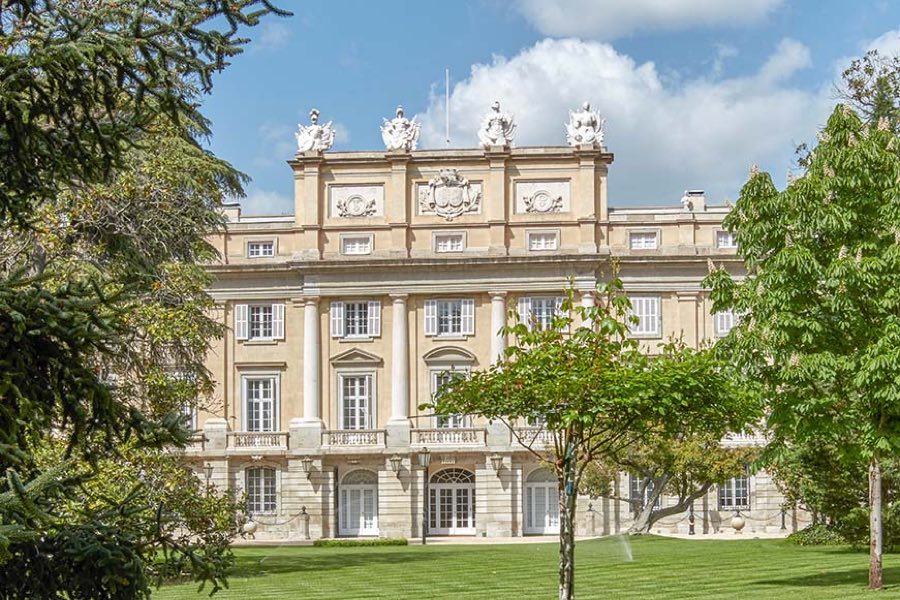
Liria Palace
Spain
PalaceRestoredFor events18th century
No. 90900
Castle · Spain
No. 90900 · 40.459 N, 3.592 W
Quick summary
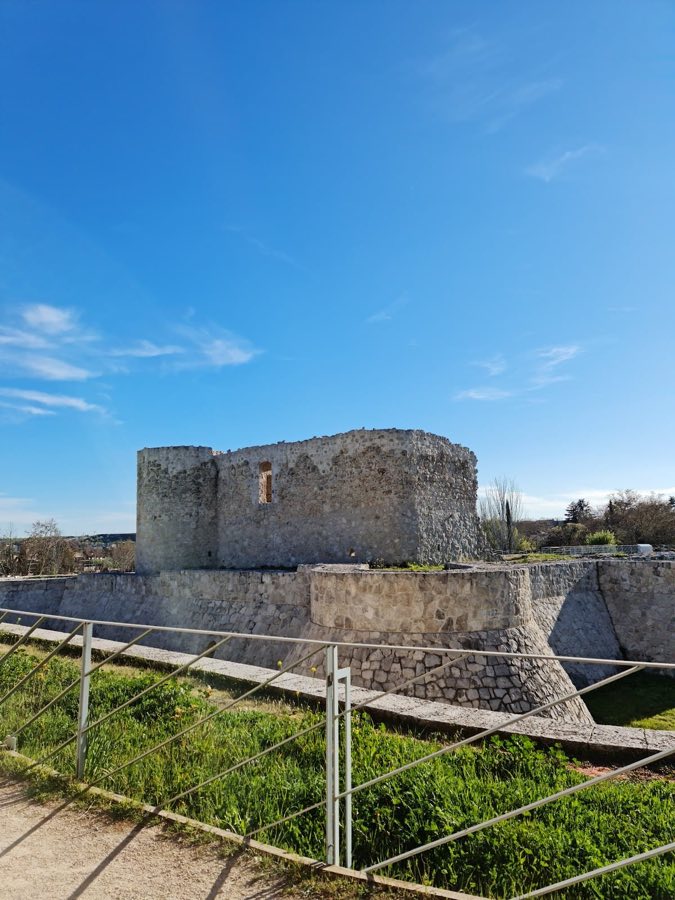
Castle of La Alameda is a castle in Spain with origins associated with the 15th century.
See all castles in SpainThe castle of La Alameda is located in the municipality of Madrid, Spain, and was built during the medieval period by the Castilian civilization. Its origins trace back to the 15th century, constructed within the village of La Alameda, a settlement repopulated in the 13th century in what is now the Barajas district. This location, taking advantage of a small hill, became strategically important during the late Middle Ages.
The fortress was likely commissioned by Diego Hurtado de Mendoza between 1431 and 1476, serving to assert his authority over the surrounding area. Historical records reveal that after the Battle of Toro in 1476—a critical event in Castilian succession disputes—the castle provided shelter for supporters of Queen Juana la Beltraneja. As the lordship passed to the Mendoza family, the castle also became intertwined with Madrid’s noble circles through a dowry granted by King Juan II of Castile to Inés de Ayala and Ruiz Sanz Zapata, firmly linking it to the influential Zapata family of the late medieval period.
In the latter half of the 16th century, specifically from 1575, Francisco Zapata y Cisneros, the first Count of Barajas and lord of La Alameda, initiated significant modifications. Under his guidance, the castle underwent transformation from medieval fortress to Renaissance palace. Enhancements included expanding the residence with new wings on the eastern and southern sides and constructing a prominent keep tower, reflecting evolving architectural tastes and functions of noble residences during this period. Its gardens also replaced the original defensive moat, indicating a shift toward comfort and aesthetics.
The castle hosted notable figures of its time. In 1580, Fernando Álvarez de Toledo, known as the Duke of Alba, was recorded as a visitor. Later, in 1599, Queen Margaret of Austria stayed within its walls. The building also saw darker episodes when the third Duke of Osuna died there after a short captivity between 1622 and 1624, further marking its role in aristocratic and political affairs.
A disastrous fire in 1697 severely damaged the castle, leading to its abandonment. During the 18th and 19th centuries, the ruins became a source of building materials. Stones were repurposed for other constructions in the area, including the pantheon of the Fernán Núñez family. The site suffered further harm during the Spanish Civil War in the early 20th century when a machine gun nest was established close to the castle as part of Republican defensive lines.
Archaeological interest in the site began in 1996, revealing a much longer history of occupation. Excavations uncovered remains from the Bronze Age through to Roman times, demonstrating that the location had been settled continuously since around 2000 BCE. Since 2010, the partially restored castle has functioned as a museum managed by the Madrid City Council and is recognized as a Bien de Interés Cultural, an official category protecting Spain’s heritage sites.
The castle of La Alameda occupies a roughly rectangular plan with rounded corners and covers an interior area of about 200 square meters. It is set atop a small hill at approximately 627 meters above sea level and was originally surrounded by a forest of holm oak trees (Quercus ilex). The extant structure includes two towers positioned diagonally opposite each other: a square tower at the northwest corner and a cylindrical tower at the southeast corner.
The architectural program evolved notably in the 16th century during its conversion into a Renaissance palace. This phase added a central keep tower along with new residential wings on the eastern and southern flanks, increasing the size and brightness of windows to favor light and domestic comfort. The stone walls and towers show Renaissance construction techniques typical of noble residences of the period. Additionally, the original defensive moat was filled in and transformed into ornamental gardens, reflecting a less militarized, more residential function.
Today, these elements survive in a partially restored state. Prior to conservation efforts in the late 20th century, especially between 1988 and 1989 under architect Pedro Herrero Pintó, the site had fallen into semi-ruin. Archaeological excavations have also exposed earlier layers beneath the castle. Materials and artifacts dating back to pre-Roman times and Roman occupation have been found directly below, highlighting the long-term human presence at this location.
Throughout its history, the castle and its site have served multiple purposes—from fortress to noble palace and refuge—leaving a layered architectural and archaeological record. It remains one of only four medieval fortifications preserved within Madrid’s boundaries, standing alongside the Castillo de Viñuelas and the surviving sections of the city’s Arab and Christian walls, thus attesting to the region’s complex historical landscape.
No. 49214
No. 78392
No. 19678
No. 46865
Comments
Comments for Castle of La Alameda will require a verified account before posting.
We'll send a verification link before your first comment is published.