No. 26784
Areimeh Castle
Syria
CastleRuinFor events12th century
No. 85588
No. 85588 · 34.582 N, 36.016 E
Quick summary
Coliath (Qlayaat) is a castle in Lebanon with origins associated with the 12th century.
See all castles in LebanonColiath stands in the town of Qlayaat, Lebanon, and was built by Crusader forces associated with the County of Tripoli.
The site came under Frankish control soon after Count Pons of Tripoli captured the place in 1118. In 1127 the location was granted to the Knights Hospitaller, who used the fastened position to help protect the land route linking Tortosa (Tartus) with Tripoli, working together with the nearby fortress of Arqa to secure movement along that coastal road.
In 1207–1208 the Ayyubid ruler al‑Adil seized Coliath and ordered its fortifications taken down. A contemporary report by Wilbrand of Oldenburg records the place as a ruin in 1212, and it may have remained in a broken state through much of the later Crusader era. Some accounts state that the Franks returned to Coliath after al‑Adil’s action, and that the Mamluk sultan Baibars completely ruined the fortress in the summer of 1266. Historian Hugh N. Kennedy has argued that the simple castrum plan of Coliath reflects its use as a waystation for pilgrims.
In the modern period the ruins were examined briefly by investigators in 1914 and again in the early 1930s, but no full archaeological excavation has been carried out.
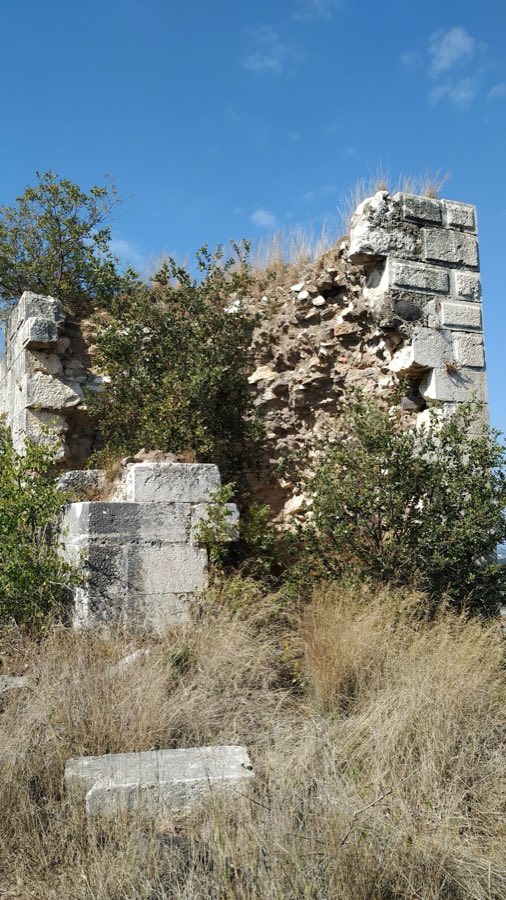
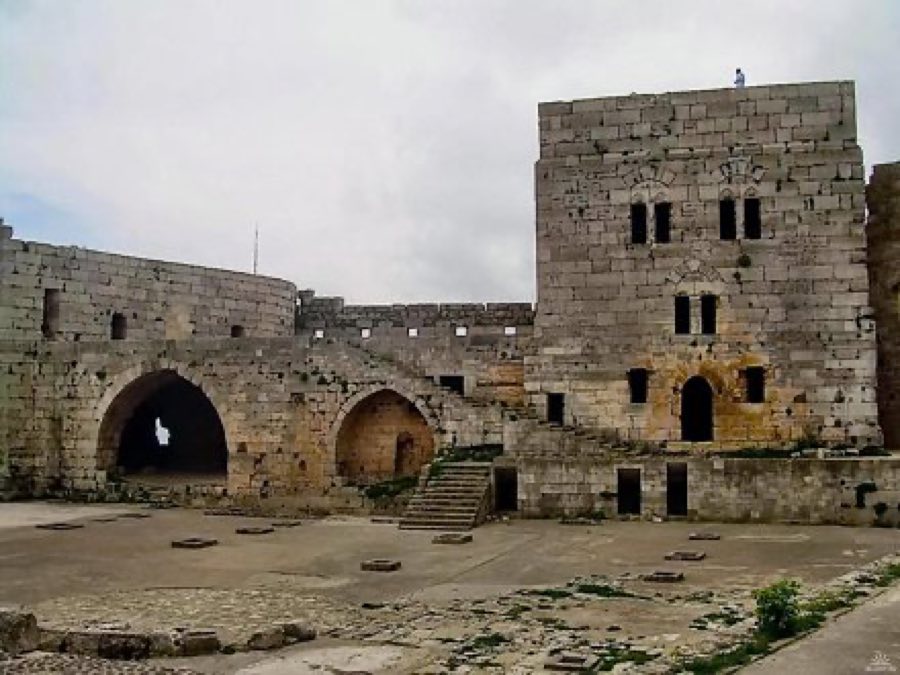
Coliath occupies a compact rectangular fort footprint of roughly 63 by 56 meters, laid out as a castrum-style enclosure. The perimeter is formed by continuous curtain walls punctuated by towers; each corner features a square tower, and three sides have an additional square tower placed about halfway along the wall. The main gate opens through the center of the southern curtain.
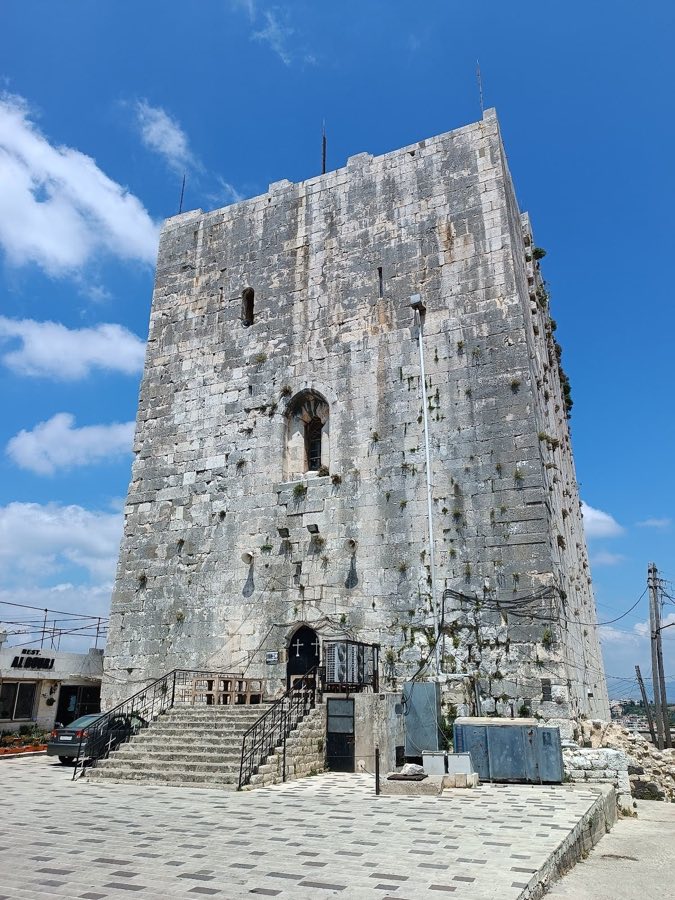
All towers are square in plan, with the south‑west corner tower noticeably larger than the others. Several towers do not project strongly beyond the line of the curtain, and the outer face of the walls is defended by a ditch cut into the rock immediately in front of the curtains.
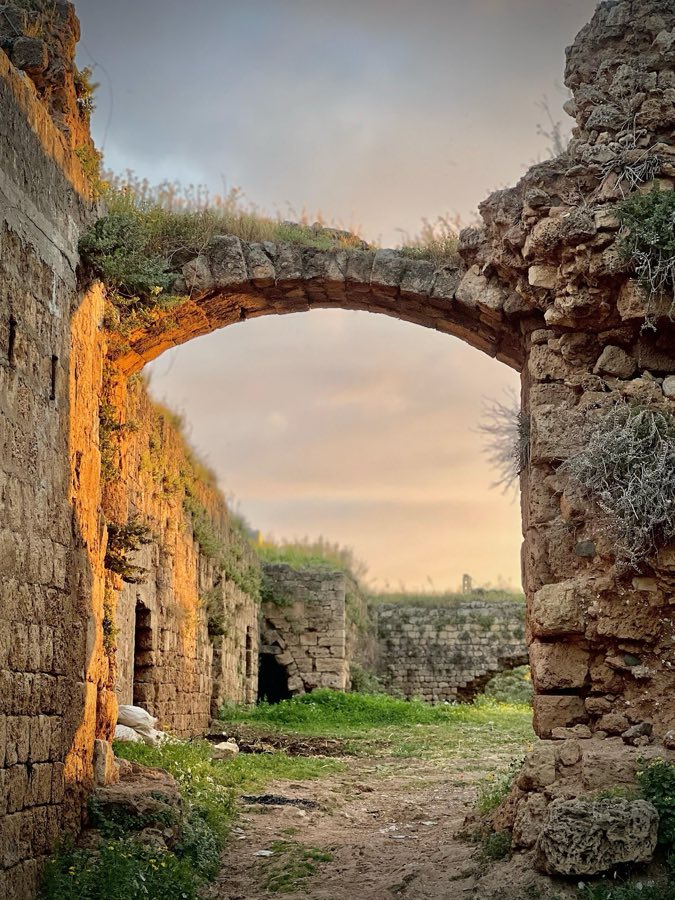
Inside the enclosure a small open courtyard fills most of the interior. Along the northern inner wall substantial vaulted halls survive, their barrel vaulting still evident in the standing fabric. Traces indicate that comparable vaulted rooms once lined the inner face of the southern wall, though those survives are more fragmentary. The overall state of the site is ruinous, with limited structural remains standing on a slight knoll about two kilometres from the sea and roughly five kilometres north of Archas (Arqa). The site was noted in brief surveys in 1914 and in the early 1930s; no comprehensive archaeological excavation has been undertaken.
No. 26784
No. 26560
No. 64140
No. 27511
Comments
Comments for Coliath (Qlayaat) will require a verified account before posting.
We'll send a verification link before your first comment is published.