No. 45334
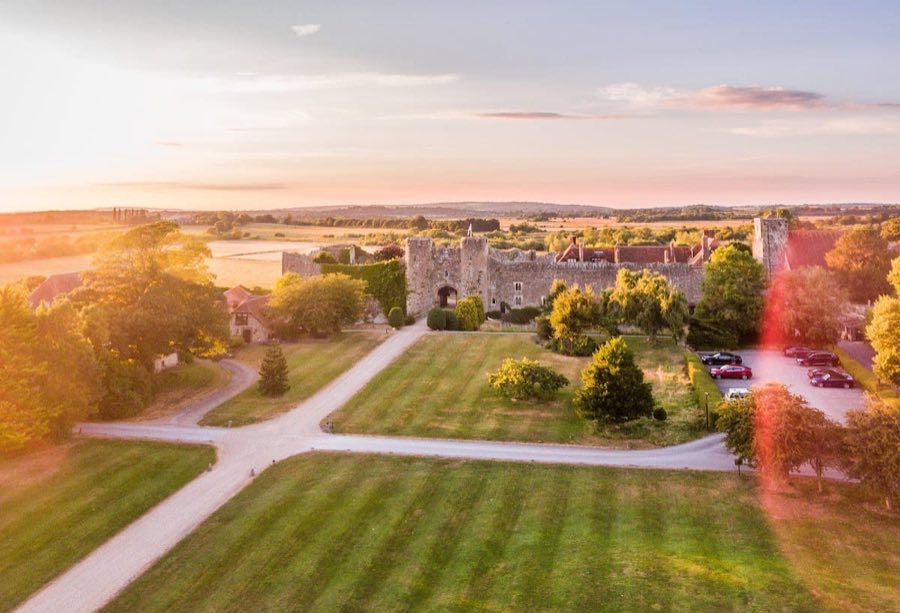
Amberley Castle
United Kingdom
CastleRestoredFor rent14th century
No. 98671
Castle · United Kingdom
No. 98671 · 50.856 N, 0.554 W
Quick summary
Arundel Castle is a castle in United Kingdom with origins associated with the 20th century.
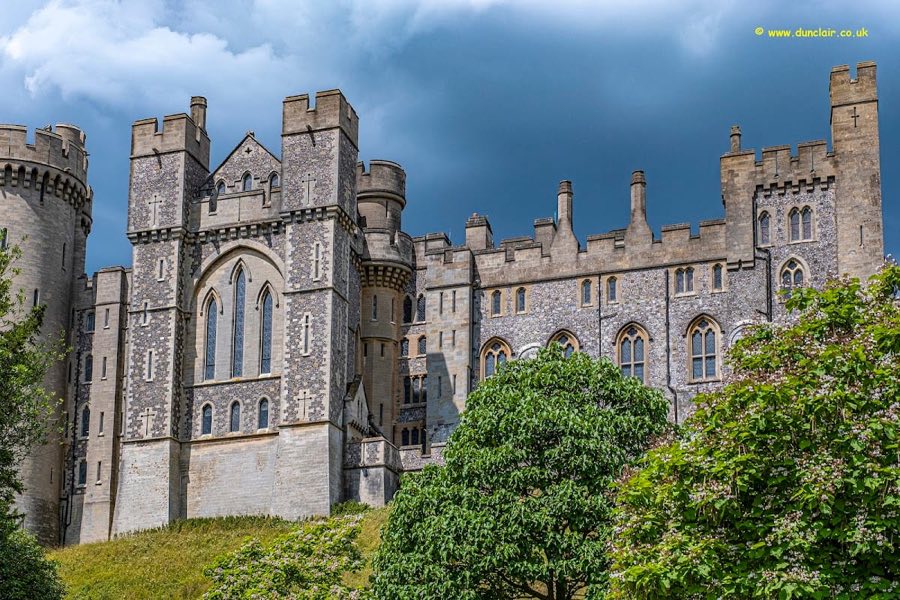
See all castles in United KingdomArundel Castle, located in Arundel BN18 9AB, UK, was first built in 1067 by Roger de Montgomery, a cousin of William the Conqueror. Roger became the first Earl of Arundel and received extensive lands, including a large portion of Sussex. The castle was established as a defensive fortress and noble residence on a hill overlooking the River Arun, which was navigable to the sea at that time.
After Roger de Montgomery’s death, the castle returned to royal ownership under King Henry I. Henry I granted it to his second wife, Adeliza of Louvain. In 1138, Adeliza married William d’Albini, who became the first Earl of Arundel from the d’Albini family. William began significant stone fortifications, replacing earlier timber defenses with a stone curtain wall.
From 1243 until 1580, the castle was mainly held by the Earls of Arundel and later the FitzAlan family through marriage. During this period, the castle saw expansions and renovations under monarchs Henry II and Edward I, including the addition of towers and improved defenses. It also played a minor role in the civil war between King Stephen and Empress Matilda, known as the Anarchy.
The FitzAlan male line ended in 1580, and the castle passed by marriage to the Howard family, who held the title of Dukes of Norfolk. The Howards were influential in Tudor politics and military affairs. During the English Civil War in 1643-44, the castle was besieged by Parliamentarian forces. About 10,000 Royalist troops defended it for 18 days before surrendering. In 1653, Parliament ordered partial demolition to prevent its future military use.
Following a period of neglect, restoration began in 1708. The 11th and 13th Dukes of Norfolk carried out extensive renovations in the late 18th and 19th centuries, including Gothic Revival remodeling. Queen Victoria and Prince Albert visited in 1846, prompting further refurbishments to meet royal standards, such as new guest apartments decorated in Victorian style.
In the early 20th century, the 14th and 15th Dukes modernized the castle and improved the gardens. Plans by the 16th Duke to transfer the castle to the National Trust were reversed by the 17th Duke, who created an independent trust to manage the property. Today, Arundel Castle remains the main residence of the Dukes of Norfolk, with much of the grounds open to the public.
Arundel Castle is built on a defensible hill overlooking the River Arun. Its original form was a motte-and-bailey design, using earth and timber. This early structure was replaced in the 12th century by stone fortifications initiated by William d’Albini, including a stone curtain wall surrounding the castle.
Medieval additions include the Brabican and Beaumont towers, a rebuilt main gatehouse, and residential buildings in the southern courtyard. These replaced earlier family lodgings that once stood on the motte. The castle also contains the FitzAlan Chapel, commissioned by the 10th Earl of Arundel and completed after his death.
The castle suffered damage during the English Civil War siege and partial demolition ordered in 1653, which destroyed some residential quarters. Restoration in the late 18th century by the 11th Duke of Norfolk involved rebuilding and modernization, with the library retaining much of the design from this period.
A folly tower overlooking Swanbourne Lake was built by architect Francis Hiorne as a demonstration of his skill for the Duke. The 1846 royal visit led to the construction of new guest apartments decorated in Victorian style, including furniture made specifically for Queen Victoria, now preserved as exhibits.
Late 19th-century renovations under the 13th Duke and architect Charles Buckler transformed the castle into its current Gothic Revival appearance. The castle grounds include extensive gardens, which have been significantly enhanced since 2009. These improvements include a wild water garden around a lake, opened to visitors by 2020.
Arundel Castle is a Grade I listed building, recognizing its architectural and historic significance. Many of its medieval and later features remain intact or have been carefully restored.
No. 45334
No. 40435

No. 95442
No. 61735
Comments
Comments for Arundel Castle will require a verified account before posting.
We'll send a verification link before your first comment is published.