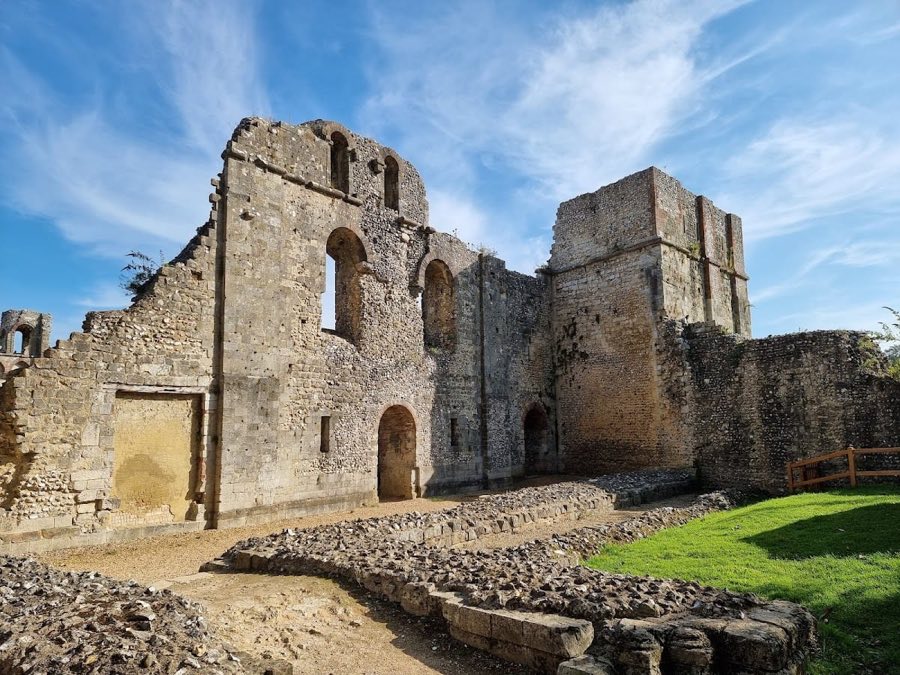
No. 61735
Wolvesey Castle
United Kingdom
CastleRuinFor events12th century
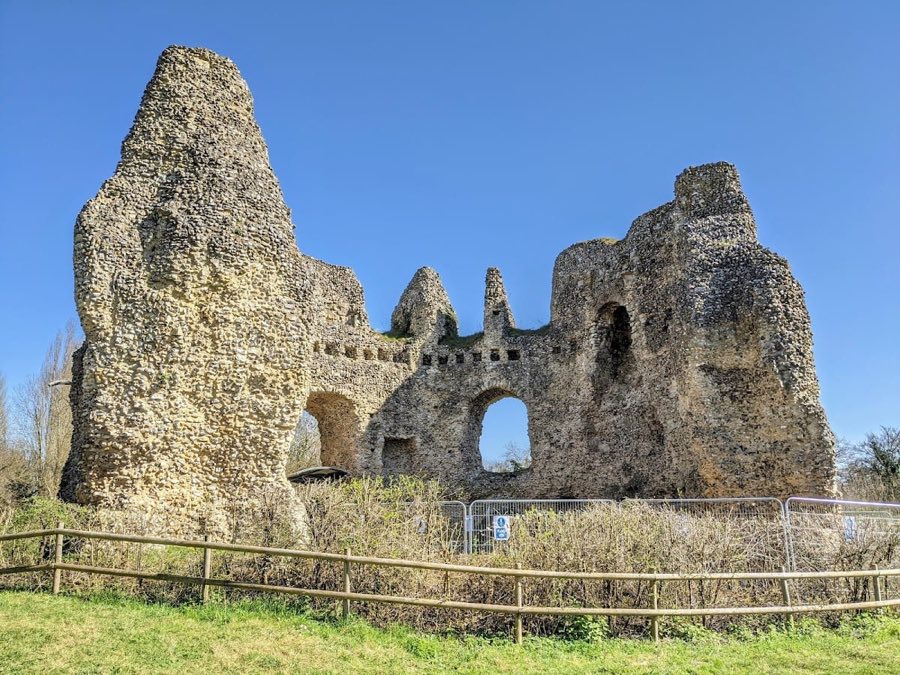
No. 40435
Castle · United Kingdom
No. 40435 · 51.261 N, 0.962 W
Quick summary
Odiham Castle is a castle in United Kingdom with origins associated with the 13th century.
See all castles in United KingdomOdiham Castle is located in North Warnborough, within the modern boundaries of the United Kingdom. It was built by the English crown during the early 13th century as one of only three castles constructed under King John, whose reign saw increasing efforts to strengthen royal control over his realm.
Construction at Odiham began in 1207, likely influenced by King John’s visit to the area in 1204. The site was strategically chosen due to its position roughly halfway between Windsor and Winchester, two important royal centers. Completed around 1214, the castle was intended to serve both defensive and administrative purposes, with features suited for royal residence as well as military use.
In 1215, Odiham may have been the departure point for King John’s journey to Runnymede, where he met with rebellious barons and sealed the Magna Carta. The following year marked a turbulent period during the First Barons’ War when French forces, invited by the rebels, besieged Odiham. The castle, defended by a small garrison of 13 men, surrendered after a two-week siege on July 9, 1216. This event led to significant reconstruction efforts, including raising the mound that supported the keep by about five meters and enhancing its defenses with or confirming the existence of an inner moat.
In the decades after the conflict, the castle entered a phase of noble residence. In 1238, Simon de Montfort married Eleanor, daughter of King John, who had been granted ownership of Odiham by her brother, Henry III. During this time, improvements were made to the living quarters, including the addition of a kitchen on a bridge over the inner moat and a new hall outside the keep. A second building was also constructed atop the moat’s southeast side to expand residential space. After Simon de Montfort’s failed rebellion and death at the Battle of Evesham in 1265, Eleanor was exiled, and Odiham reverted to royal possession.
The castle continued to play a role in political unrest during the reign of Edward II, serving as a stronghold in the disputes involving the Despenser family and the forces of Roger Mortimer and Queen Isabella. Odiham also hosted a session of Parliament in 1303, highlighting its continued administrative use. Later, following his capture at the Battle of Neville’s Cross in 1346, King David II of Scotland was held prisoner at the castle for eleven years. Though a captive, David II was lightly guarded and permitted to maintain a household within the castle.
By the 15th century, Odiham’s military significance had diminished, and it was primarily used as a hunting lodge. Over the following centuries, the castle fell into ruin, with records from 1605 describing it as dilapidated. The alteration of the castle’s surrounding landscape continued into the late 18th century, when the Basingstoke Canal was constructed through the castle’s southern bailey corner in 1792.
Throughout the 20th century, archaeological interest led to excavations in 1953 and from 1981 to 1985, conducted by Hampshire County Council Museum Services, revealing further details about the castle’s layout and evolution.
Odiham Castle occupies an approximately eight-hectare site positioned along a modified bend of the River Whitewater. Its defensive design centers around a stone keep of octagonal form, rising three stories tall, which stands atop a heightened earth mound. The keep was encircled by an inner round moat and an additional square moat, creating a layered system of water defenses. Beyond these, the castle featured two moated baileys—enclosed courtyards—offering further protection and space for various functions.
Construction of the castle made use of robust stonework for the central keep, while earth banks and timber palisades formed part of its initial fortifications. Following the French siege of 1216, significant alterations included raising the mound beneath the keep by about five meters, which would have enhanced the defensive advantage overlooking the surrounding terrain. The presence or addition of the inner moat during this rebuilding phase also strengthened the castle’s defenses.
Within the castle grounds stood a domus regis, or king’s house, signifying the site’s role as a royal residence. In subsequent years, architectural enhancements expanded the living area. A notable kitchen was constructed on a bridge extending over the inner moat, allowing for efficient service and strategic placement. A new hall was built outside the keep to accommodate gatherings or administrative functions, while a further building was added over the moat on the southeast side, augmenting the residential quarters.
Today, what remains visible includes sections of the octagonal shell keep and the surrounding earthworks that mark the original footprint of the castle. The southernmost portion of the moat still survives, now appearing as a small, overgrown pond situated across from the main ruins and divided by the Basingstoke Canal, which intruded upon the castle’s bailey in the late 18th century. This canal cutting altered the original layout but also serves as a historical layer reflecting later changes to the castle’s environment.
Restoration efforts in September 2007, carried out under the stewardship of Hampshire County Council and English Heritage, focused on conserving the surviving keep structure, ensuring that its historic form remains legible for future study and appreciation.
No. 61735
No. 33796
No. 54602
No. 45334
Comments
Comments for Odiham Castle will require a verified account before posting.
We'll send a verification link before your first comment is published.