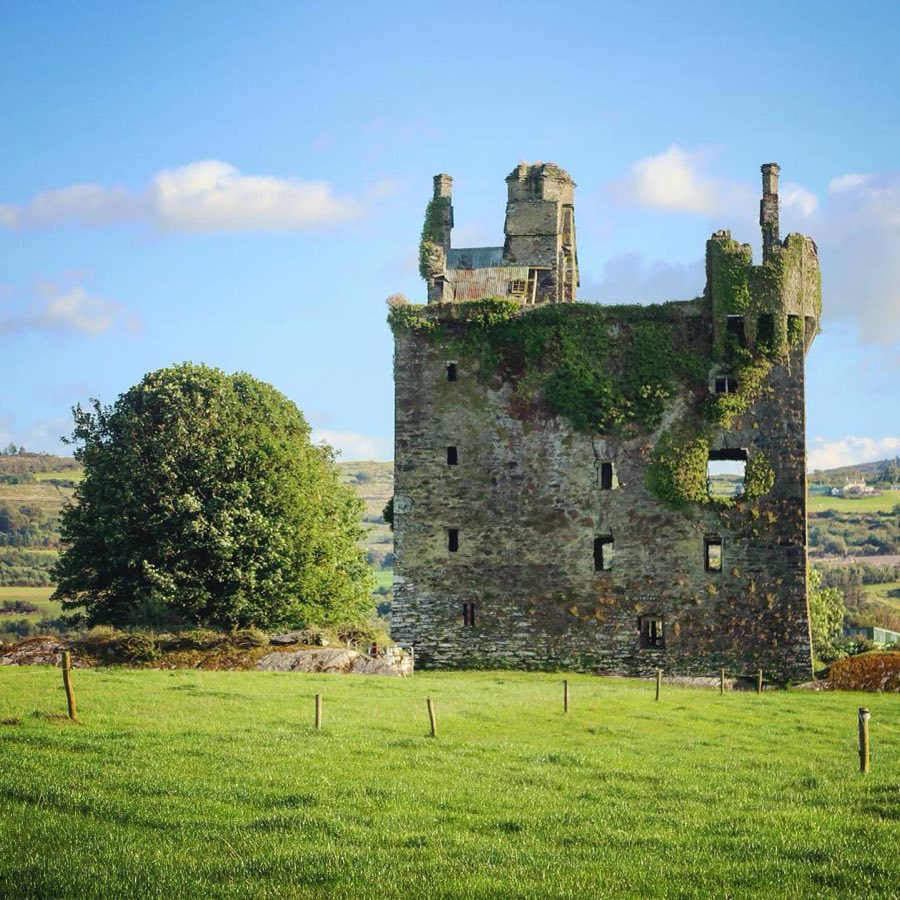
No. 75977
Togher Castle
Ireland
Tower houseRuin16th century
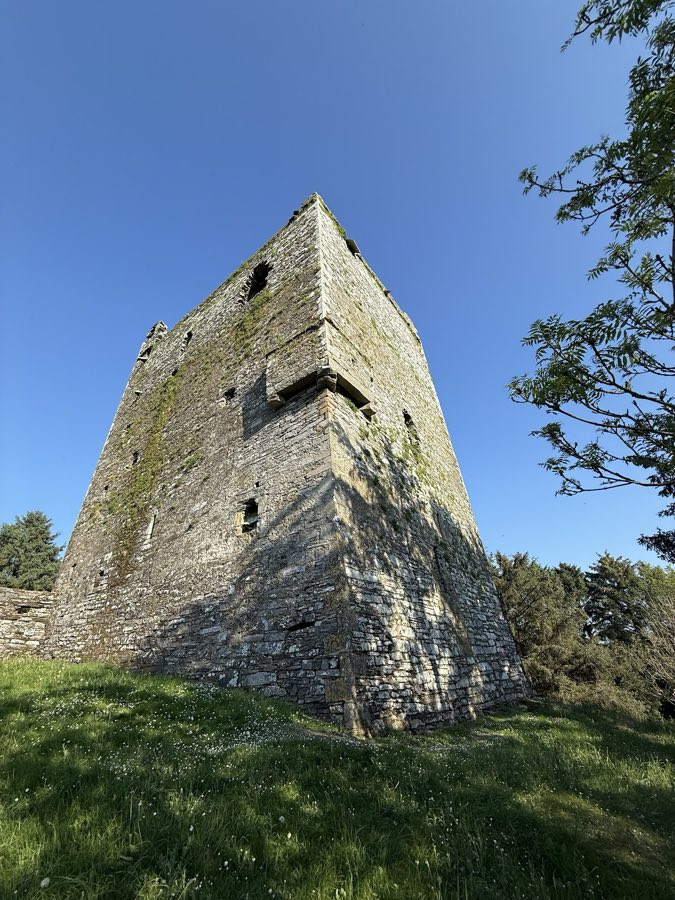
No. 34239
Tower house · Ireland
No. 34239 · 51.706 N, 9.032 W
For events
Ballinacarriga Castle is marked as a château or castle venue lead. Capacity, indoor/outdoor spaces, catering rules, and accommodation options are published only after public verification.
Event types: Private events, Cultural gatherings, Filming and photography
Quick summary
Ballinacarriga Castle is a tower house in Ireland with origins associated with the 17th century.
See all castles in IrelandBallinacarriga Castle, Dunmanway, Ireland, was erected by Gaelic Irish families. The Irish name for the place, Béal na Carraige, means “Mouth of the Rock.”
The building is described as a 16th‑century tower house. Stonework high in the tower bears the date 1585 together with the letters R.M. and C.C., and that date has been cited as the year of construction, while other evidence indicates parts of the structure may be older. The tower has been linked in different ways with the native Ó Muirthile family, with the MacCarthy clan, and with Randal Murlihy (Hurley) and his wife Catherine Cullinane; a carving of a woman holding five roses has been read as representing Catherine and her five children.
Ownership changed during mid‑17th century conflicts. After the events of 1641 and their suppression, the castle was confiscated in 1654 by the English government and was granted to the Croft family. During the post‑confiscation period the building was used for a time as an English army garrison.
One room in the tower served as a Roman Catholic chapel and retained related decoration; that chapel function continued until about 1815, when a new chapel was erected around that date by a pastor named James Dogeny and the castle was then abandoned. Local tradition preserves a legend that a Púca, a supernatural black dog, inhabits the place.
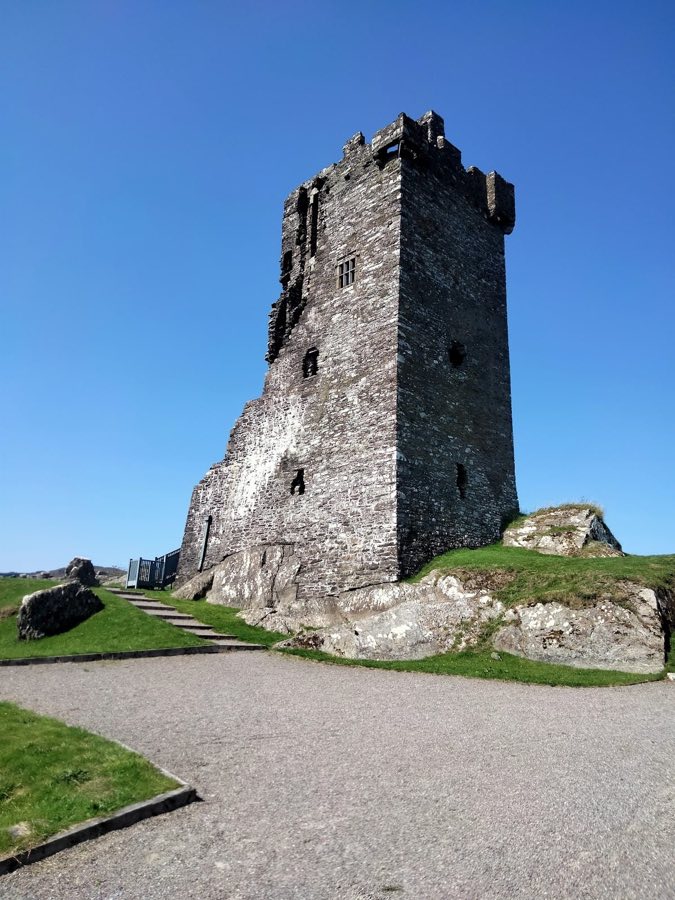
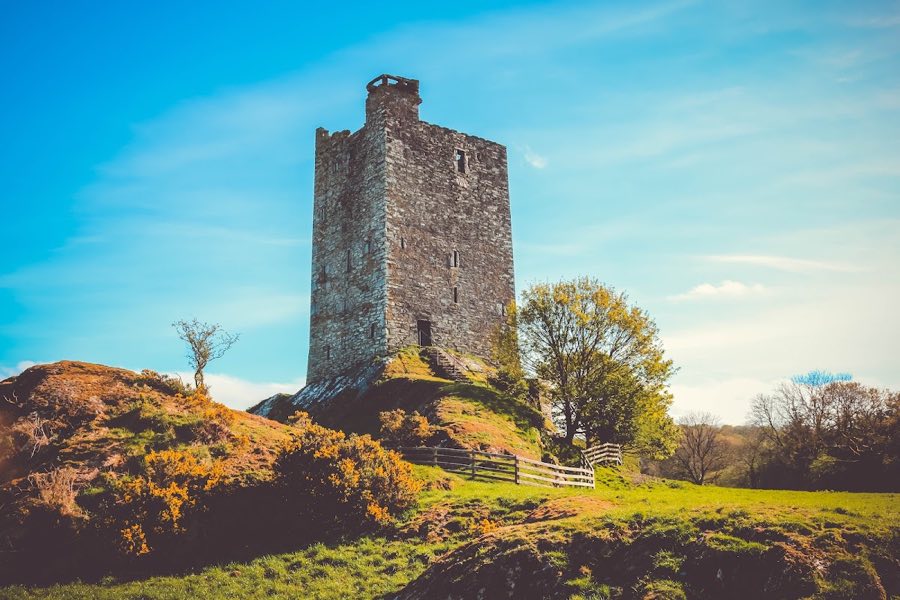
Ballinacarriga Castle survives as a ruined stone tower set on a rock outcrop, its footprint roughly rectangular and measuring about fifteen by twelve metres. The tower rises four storeys and shows refined stonework in its upper openings, with geometric carving around windows and door surrounds. An old fireplace remains inside, indicating domestic use on one or more floors.
Defensive features are visible in the masonry. Overhanging turrets, or bartizans, project from the corners, and evidence of a former machicolation survives as an opening through which defenders could have dropped objects on attackers. An unusual former portcullis arrangement is recorded at the entrance; a portcullis is a heavy, vertically sliding gate used to bar entry. Around the tower lay a stone bawn wall with four round corner towers; the most substantial vestiges of that enclosing wall survive on the north‑east side.
On the third storey two small tourelles are built into the wall opposite each other, projecting as narrow defensive or lookout elements. High on an eastern face sits a Sheela Na Gig carved in stone, shown as a naked female figure with an accentuated vulva, and religious sculpture survives elsewhere on the fabric, including a carved crucifixion panel. The inscribed date 1585 and the initials R.M. and C.C. are cut into a window sill or stone in an upper level. A carved female figure holding five roses is also set into the masonry.
Later reuse is visible in the chapel fitments and decorative work that remained into the early 19th century, reflecting the tower’s role in local worship until a new chapel was built about 1815. Remnants of the ancillary defensive walls and the ruined tower fabric are still in situ; the whole building is recognised as a monument of national importance and stands as a measurable ruin with surviving carved detail.
No. 75977
No. 48482
No. 91020
No. 31867
Comments
Comments for Ballinacarriga Castle will require a verified account before posting.
We'll send a verification link before your first comment is published.