No. 97130
Westport House
Ireland
Manor houseRuin17th century
No. 54343
Tower house · Ireland
No. 54343 · 53.935 N, 9.105 W
Quick summary
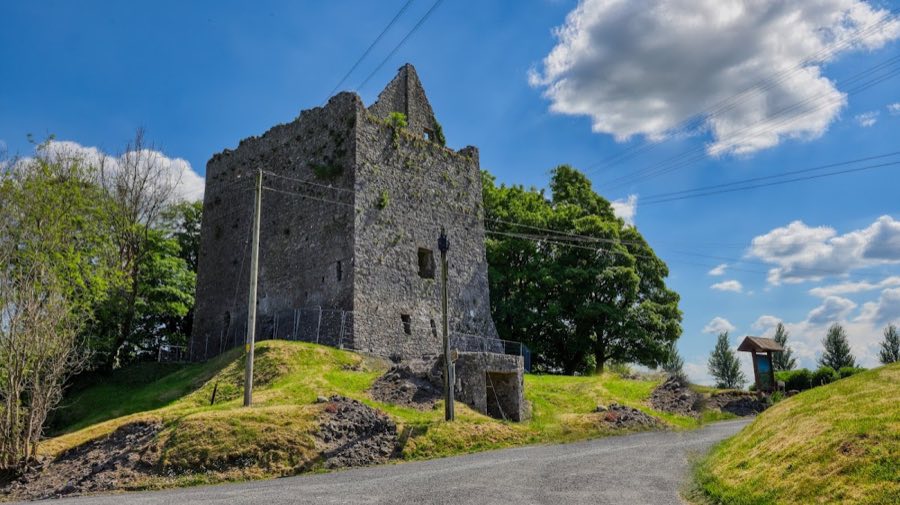
Ballylahan Castle is a tower house in Ireland with origins associated with the 13th century.
See all castles in IrelandBallylahan Castle stands in Ballylahan, County Mayo, Ireland. It was constructed during the 13th century by settlers of Norman descent who established themselves in the region. The castle was originally built by Jordan de Exeter, a notable Norman figure who held the position of Sheriff of Connacht. Through this foundation, Ballylahan became the ancestral home of the Mac Siúrtáin family, also known as the MacJordans, reflecting the blending of Norman and Gaelic identities over time.
During the early 14th century, the castle played a role in regional conflicts. In 1316, it suffered a significant assault led by Fedlim Ó Conchobair, the King of Connacht. This attack nearly destroyed the fortress, marking a noteworthy episode in the turbulent medieval power struggles within Connacht. Over the centuries, Ballylahan Castle maintained its status as an important local seat, anchoring the legacy of the MacJordans in the Mayo area.
Today, the historical importance of Ballylahan Castle is recognized officially, as it has been designated a National Monument. This status highlights its relevance in Ireland’s medieval heritage and ensures its protection and preservation for future generations.
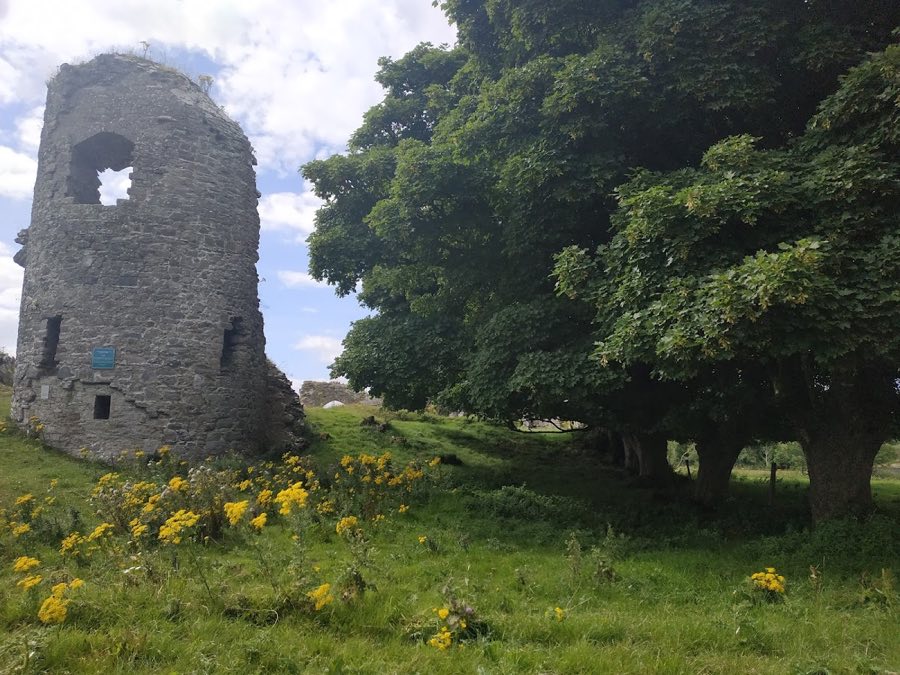
Ballylahan Castle is a classic example of a medieval tower house, characterized by its vertical design optimized for defense and residence. The primary entrance faces east and was originally guarded by two round towers, one on each side of the doorway. Presently, only one of these circular towers remains intact, providing insight into the castle’s original defensive arrangements.
Entering through the main door, one comes into an irregular hexagonal enclosed courtyard known as a bawn. This walled area served as an outer defense space and featured sturdy walls that widen toward the base, a design termed “base-batter,” which is notably strong at the northwest corner. This structural feature enhanced the bawn’s resilience against attack and demonstrated medieval strategic building techniques.
Within the bawn, there is archaeological evidence of additional buildings primarily situated along the western wall. These structures likely supported various functions, possibly including storage or living quarters, indicating a complex that extended beyond the central tower itself. The castle’s siting on the south bank of the River Moy, roughly a couple of kilometers northeast of the village of Strade, points to its strategic position beside a waterway, which may have been important for supply and defense. The remains today, though partially ruined, continue to evoke the castle’s historical stature and layout.
No. 97130
No. 25336
No. 29615
No. 82477
Comments
Comments for Ballylahan Castle will require a verified account before posting.
We'll send a verification link before your first comment is published.