No. 96565
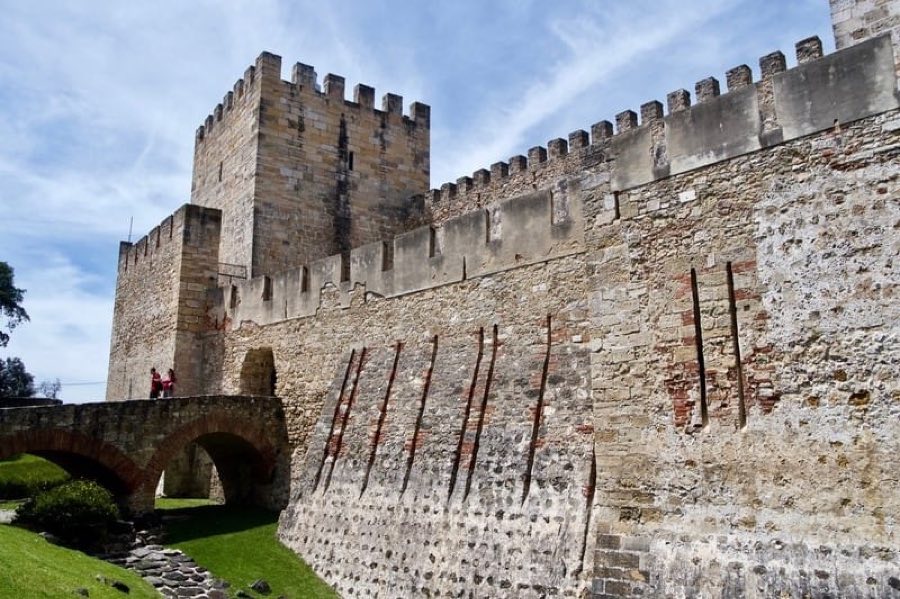
São Jorge Castle
Portugal
CastleRuin8th century
No. 89727
Palace · Portugal
No. 89727 · 38.723 N, 9.138 W
Quick summary
Palácio da Bemposta is a palace in Portugal with origins associated with the 18th century.
See all castles in PortugalPalácio da Bemposta in Lisbon, Portugal, is a royal residence erected for the Portuguese monarchy at the turn of the seventeenth into the eighteenth century, constructed for Queen Dowager Catherine of Braganza after her return from London. Work began in 1694 and continued into the early 1700s, placing the building in the late 17th–early 18th century architectural period, with later Baroque-era alterations to its private chapel. The palace became a focal point of court life and royal administration, serving successive members of the royal family and later hosting important political episodes.
A small chapel dedicated to Our Lady of the Conception, originally dating to 1501, was incorporated into the complex before the palace was completed. The queen took up residence in 1702 and died at Bemposta on 31 December 1705, leaving the property to her brother, the reigning king. In the years that followed a royal chapel was formally established at the site and, in 1707, the house and its lands were assigned to the House of the Infantado, the patrimony reserved for royal infantes. As a result the palace became the home of younger royal family members, including Infante Francis, Duke of Beja, and his son known as João da Bemposta.
The earthquake that struck Lisbon in 1755 destroyed the chapel and prompted an extensive rebuilding campaign. The rebuilt chapel featured a rectangular entrance area and a nave, and it received richly coloured tile and stone decoration. During the later eighteenth century the palace maintained a musical household with singers and an organ, although the instrument was removed to another royal residence by 1778. By the close of the century, in 1798, the palace had fallen into disuse and showed clear signs of neglect.
In the nineteenth century the building returned to prominence. The future King John VI lived at Bemposta in 1803 and, after his return from exile, carried out repairs and alterations in the 1820s. Two of the critical political crises of his reign, the Vilafrancada and the Abrilada—armed plots and court uprisings that shaped Portugal’s constitutional struggles—took place at Bemposta. John VI died in his private apartments at the palace on 10 March 1826. From 1828 the claimant King Miguel received the public there on a weekly basis.
Administrative changes followed the civil conflicts of the 1830s. The palace ceased to be part of the Infantado in 1833 and reverted to the Crown, hosting a formal government office until it was vacated on 18 March 1834 and returned to Crown control under Queen Maria II. In 1837 the monarch transferred the property to the Army. The complex was enlarged and its interiors reworked around 1850–1851 under military direction, and from 1851 it began to function as the Portuguese Military Academy. The chapel, once a private hermitage, was opened for religious use in 1853. Later urban alterations reduced the forecourt and required modification of the main external stairway in 1860.
Conservation work continued into the twentieth century. The chapel received a full restoration in 1944 and safety systems were renewed in 1997. Analysis of the building’s condition began in 1999. The palace retains the coat of arms of Queen Catherine above its principal doors, and a monument to her was installed in front of the façade in 2001. The complex is recognised for its cultural value as a Property of Public Interest, and the chapel was designated a National Monument on 19 February 2002. The site today remains the home of the Portuguese Military Academy.
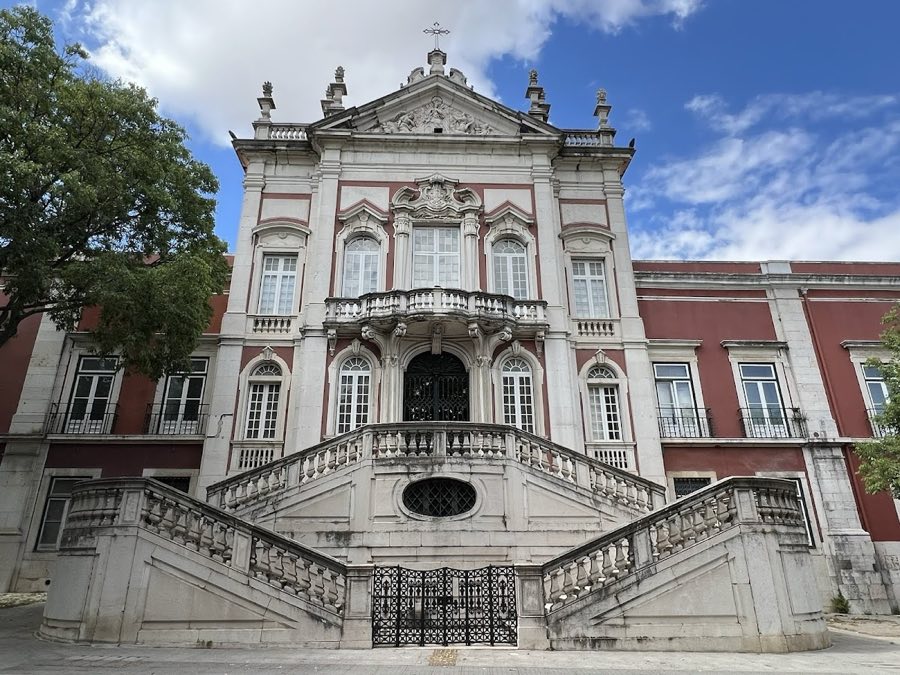
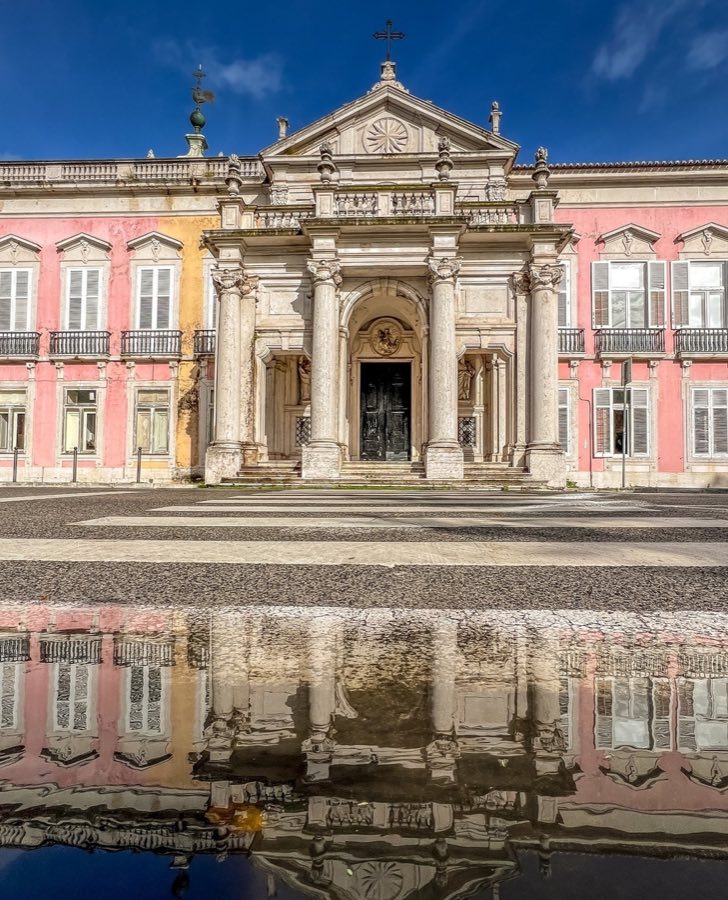
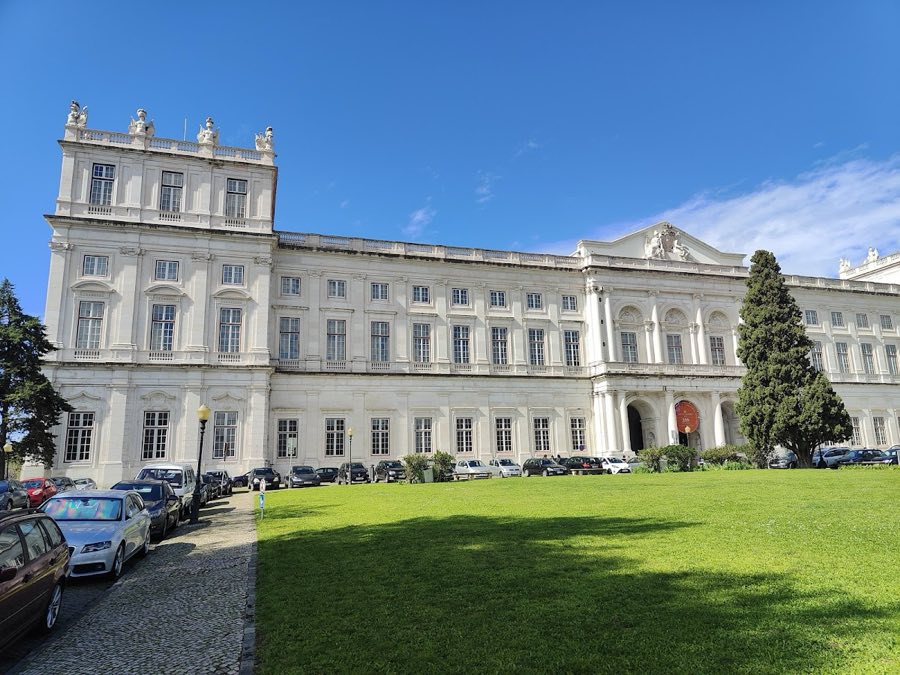
The Bemposta complex presents a mixed-construction layout in which decorative elements in limestone and marble sit upon a main structural framework of masonry, timber and reinforced steel. The principal block faces a public square and is reached by twin external stairways that sweep up to the principal floor, where a balustraded veranda stretches across the front. The central entrance is a rounded-arched doorway set between tall windows on the main level, and a second-floor veranda is pierced by a notably tall central window crowned by the sculpted royal coat of arms, which remains visible above the main doors.
Sculptural decoration animates the façade and chapel exterior. A triangular pediment above the front elevation carries a relief showing two seraphs venerating the Virgin, the composition topped by a cross set on a plinth. In the chapel atrium two recessed niches each hold a statue, representing Elizabeth of Portugal and John the Baptist; work on these figures was completed by a later sculptor. The palace forecourt acquired a commemorative monument to Queen Catherine in 2001, sited before the main façade.
The chapel interior preserves an array of painted and carved fittings. The principal space contains a figure of the patron saint and portraits of members of the royal family, while the ceiling includes an oval depiction of the Virgin attributed to a named painter. The side walls incorporate raised pulpits framed by balusters and an organ stands on the left as one enters the sanctuary. Side altars carry the monogram of the ceiling painter on most bays, and the central roof scene presents an Assumption of Mary surrounded by putti and the four doctors of the church—Augustine, Ambrose, Gregory the Great and Jerome—together with a painted Transfiguration elsewhere on the roof. The sacristy opens from the left of the main altar and is lined with colorful glazed tiles, and it preserves a Brazilwood credence table. The chapel underwent a comprehensive restoration in 1944 and later safety upgrades in 1997; overall the principal decorative ensembles remain in situ and conserved.
No. 96565
No. 29593
No. 48745
No. 66781
Comments
Comments for Palácio da Bemposta will require a verified account before posting.
We'll send a verification link before your first comment is published.