No. 70040
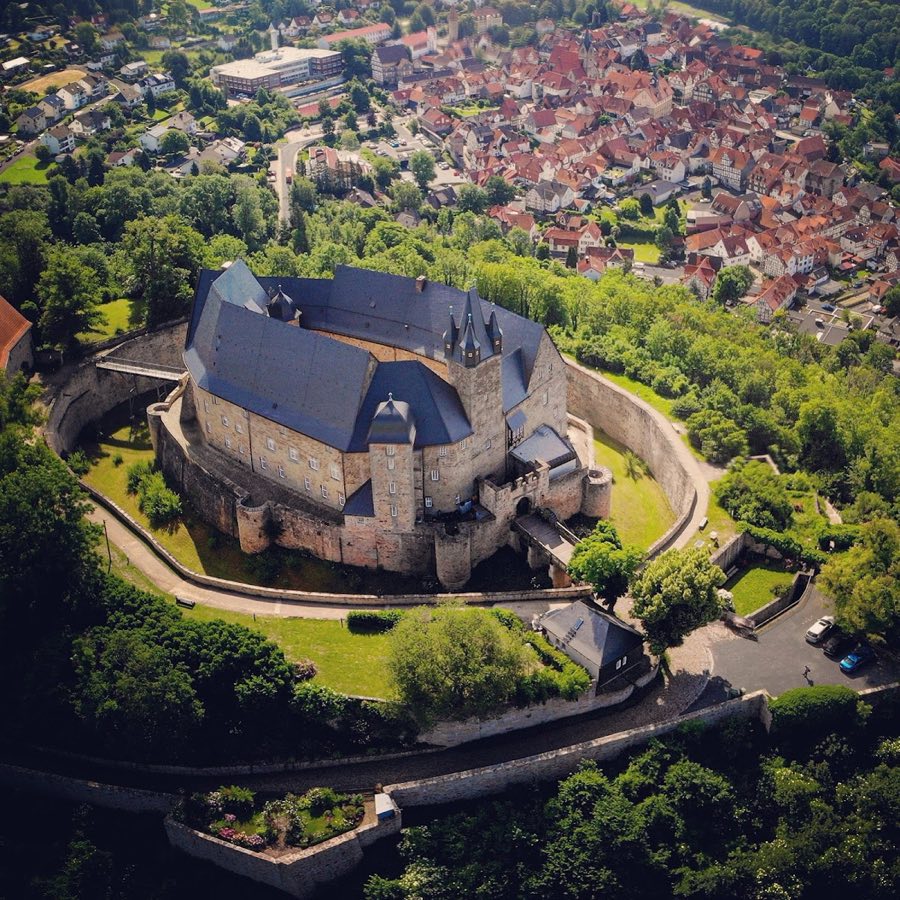
Burg Sensenstein
Germany
CastleRuin14th century
No. 85930
Palace · Germany
No. 85930 · 51.317 N, 9.400 E
For events
Bergpark Wilhelmshöhe is marked as a château or castle venue lead. Capacity, indoor/outdoor spaces, catering rules, and accommodation options are published only after public verification.
Event types: Private events, Cultural gatherings, Filming and photography
Quick summary
Bergpark Wilhelmshöhe is a palace in Germany with origins associated with the 19th century.
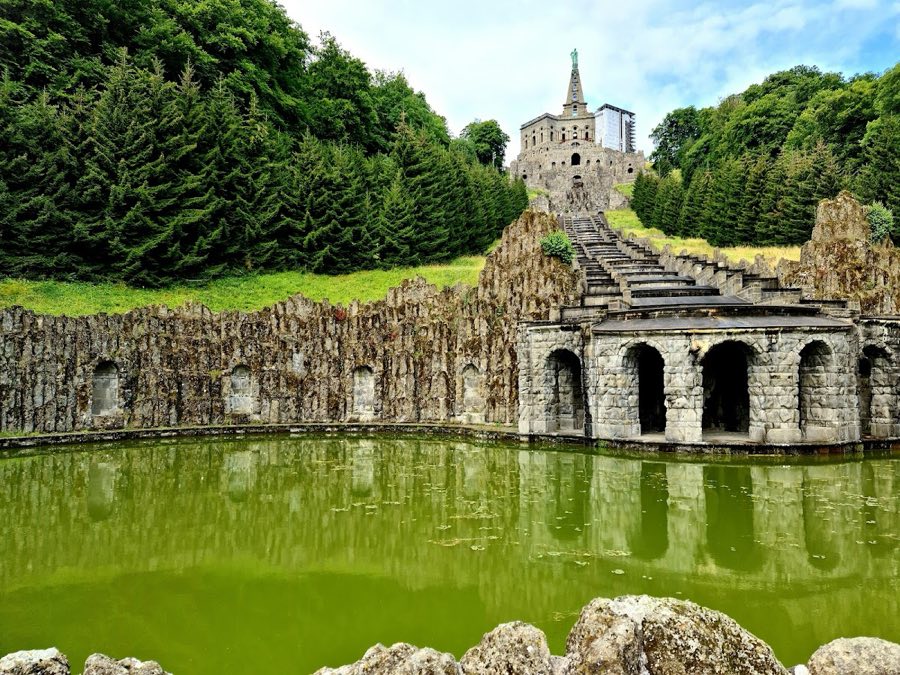
See all castles in GermanyBergpark Wilhelmshöhe in Kassel, Germany, is a vast hillside landscape park created by the rulers of Hesse‑Kassel and shaped between the late 1600s and the 19th century, with major phases in the Baroque and later English landscape styles. Built and expanded by successive landgraves and electors, the park became notable for its monumental hilltop monument and engineered water spectacles, and the adjacent palace played recurring roles in regional governance and dynastic display.
The site’s history begins before the park, when a monastery was established there in the 12th century and later dissolved during the Reformation around 1517–1518. Surviving monastic buildings were converted to a hunting lodge by a later landgrave, and an early hunting palace stood on the hilltop by the early 1600s. These earlier uses set the stage for the large-scale garden and monumental programme that followed.
In the early 1700s the hilltop ensemble around the hill-top statue known as Herkules and its sequence of grottos and cascades was created under the authority of the ruling landgrave. Public displays of the engineered waterworks were held in June 1714, and the hill monument was set in place in 1717. In the closing years of the 17th century there was also a trial to develop a steam pump, but the device failed and a planned collaboration with the mathematician Gottfried Wilhelm Leibniz did not go ahead.
From the mid-1780s the lower slopes and palace precincts were remade in the manner of English landscape gardens. The palace at the lower end of the main axis was rebuilt between 1786 and 1798 in a restrained classical idiom, and a series of designed views, ornamental ponds, engineered bridges and deliberate ruins were added through the 1790s and into the early 1800s. A faux medieval ruin was erected as a romantic garden feature in the 1790s and other garden constructions, ponds and waterfalls joined the water sequence descended from the ridge.
Political upheaval in the Napoleonic era brought the park into new use when Jérôme Bonaparte ruled the Kingdom of Westphalia from the palace beginning in 1806; the hill and grounds were briefly renamed Napoleonshöhe, and the palace was enlarged and given a theatre during this period. After the fall of Napoleon the previous state structures were restored in 1813, and subsequent rulers continued to modify the grounds, including the addition of a new waterfall in 1826.
Mid-19th century conflict transformed the political status of the prince‑state when it sided with Austria in the 1866 war against Prussia; Prussia annexed Hesse‑Kassel and the town ceased to be a princely seat. The palace again figures in later political events: in 1870 the deposed emperor Napoleon III was held at the palace, and from 1899 the German emperor used the building as a summer residence, restoring the site’s role as a stage for high politics.
In the 20th century the park underwent mainly conservation work rather than major expansion. The palace and parts of the water system suffered damage in the Second World War; the palace was rebuilt in the late 1960s and early 1970s and repurposed as a museum. A nineteenth-century waterfall feature lost its hydraulic connection after wartime damage, and one tower of the romantic ruin was destroyed in bombing and reconstructed in the early 21st century. Park management was consolidated under a regional heritage institution in 2006 (renamed in 2023), the park joined a European garden network in 2009, and UNESCO inscribed the ensemble as a World Heritage Site on 23 June 2013.
The park covers about 2.4 square kilometres on a steep hillside running from the palace at roughly 282 metres elevation up to the Karlsberg ridge at about 526 metres, with the Herkules monument sited near 515 metres. The principal visual axis runs from the hill monument down to the palace, a drop of approximately 238 metres, and a long straight avenue links the city edge to the park for nearly 4.5 kilometres. The overall layout combines engineered hydraulic terraces and cascades on the upper slopes with broad lawns, ponds and ornamental ruins lower down.
The Herkules monument complex crowns the ridge and dates to the early 18th century, with the statue installed in 1717 and the ensemble completed around 1701–1717. The monument stands above a carefully arranged sequence of grottoes, stepped cascades and basins that channel gravity‑fed water. Named elements include a water grotto fitted with a hydraulically driven roller organ, an artichoke-shaped basin, several curved cascade runs, and a set of large cascades terminating at a Neptune basin and grotto. Recorded height figures for the Herkules structure vary, with descriptions citing either a 71-metre total or a composition of a 40-metre pyramid topped by an 8.5-metre bronze figure.
The hydraulic system itself is an extensive gravity-fed network of reservoirs, conduits and hand‑operated valves fed from catchments on the Habichtswald ridge. The large inlet basin known as Sichelbachbecken measures about 6,300 square metres in surface area, reaches around 7 metres in depth and can hold roughly 40,000 cubic metres. For the staged water spectacles the available working volume is about 2,100 cubic metres, and the designed sequence is arranged so water passes each viewing station over intervals of roughly ten minutes, with a complete descent taking about one hour and fifteen minutes. Contemporary discharge figures used in the displays have included flows measured at several hundred cubic metres in short bursts, and jets projected tens of metres high during the show sequence.
Lower down, a broad artificial pond created in the late 18th century serves as the receiving basin for the cascades; this lower pond was constructed between 1785 and 1791. Nearby features added in the same era include a formal fountain pond from 1789–1790, a decorative bridge with a small “hell” pond from 1792–1793, and a deliberately designed aqueduct built 1788–1792 that evokes a Roman watercourse while dropping water by about 34 metres. A waterfall added in 1826 later lost its hydraulic connection after wartime damage and was not reconnected to the main sequence.
Several built structures anchor the park’s functional and theatrical character. The palace at the lower terminus was rebuilt in the classical manner during the late 18th century and later adapted for varied official uses. The romantic artificial ruin erected in the 1790s mimics a medieval castle and originally included two towers; one of those towers was destroyed in wartime bombing and rebuilt in the early 21st century. A court theatre erected during the Napoleonic period survives in altered form, and an early 19th‑century greenhouse complex was notable for its early use of iron and glass, later modified in the late 19th century. A single‑storey stone house that once sheltered the cascade overseer now functions as an inn, and a former stable and gardener’s complex mark the park’s operational core. An old railway station building from 1898 now accommodates a visitor centre.
The landscape contains numerous ornamental small buildings and staged vignettes added across the 18th and 19th centuries, including the remains of a late‑18th‑century “Chinese village” on the park’s south‑east fringe. Upper slope stonework and approaches were built with locally quarried basalt; surviving evidence includes worked steles, abandoned column blocks and spoil heaps from an 18th‑century basalt extraction area. Many historic constructions survive in conserved or restored form, with the palace reconstructed in the late 1960s and early 1970s for museum use, a ruined tower returned to its former profile in the first decades of the 21st century, and ongoing restoration work directed at the hill monument and cascade system. Pathways, service roads and later visitor facilities such as two small visitor centres and broad promenades are interwoven with the historic fabric and form part of the park’s built record.
No. 70040
No. 81901
No. 37766
No. 91127
Comments
Comments for Bergpark Wilhelmshöhe will require a verified account before posting.
We'll send a verification link before your first comment is published.