No. 66218
Wąwolnica Castle
Poland
CastleRuin14th century

No. 34482
Castle · Poland
No. 34482 · 51.177 N, 22.282 E
Quick summary
Bełżyce Castle is a castle in Poland with origins associated with the 15th century.
See all castles in PolandZamek w Bełżycach, situated in the town of Bełżyce in present-day Poland, was constructed in the early 15th century by the Polish nobleman Spytko of Tarnów. Built as a fortified residence known as a “castriolum,” it served as a defensive stronghold for the Leliwit-Tarnowski family, a noble lineage bearing the Leliwa coat of arms.
The earliest recorded mention of Bełżyce dates back to 1349, while the castle itself is first explicitly referenced in a document from 1416, confirming its existence by that time. Ownership of the castle changed hands in 1446 when it came under the control of the Pilecki family, also affiliated with the Leliwa heraldic clan. That same year, the castle held significant political importance as it hosted a noble assembly where Kazimierz Jagiellończyk was elected King of Poland.
During the late 16th century, the castle shifted from purely military use to also serve educational and religious functions. It accommodated a school and became a center for the Polish Brethren, a religious community known for its nontrinitarian beliefs. This period highlights the castle’s role as both an administrative and cultural hub.
In 1648, the castle and the surrounding town suffered devastation at the hands of Cossack forces under Bohdan Khmelnytsky, a turning point marked by conflict connected to wider uprisings in eastern Poland. Local tradition preserves a haunting memory of this event through a legend describing nightly moans emanating from the cellars of the ruined castle.
By the late 18th or early 19th century, the structure had been abandoned, reflecting shifts in military and residential priorities. In 1829, the castle’s remains were dismantled to make space for a brewery and distillery, signaling a transformation of the site’s function from noble residence to industrial use. During the Second World War, in 1942, the location served as a dairy facility, indicating continued adaptation.
Since 2017, the site has been the headquarters of the Bełżyce Castle Foundation, an organization dedicated to preserving the legacy and remains of this historic landmark.
The castle in Bełżyce was originally constructed using stone and brick and featured two stories. It was coated with plaster, a common method to protect and smooth the exterior surfaces. The complex was enclosed by a defensive wall accompanied by an earthen rampart, providing an additional layer of fortification.
Among the castle’s notable facilities was a chapel, reflecting its role not only as a residence but also as a place of worship. A small treasury was housed within a tower structure, locally known as a “baszta,” indicating its importance for safeguarding valuables. Adjacent to the main stone and brick construction, there was a wooden section equipped with two fireplaces, offering domestic comfort within the fortress.
Surrounding the castle was an Italian-style garden that included ponds, demonstrating an interest in landscape design and leisure spaces. A wooden bathhouse also formed part of the estate, highlighting amenities for hygiene and relaxation unique for such a setting.
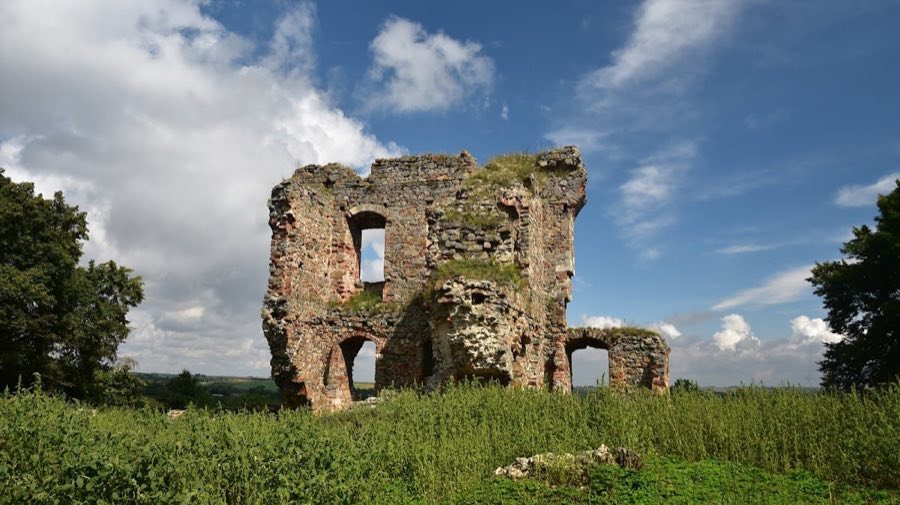
Today, what survives are primarily the lower portions of the castle walls, distinguished by barrel vaults—these are curved, tunnel-like stone ceilings that supported upper floors or ceilings. These structural elements remain in place and provide insight into the castle’s original architectural design and construction methods.
Local legend ties the physical site to stories of restless spirits, particularly the tale of mysterious nocturnal sounds coming from the castle’s cellars, a folklore echo of the violent destruction suffered during the mid-17th century. This oral tradition enriches the historical narrative and connects present-day visitors to the castle’s turbulent past.
No. 66218
No. 10169
No. 53066
No. 95273
Comments
Comments for Bełżyce Castle will require a verified account before posting.
We'll send a verification link before your first comment is published.