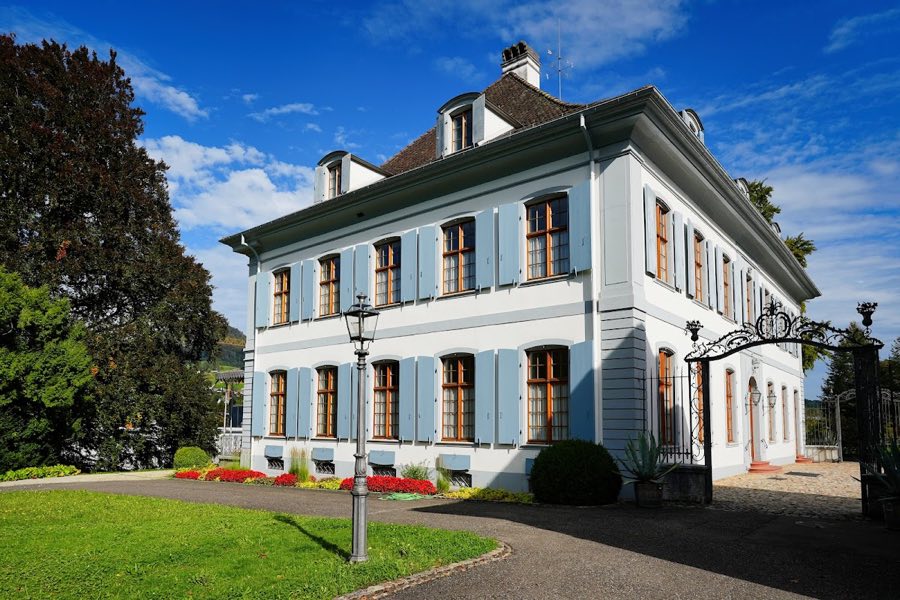
No. 73088
Ebenrain Château
Switzerland
ChâteauRestoredFor events18th century
No. 47508
Castle · Switzerland
No. 47508 · 47.475 N, 7.827 E
Quick summary
Bischofstein Castle is a castle in Switzerland with origins associated with the 13th century.
See all castles in SwitzerlandBischofstein Castle stands as a medieval fortress ruin situated near Sissach in Switzerland. It was established during the mid-13th century by the noble family of Eptingen after they inherited surrounding lands from the now extinct Itkon lineage. This strategic location in the Ergolz valley allowed the castle to play a role in regional control.
Around the year 1250, the lords of Eptingen constructed the castle to assert their presence. Soon after, the site was handed over as a fief to the Bishop of Basel. This ecclesiastical connection not only offered protection but also influenced the castle’s name—Bischofstein, meaning “Bishop’s Stone.” The earliest written record of a lord holding the castle dates from 1311, mentioning Ulrich von Bischofstein.
In 1356, the castle was likely harmed during a massive earthquake that shook Basel and its environs. While earlier historical accounts suggested repairs and continued use into the 15th century, modern archaeological investigations have revised this understanding. Evidence points to the castle being deserted and gradually falling into ruin soon after the earthquake.
Ownership saw several transitions in the following centuries. By the mid-1400s, the castle was sold to local noble officials associated with Basel’s administration. In 1464, it passed to Wernher Truchsess von Rheinfelden and Peter Offenburg, with the Offenburg family maintaining possession for about one hundred years. Eventually, in 1560, the city of Basel acquired the remains and rights of Bischofstein, placing its management under the Farnsburg office, a regional authority.
Throughout its post-medieval history, the site suffered from repeated unauthorized digging by treasure seekers, which compromised archaeological layers. Professional excavations began in the early 20th century, initially in 1914 and 1916, and later resumed more extensively from 1926 onward with community support. A comprehensive excavation and preservation effort was completed in 1937–38, incorporating discoveries from previous digs and stabilizing the ruins for future study.
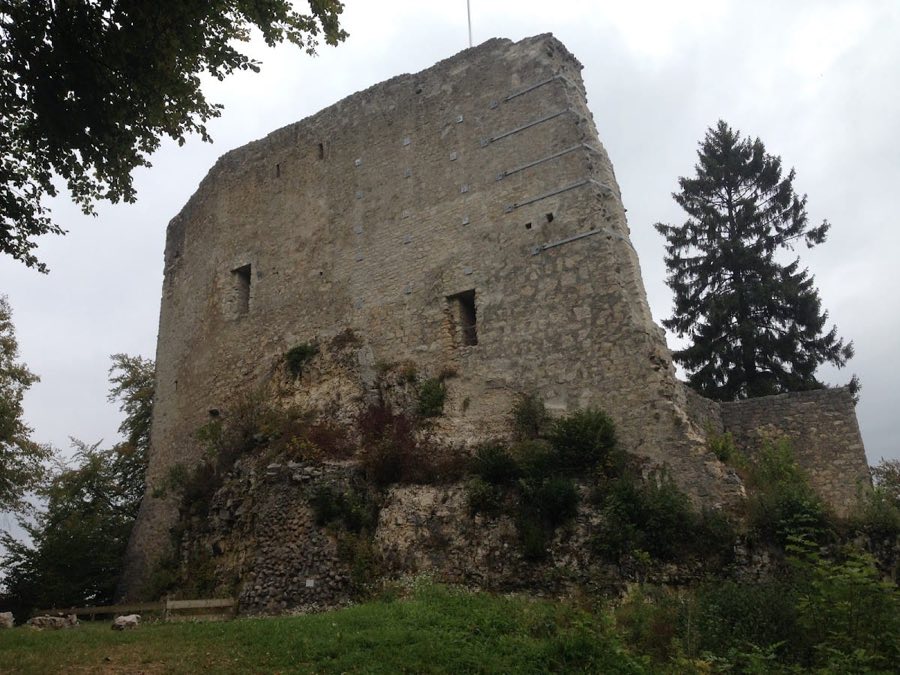
Bischofstein Castle occupies a ridge overlooking the Ergolz valley, utilizing natural and manmade defenses to protect its inhabitants. The northwest side of the fortress benefits from a steep rock face, creating a formidable barrier. On the remaining sides, defenders dug deep ditches to separate the site from the surrounding land, enhancing its defensibility.
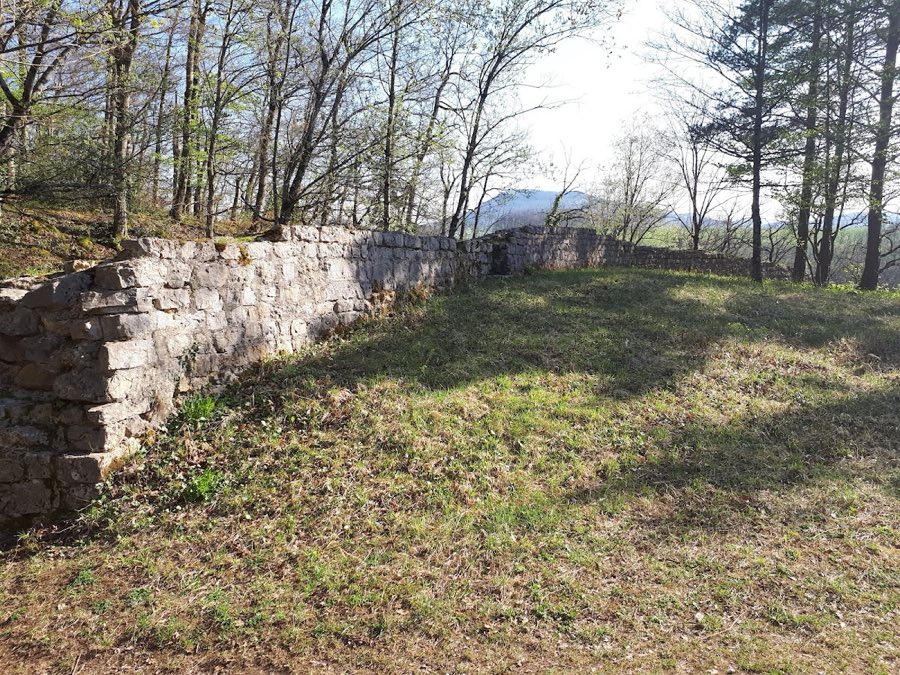
The castle’s original layout reveals two distinct construction stages. The earliest phase included an irregularly shaped ring wall that traced the contours of the natural rock outcrop. This protective wall was constructed from local stone, reaching over 1.5 meters thick above the defensive ditch, but became thinner where the sheer cliff offered protection. The main entrance was positioned on the northeast side, accessible by crossing a ramp over the ditch. Remains of a strong gate structure survive near this original entry point.
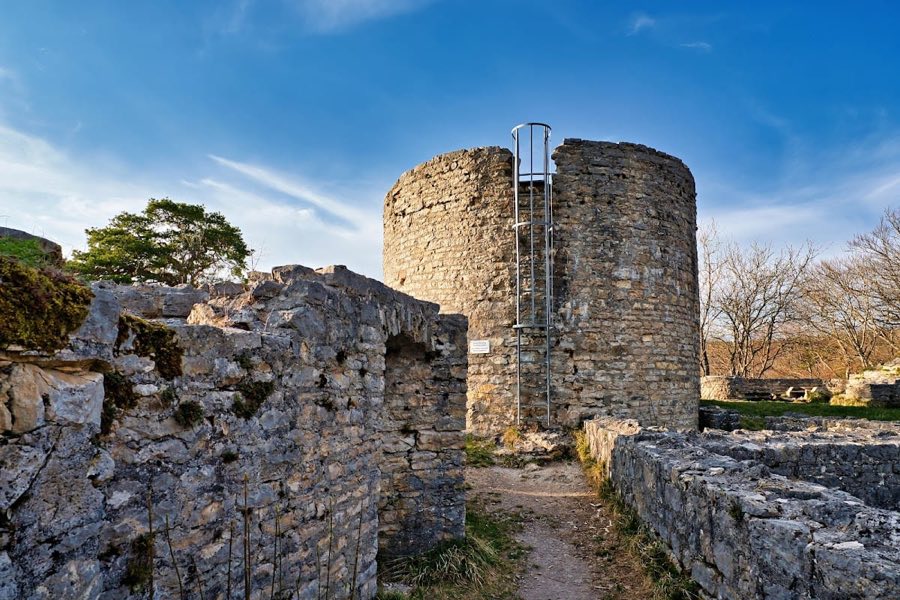
Dominating the center is a large, circular tower known as a bergfried, which served as the main defensive and lookout structure. Its walls measure about 2.3 meters in thickness, enclosing an internal space roughly three meters across. While the exact original height remains uncertain, estimates suggest the tower may have stood as tall as 20 meters and could have been crowned with a conical roof.
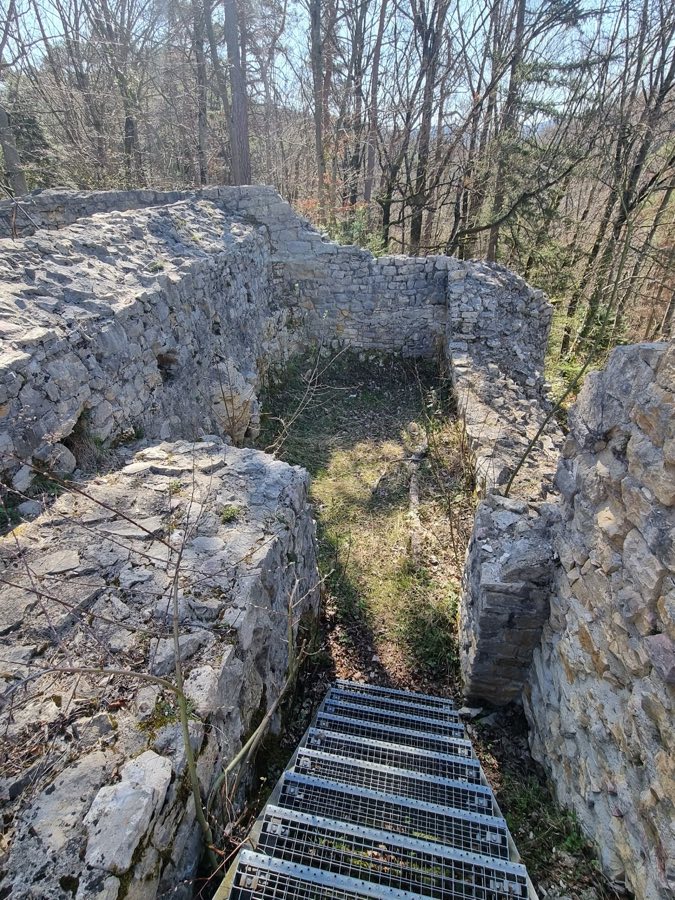
Between the bergfried and the enclosing wall, stone buildings housed various functions. In the southwest section lay a two-room residential building called the palas. The northern chamber featured vaulted ceilings and included a cellar beneath. Several pointed arch windows crafted from distinctive red sandstone were part of this building; fragments of these windows were recovered from the ruins and later incorporated into restored wall sections as display features.
To the south of the courtyard, additional stone structures probably served as stables on the lower floor with living quarters above. A cistern designed to filter and collect water was located in the northern courtyard area, likely capturing rainwater from nearby rooftops.
Later developments added greater protection and utility. A new outer gate complex was constructed on the west and south sides, accompanied by a zwinger—a fortified outer ward or courtyard space. This required piercing the original southern ring wall to create an inner gate, linking the new outer ward with the main courtyard, while the original main gate was sealed.
Artifacts found at Bischofstein indicate a surprisingly comfortable lifestyle for its age. The discovery of many stove tiles, both glazed and unglazed, shows that multiple ovens were in use. Several windows had partially glazed glass panes held by lead framing. Numerous iron fittings, a nearly complete brass cooking pan, and a bronze lock have also been unearthed, providing insights into daily life within the castle walls.
Construction materials came from fresh quarrying of stone within the castle’s own defensive ditches, but builders also reused masonry salvaged from an adjacent older ruin linked to the earlier Itkon family estate. Today, visitors can see the preserved remains of the bergfried, sections of the ring wall, the gate area, zwinger, and surviving residential buildings. An observation platform accessed by ladder allows for views from the main tower. Selected artifacts uncovered during excavations are displayed in local institutions such as the Heimatmuseum Sissach, Kantonsmuseum Baselland, and the Historisches Museum Basel, helping to illustrate the castle’s historical importance.
No. 73088
No. 71740
No. 75260
No. 67281
Comments
Comments for Bischofstein Castle will require a verified account before posting.
We'll send a verification link before your first comment is published.