No. 47508
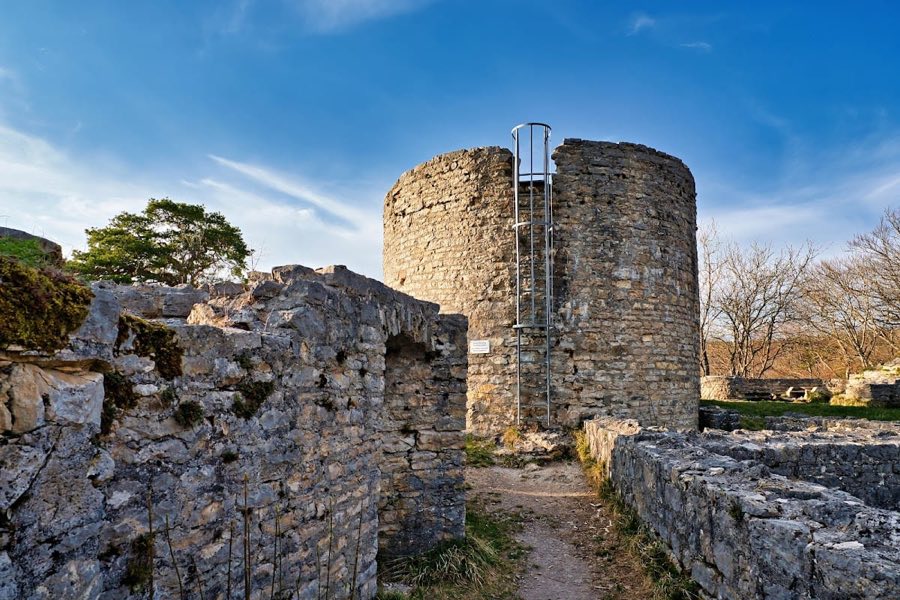
Bischofstein Castle
Switzerland
CastleRuin13th century
No. 73088
Château · Switzerland
No. 73088 · 47.464 N, 7.805 E
For events
Ebenrain Château is marked as a château or castle venue lead. Capacity, indoor/outdoor spaces, catering rules, and accommodation options are published only after public verification.
Event types: Private events, Cultural gatherings, Filming and photography
Quick summary
Ebenrain Château is a château in Switzerland with origins associated with the 18th century.
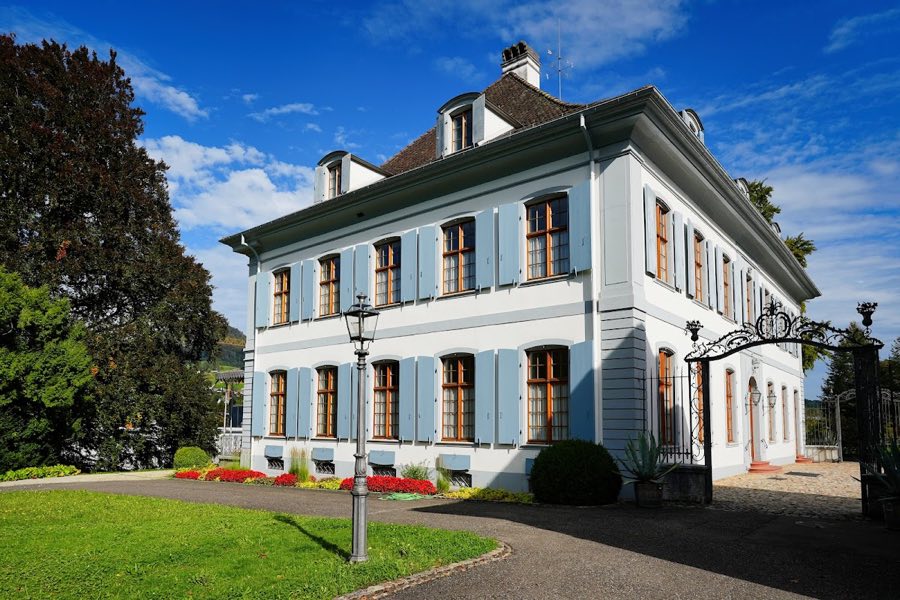
See all castles in SwitzerlandEbenrain Château in Sissach, Switzerland, is a late 18th-century Baroque country house erected between 1774 and 1776 for a silk-ribbon manufacturer from Basel. Built as a summer residence by affluent Swiss patrons, it ranks among the most important late Baroque rural houses in northwestern Switzerland and was set in formally arranged grounds that marked the social standing of its owners.
Construction and early decades: the house began as a modest plan that was enlarged into a luxurious estate during its building phase in the 1770s. At the same time formal gardens were laid out to the north and south of the house. In the first decades of the 19th century those formal arrangements were reshaped into English-style landscape parks, while one strong axial feature, twin lines of linden trees along the main drive, survived essentially unchanged.
19th-century ownership changes: the estate passed through several owners during the 1800s. In 1817 it was sold to Johann Rudolf Ryhiner-Streckeisen; Ryhiner faced legal charges of bigamy and took his own life with a pistol on 29 July 1824. Later transactions moved the property through a succession of private hands: a sale in 1836, a change of ownership in 1838 to an art collector recently returned from Mexico who died at the house in December 1840, and further transfers in 1849 and 1850 to military and noble owners. The estate changed hands again in 1857 and 1860, and in 1872 was acquired by a textile merchant who had settled in Alsace but left that province after the Franco–Prussian War (the 1870–1871 conflict that led to Alsace joining Germany).
Late 19th century and Second Empire alterations: under this owner the grounds were enlarged, farming activity was intensified, and the residence was reshaped in the fashion of the Second Empire. The main building was enlarged, interiors were reworked, the exterior was repainted in beige, and park outbuildings were added. Most of the later outbuildings were removed in subsequent decades.
20th century restorations and public ownership: after the death of the late-19th-century owner in 1890 and the death of his widow in 1911, the property passed to their daughter and her husband, a French naval officer and diplomat, who lived there until his death at the house in 1930. The heirs then sold Ebenrain to a new private owner who undertook an extensive restoration program lasting nine years (one account gives the dates 1934–1942). That owner displayed a collection of modern French paintings at the estate, lived in an outbuilding, and worked with the previous family to reverse many of the Second Empire modifications, returning the house toward its Baroque character and restoring a blue-gray exterior color. After a stroke in 1946 the owner’s son sold the château to the Canton of Basel-Country in 1951. The canton used the building and park for art exhibitions, concerts and other public events.
Late 20th century to present: road works in 1967 raised a nearby highway and made the park less directly linked to the town, although the house and grounds remain reachable on foot or by bicycle. Between 1986 and 1989 the canton carried out a comprehensive restoration that reinstated the Baroque appearance inside and out, converted the top floor into a large exhibition room, enlarged the cellar, and introduced full access for people with disabilities. The house has been fully accessible since 1989. The agricultural lands once attached to the estate were separated and have been run as an agricultural training centre. Ebenrain Château is listed as a Swiss cultural property of national significance.
The site is organized as a country residence set within paired garden complexes to the north and south. The main house dates to 1774–1776 and retains its character as an 18th-century Baroque rural mansion. The building’s successive modifications from the late 1800s and the 20th century are visible in its fabric, reflecting a cycle of Second Empire enlargement and interior alteration, followed by restoration work that re-emphasized the original Baroque qualities.
The gardens and park survive as a coherent landscape ensemble. The original formal layouts were transformed into English-style landscape parks in the early 19th century, and that later park form is the dominant character today. A prominent axial feature remains: two continuous rows of linden trees that flank the approach drive and preserve the visual centerpiece of the estate.
Late-19th-century additions and later removals are part of the site’s physical history. Park outbuildings and service structures were constructed during the period of Second Empire transformation; most of those ancillary buildings have since been taken down. The main house shows traces of the late-19th-century expansions, the mid-20th-century campaign of restoration carried out over approximately nine years, and the 1986–1989 restoration. The 1980s work also converted the roof-level floor into a large exhibition space and enlarged the cellar, and modifications since then have made the building fully accessible to wheelchair users.
The agricultural component of the estate now functions separately. The farm that once served the residence has been detached from the château and is administered as an agricultural centre. The house and its surrounding park remain an intact ensemble under cantonal ownership and continue to reflect the sequence of 18th-century construction, 19th-century reworking, and 20th-century restoration.
No. 47508
No. 75260
No. 71740
No. 62234
Comments
Comments for Ebenrain Château will require a verified account before posting.
We'll send a verification link before your first comment is published.