No. 75260
Scheidegg Castle Ruins
Switzerland
CastleRuin13th century
No. 67281
Castle · Switzerland
No. 67281 · 47.442 N, 7.894 E
Quick summary
Ödenburg is a castle in Switzerland with origins associated with the 10th century.
See all castles in SwitzerlandRuins of Ödenburg lie above the village of Wenslingen in northwestern Switzerland. The site was established in the medieval period, probably by regional lords associated with the Counts of Homberg. Archaeological evidence indicates activity from the late 10th century and the castle itself is dated to that time; finds continue into the 12th century, showing use across several generations.
By around 1150 the castle appears to have been abandoned. The plan and unfinished masonry suggest occupation ended while construction was still under way. Quarrying within the defensive works shows builders extracted stone from the site, a pattern consistent with financial difficulties or shifting local power rather than destruction in a recorded siege. During 20th-century investigations a localized trace of burning was noted in part of the enclosure.
When the Homberg male line ended in 1223 their fief reverted to Habsburg-Laufenburg, and records place the ruined site under Habsburg-Laufenburg control by 1320. The castle’s original medieval name is not preserved; a folk name meaning deserted castle produced the modern Ödenburg, and some researchers have suggested an older form Heltburg, perhaps derived from a word for hero. Excavation and conservation were carried out in 1941–42, again in 1968, and during 1976–79.
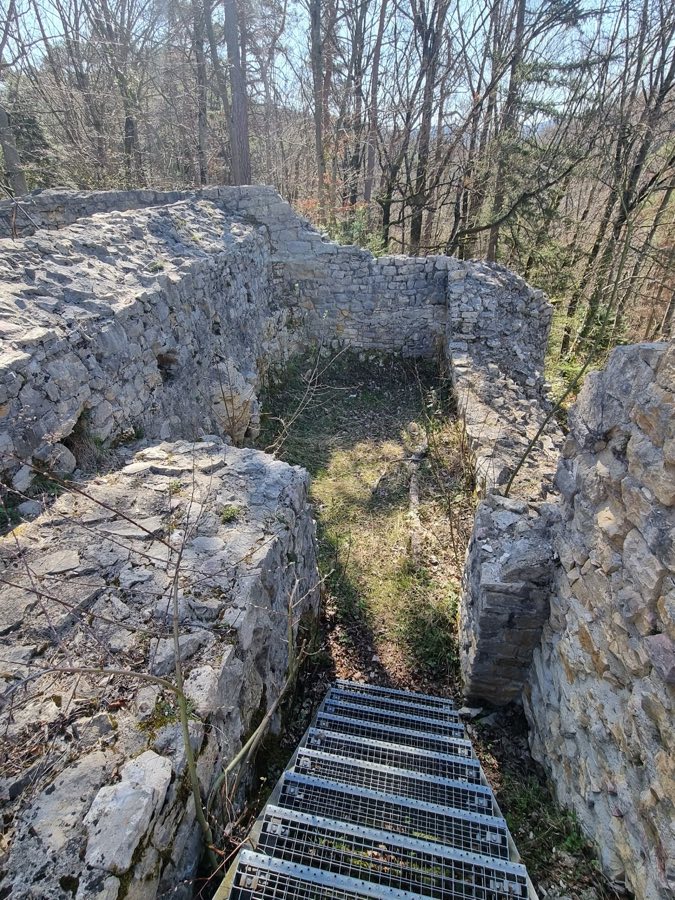
The castle occupies a prominent rock spur at about 566 metres above sea level. Its roughly triangular plan follows the ridge, with natural rock faces protecting the north and southwest flanks and an artificial neck ditch cut into the southeast side. That ditch is deeply quarried and supplied dressed stone used in the castle’s construction.
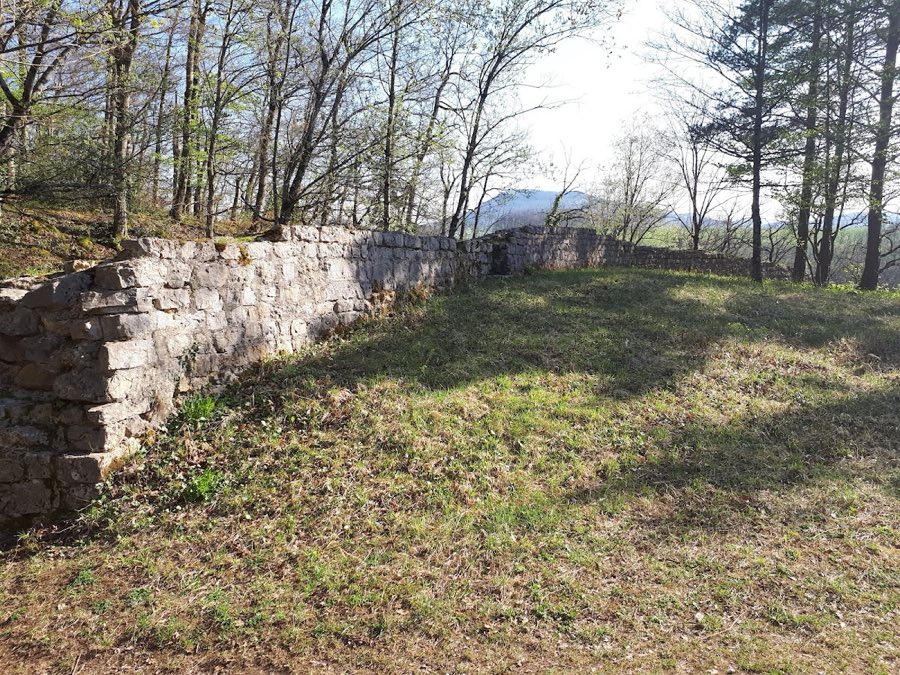
Immediately behind the ditch survives a substantial shield wall about two metres thick, intended to guard the southeast approach; the wall now remains only in fragments. Quarrying traces around the ditch confirm that stone for walls and buildings was taken from the defensive cut.
The entrance faced north and was reached by an ascending vaulted passage within a gate tower. Surviving elements indicate the gate had two swinging leaves and stood roughly two metres above the former walking level. The original approach cannot be traced with certainty; one investigator proposed a slipped ramp, while another suggested a steep wooden structure, possibly a drawbridge, connecting steps below to the gate.
Excavations found foundations and wall remains of stone-built houses alongside evidence for timber structures and a sunken-floor dwelling or pit-house. These varied building techniques point to a settlement combining permanent stonework with lighter timber architecture. A deposit showing burning was uncovered during the 1941–42 work.
The ruin remains fragmentary but has been the subject of archaeological investigation and conservation in the 20th century. Short marked footpaths from nearby villages provide the modern approach to the exposed remains.
No. 75260
No. 71740
No. 47508
No. 73088
Comments
Comments for Ödenburg will require a verified account before posting.
We'll send a verification link before your first comment is published.