No. 56812
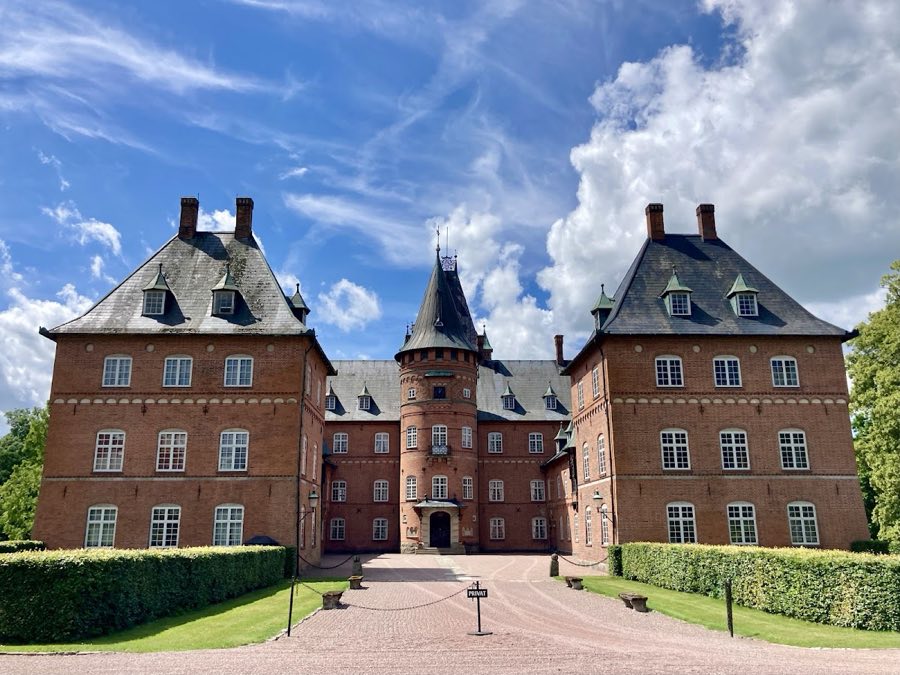
Trollenäs Castle
Sweden
CastleRestored19th century
No. 18914
No. 18914 · 55.751 N, 13.037 E
Quick summary
Borgeby Castle is a castle in Sweden with origins associated with the 11th century.
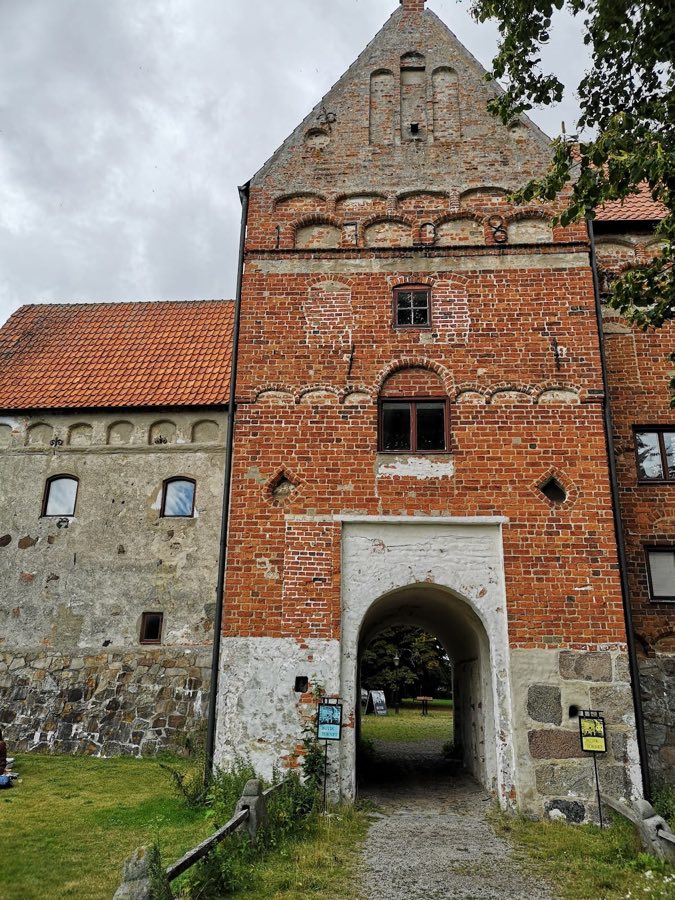
See all castles in SwedenBorgeby Castle is situated in Lomma municipality, Sweden. Its origins lie in the Viking Age, when the site was established around 980 AD as one of King Harald Bluetooth’s trelleborgs—circular fortresses built as strongholds during his reign. These ring-shaped fortifications served both military and administrative purposes and were strategically placed near the Lödde River, between the towns of Lund and Landskrona.
Initially, the fortress was connected with the rule of Toke Gormsen, a figure appointed by Harald Bluetooth as king of Skåne. Toke governed from Borgeby until his death in 986. Unlike many other trelleborgs, Borgeby continued to be inhabited after the Viking Age, as shown by archaeological finds including a late Viking coin scale and locally minted coins from the mid-11th century. This continuity suggests the site remained an important local center into the early medieval period.
In the early 1100s, a stone defensive tower was erected at the heart of the original Viking ring fortress, signaling continued military and administrative use. By the 13th century, a large brick castle was constructed on roughly a quarter of the fortress’s original footprint. This medieval castle was surrounded by a high brick wall, measuring between 10 and 11 meters, and protected by a substantial moat. Several brick buildings from this period were added, including a gate tower that still stands today.
The castle’s history includes conflict, notably in 1452 when the Swedish army under King Karl Knutsson (Bonde) burned it down. Afterward, the site saw the construction of an archbishop’s chapel and a large tower, probably used as the archbishop’s residence. This tower survives but was heavily modified in 1870 when architect Helgo Zettervall carried out extensive restorations, removing much of the original medieval masonry.
Following the Danish Reformation in 1536, control of the castle shifted from church to private hands. In 1540, King Christian III mortgaged it to Jörgen Kock, the mayor of Mälmö. During the 1550s, Hans Spiegel, chamberlain to King Frederik II, built the current main building on the castle grounds. The site’s turmoil continued with damage during the Scanian War in 1678, when Danish forces burned Borgeby, leaving mainly walls standing. Restoration work quickly followed.
In the 18th century, brick stables were added to the estate in 1744. The property entered private ownership again in 1886 when farmer Lars Pehrsson purchased it at auction. It eventually passed to his daughter, Hanna Larsdotter, who was married to artist and author Ernst Norlind. After their son Staffan’s death in 1978, a foundation acquired the castle. Later, Lomma municipality took ownership in 2007 before selling it in 2012 to a private company, Borgeby Slott AB.
Interest in uncovering the site’s deeper past began with aerial photographs in 1974 that revealed traces of the ancient ring rampart. Archaeological excavations took place in 1984 and the early 1990s, exploring cultural layers and dating existing structures. In 1998, further digs confirmed Borgeby as one of Harald Bluetooth’s trelleborgs, identifying details such as a distinctive V-shaped moat found at similar Danish fortresses. Over its long history, Borgeby Castle has featured not only in written records but also in cinematic works, including a 2012 documentary tracing its thousand-year story.
The site of Borgeby Castle preserves features from its origins as a Viking ring fortress through its development into a medieval stronghold. The fortress originally took the form of a circular earthwork with an approximate diameter of 150 meters. Its ramparts were broad, around 15 meters wide, encircling the core area near the Lödde River—a strategic location about two kilometers from where the river meets the Öresund strait. This design reflects the typical trelleborg layout, combining military defense with a compact, organized space.
Within the Viking enclosure, a stone defensive tower was constructed in the early 12th century, occupying the central position of the fortress. This early medieval tower represented a shift from timber to more permanent stone construction, reinforcing the site’s continued importance during that era.
By the 13th century, the focus of occupation moved to a substantial brick castle occupying roughly a quarter of the original fortress area. This castle was protected by a high brick wall standing between 10 and 11 meters tall, encircled by a large moat. Within these defenses, several brick buildings were erected, including a prominent gate tower which remains largely intact today. Its survival offers valuable insight into medieval building techniques and fortification methods.
Following the destruction inflicted by the Swedish army in 1452, new constructions were added. Notably, the site includes an archbishop’s chapel, which endures to the present day. Nearby stands a large tower, believed to have been the private residence of an archbishop. Known as Börjes Tower, this structure experienced significant restoration in 1870 led by architect Helgo Zettervall, who removed much of the original medieval stonework. Today, Börjes Tower serves partly as a space for art exhibitions, blending historical preservation with contemporary cultural use.
The main residential building on the estate dates from the 1550s and was built by Hans Spiegel during the period when the castle was in private hands following the Danish Reformation. Additionally, brick stables constructed in 1744 highlight the continued use and adaptation of the site for agricultural and estate functions well into the early modern period.
Archaeological excavations have uncovered multiple cultural layers at Borgeby, including Viking coin scales and locally minted coins that confirm ongoing occupation well beyond the initial fortress phase. These finds support the understanding that Borgeby remained a continuously active center through the medieval era.
The defensive layout includes a ring rampart with a distinctive V-shaped moat, a feature shared with other known trelleborgs, demonstrating a consistent military design approach pioneered during Harald Bluetooth’s time. Spatially, the castle remains closely associated with Borgeby Church, located just east of the fortress, as well as the surrounding medieval farming village, providing a broader picture of the castle’s role within its local landscape and community throughout history.
No. 56812
No. 75351
No. 32905
No. 60955
Comments
Comments for Borgeby Castle will require a verified account before posting.
We'll send a verification link before your first comment is published.