No. 73440
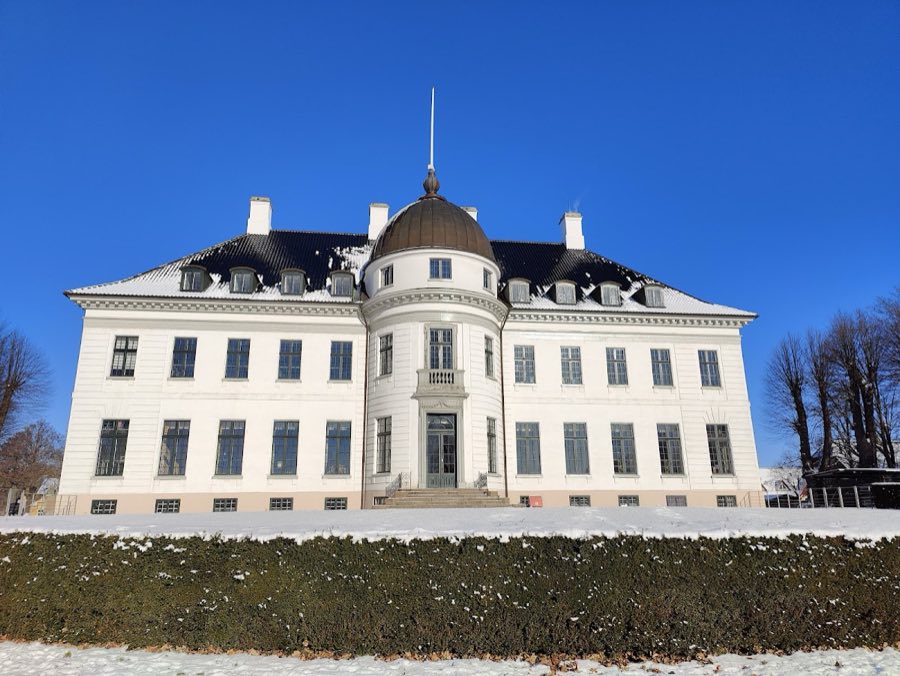
Bernstorff Palace
Denmark
PalaceRestoredFor rent18th century
No. 32905
Palace · Denmark
No. 32905 · 55.750 N, 12.581 E
For sale
Charlottenlund Palace in Denmark is marked with a public sale signal. Asking price, tenure, land area, floor area, and room counts are shown only after public verification.
Status: Public sale signal
Price: Price on application or not publicly verified
Property type: Palace
Notable features: Restored historic fabric, Residential use, Museum or cultural use, Public-access operations
Availability note: Submit an official public listing or register buying interest to complete the sale record.
For events
Charlottenlund Palace is marked as a château or castle venue lead. Capacity, indoor/outdoor spaces, catering rules, and accommodation options are published only after public verification.
Event types: Private events, Cultural gatherings, Filming and photography
Quick summary
Charlottenlund Palace is a palace in Denmark with origins associated with the 18th century.
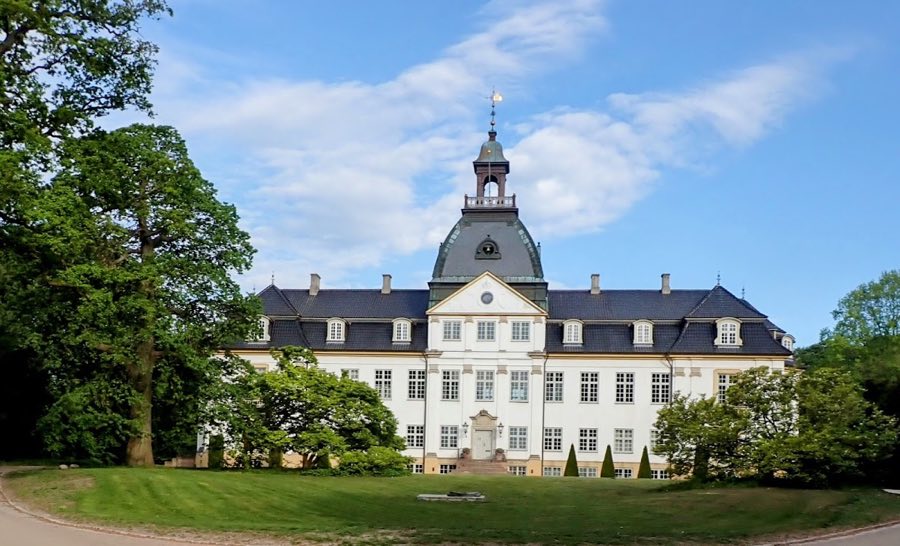
See all castles in DenmarkCharlottenlund Palace, in Charlottenlund, Denmark, is a former summer residence of the Danish royal family built under the authority of the Kingdom of Denmark. The principal building takes its form from the early 18th century and was completed in 1733 in a Baroque manner, after which it served successive royal occupants and later public and scientific institutions, making it an enduring site of royal, civic, and cultural importance.
The site began its recorded life in 1622 when King Christian IV laid out a deer park to replace Rosenborg Deer Park. In 1663 King Frederick III exchanged the fenced grounds to a courtier, who established an inn there; the estate later passed into the hands of Ulrik Frederik Gyldenløve and acquired the name Gyldenlund. The crown recovered the property in a later exchange, and an avenue connecting the estate with Jægersborg was created in 1706 by Christian V.
In 1730 Crown Prince Christian gave the estate to his sister, Princess Charlotte Amalie, and the modest house then standing was replaced by a new Baroque palace finished in 1733. Much of the stone and other building material for that work came from the dismantling of Copenhagen Castle. The palace and nearby grounds became established as a royal residence with formal gardens laid out in the period style.
During the 1800s the palace served for many years as the home of Louise Charlotte and Prince William of Hesse-Kassel, while the surrounding park remained open and popular with the public for excursions and summer music. In 1869 the future King Frederick VIII and his wife took up residence there; their sons Christian, later Christian X of Denmark, was born in 1870, and Haakon VII of Norway was born in 1872 at the palace. A substantial rebuilding and enlargement was carried out in 1880–81, adapting the appearance of the house and creating a large central reception hall beneath a newly added dome.
Queen dowager Louise lived at the palace until her death in 1926 and was the last member of the royal family to make it a permanent home. The building received protected status in the early 20th century, and the royal household ceased official use of the property in 1935. That same year the Danish Biological Station, an institute founded in 1889, moved into the premises; the institute later became the Danish Fishery Survey and in its final years was known as DTU Aqua.
In 1938 a marble obelisk brought from Greenland, funded by the Danish and Icelandic states, was set in the west garden in honour of Frederick VIII and Queen Louise. The following year the national aquarium opened at the garden entrance and remained there until a new aquarium opened in 2013. In 2001 the institute and grounds became part of the Technical University of Denmark as DTU Aqua. When DTU Aqua relocated in 2017 management of the palace and park passed to a private company, which adapted the Knights’ Hall into a museum space displaying original interiors and paintings. From 2019 the palace has been occupied by companies and used for cultural events, with the Great Hall (Kongelig Salon, meaning Royal Salon) employed for occasional classical concerts. In 2022 reports raised the possibility of the property being offered for sale amid an administrative dispute, but as of August 2023 the site remained open to the public.
The palace complex reads as a large Baroque house given later 19th-century additions, set within a wooded estate and formal grounds. The main building preserves the 1733 Baroque core, which incorporated a substantial quantity of material reused from the demolition of Copenhagen Castle. In the 1880–81 works the house was expanded and its street-facing front was reshaped to present a more French-inspired appearance, while the garden front was given a pronounced central projection. A new dome with a lantern was placed over the centre, creating a lofty central reception space beneath it.
Beneath the dome the principal interior has served as a great hall used for public concerts in recent years, and a historic ceremonial chamber dating from the earlier palace phase, the Knights’ Hall, has been converted into a museum room where original interior fittings and portraits are on display. On each lateral face of the building there are tall projecting viewing bays that extend the full height of the house and give elevated sightlines toward the water.
The grounds form a wooded park of nearly fifty hectares around the palace, with formal garden areas occupying roughly fourteen hectares. The original Baroque parterre was reworked in the 1880s into a landscape that follows English-style Romantic taste, introducing winding lawns and groups of trees in place of strict geometric beds. Small ancillary structures survive across the property, including an ice house and a yellow, thatched timber-framed building that at times served as a wash house and later as a guard house for the Royal Life Guards.
A polished marble obelisk quarried in Greenland stands in the west garden, erected in 1938 through joint Danish and Icelandic funding as a memorial to Frederick VIII and Queen Louise. The park borders both a beach park and Charlottenlund Forest, and the palace dome affords views across the Øresund toward the strait. The principal rooms and selected park features remain in use today for museum display, events, and office functions.
No. 73440
No. 38933
No. 60955
No. 74920
Comments
Comments for Charlottenlund Palace will require a verified account before posting.
We'll send a verification link before your first comment is published.