No. 25508
Kalmar Castle
Sweden
CastleRestoredFor events12th century
No. 76081
Castle · Sweden
No. 76081 · 56.871 N, 16.643 E
Quick summary
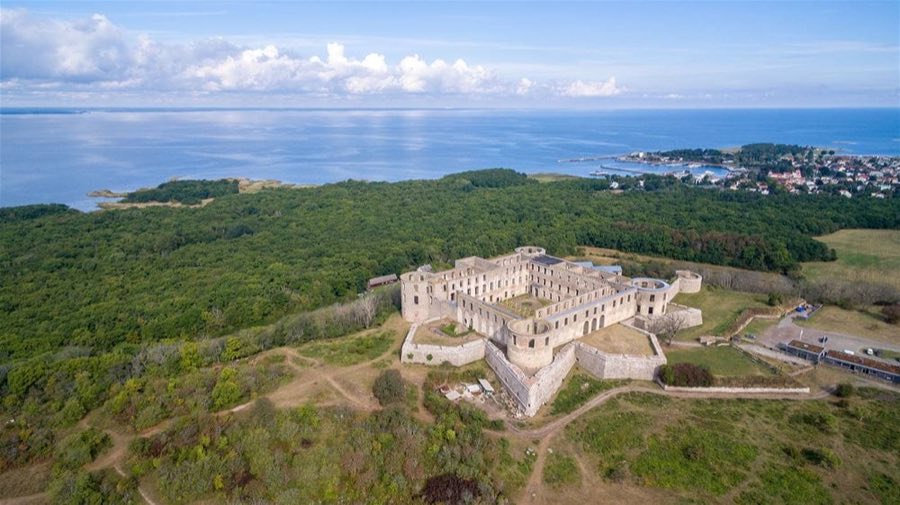
Borgholm Castle is a castle in Sweden with origins associated with the 12th century.
See all castles in SwedenBorgholm Castle is located in the municipality of Borgholm in present-day Sweden and was originally built by medieval Swedish builders. Its origins date back to the late 12th century, likely founded during the reign of King Knut I (1167–1195) as a fortress designed to defend the waters of the Kalmar Strait and the island of Öland from potential attackers across the Baltic Sea. The earliest written record mentioning the castle appears in 1268, confirming its early importance.
During the 13th and 14th centuries, the fortress was expanded beyond its original stone tower to include a thick ring wall enclosing a courtyard and multiple defensive towers. Its position allowed it to control critical maritime routes between the northern and southern parts of Scandinavia. The castle’s proximity to Kalmar, a major political center in the Kalmar Union between 1397 and 1523, and its location near the strategically significant island of Gotland, placed Borgholm Castle at the heart of regional conflicts.
The castle frequently changed hands throughout the late medieval and early modern eras. Danish forces attacked and damaged it notably in 1361 and again during the Kalmar War (1611–1613). The castle was taken by Denmark in 1611, swiftly recaptured by Sweden within the same year, lost again in 1612, and finally returned to Swedish control under the 1613 Treaty of Knäred. These conflicts reflected the broader struggle for dominance in the Baltic region.
In 1572, King Johan III initiated a Renaissance-style reconstruction of the castle led by the Pahr family of architects. This project transformed Borgholm into one of Sweden’s earliest bastion-type fortresses, marking an important architectural evolution. Work was halted in 1593 by Duke Charles but resumed in 1602, continuing until the Kalmar War erupted. The war’s aftermath left the castle in poor condition, with only partial repairs attempted.
From 1651 onwards, King Karl X Gustav commissioned the renowned architect Nicodemus Tessin the Elder to redesign the castle in the Baroque style. The plan included four wings arranged around a courtyard, but construction stopped after Karl X Gustav’s death in 1660, leaving only three wings completed. Over time, the castle gradually fell out of military use.
By the 18th century, parts of Borgholm Castle housed a small military garrison and a prison, while other sections served industrial functions such as textile dyeing. On October 14, 1806, a fire caused by a faulty chimney, fanned by strong winds, destroyed much of the structure’s roof and interior, reducing the castle to a ruin with only the stone walls standing.
Since 1929, archaeological investigations have uncovered various elements of the castle’s long history through several excavation campaigns conducted periodically. More recent efforts, supported by European Union funding, aim to preserve and enhance understanding of this important medieval and early modern site.
Borgholm Castle’s ruins are situated atop a limestone cliff known locally as the Landborg, approximately 25 meters above the surrounding terrain. This elevated position provided natural protection on the west and north sides and offered commanding views over the Kalmar Strait. The castle’s overall plan reflects successive building phases from the late 12th century onward, retaining a blend of medieval, Renaissance, and Baroque elements.
The original medieval fortress centered on a prominent limestone tower roughly 20 meters high, known as a donjon or keep. This tower was surrounded by a ring wall equipped with three flanking towers positioned to the east, south, and west. A square gate tower likely faced the nearby limestone plain, or alvar, controlling approach routes. Within the walls stood a medieval stone building called the gamla kungshuset, or old king’s house, built in the early 14th century on the northern side. These features established a compact and defensible stone enclosure typical of Scandinavian castles of the period.
During the Renaissance rebuilding commissioned by King Johan III, the castle’s layout was reshaped into a square plan with rounded towers at each corner. The main residential wing was oriented toward the Kalmar Strait. Notably, the original donjon was preserved and restored within the courtyard as a deliberate homage to the castle’s origins. Construction incorporated locally quarried limestone from the surrounding alvar and the island of Gotland, while timber for structural elements and scaffolding was brought from the nearby region of Småland.
In the Baroque phase under Nicodemus Tessin the Elder, earlier medieval stone towers including the original keep and rectangular gate towers were demolished to make way for three of the planned four wings. This redesign adapted the fortress to the architectural ideals of the time but was never fully completed. By the 18th century, some roofing remained over parts of the castle, which housed a small garrison and a prison, with better preserved northern sections used for textile dyeing operations.
The devastating 1806 fire left the castle’s interior and roof structures destroyed, with only the stone walls enduring. Today, these surviving walls trace the castle’s historical footprint, revealing foundation layouts and defensive features documented through ongoing archaeological work. Finds include remnants of fortification walls and tower bases from various building campaigns.
Today, the site stands as a protected monument and serves as a striking reminder of Borgholm Castle’s layered history, combining its origins as a medieval stronghold with Renaissance ambitions and Baroque planning, all set high above the Baltic coast.
No. 25508
No. 42748
No. 75588
No. 14525
Comments
Comments for Borgholm Castle will require a verified account before posting.
We'll send a verification link before your first comment is published.