No. 66809
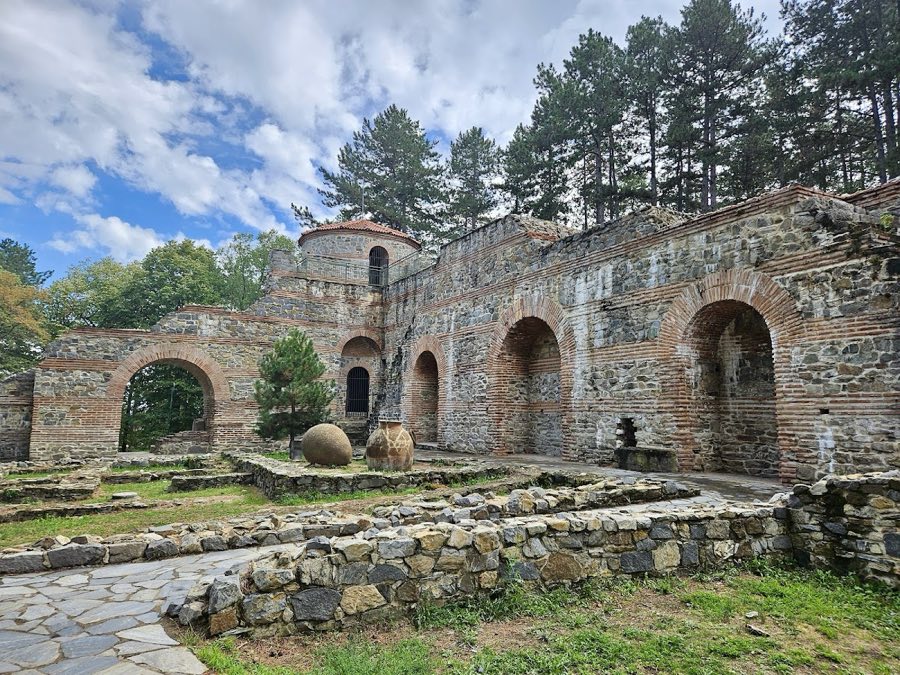
Hisarlaka Fortress
Bulgaria
CastleRestored6th century
No. 84501
Castle · Bulgaria
No. 84501 · 42.996 N, 23.824 E
Quick summary
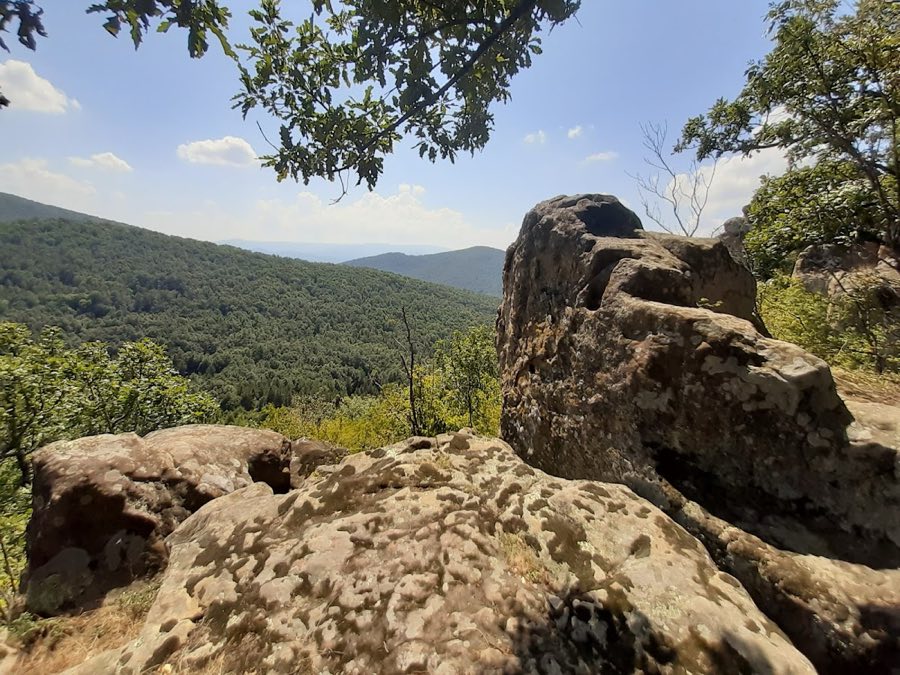
Bozhenishki Urvich is a castle in Bulgaria with origins associated with the 20th century.
See all castles in BulgariaBozhenishki Urvich, in the municipality of Bozhenitsa, Bulgaria, began as a fortified site constructed within the Early Byzantine defensive system.
People lived on this ridge long before the fortress walls were raised; archaeological work found evidence of prehistoric habitation. The first substantial works on the fortress date to the late fifth and early sixth centuries, when two concentric lines of defence were established as part of the Byzantine frontier network.
The stronghold grew and changed over the medieval centuries and reached its greatest development in the thirteenth and fourteenth centuries. During that period builders added an outer defensive wall that closed off the single northern approach. By the end of the fourteenth century the fortress served as the headquarters of the boyar (sevast) Ognyan, who acted as a regional commander (kephale) under Tsar Ivan Shishman.
A medieval inscription connected with sevast Ognyan came to light in winter 1918–1919 when a shepherd, Nedyalko Umenkovski, found a carved stone among the roots of a fallen tree; Academician Petar Mutafchiev transcribed and published the inscription. Archaeological work at the site is recorded from 1918 onward. The fortress was declared an object of national significance in 1966. A focused excavation campaign carried out by an expedition named Sevast, led by Pavel Dishev with team members including Vasil Dimitrov, Mitrofan Velev and architect Yordan Yordanov, began in 1971 and took eight years to uncover the main structures; later efforts concentrated on conserving and restoring what had been revealed.
Near the gates excavators recovered a hoard of 1,327 silver coins and half-groshi buried at shallow depths. The coins show the image of Tsar Ivan Alexander but many pieces were re-stamped with the name of his successor Ivan Shishman and an image of the Virgin with Child on the obverse. Ceramic fragments and Byzantine coins from the reigns of Justin I and Justinian I were also recovered during investigations.
The fortress occupies a narrow spur on the northern slope of the Lakavishki (also recorded as Lakavitsa) ridge and is organized in three defensive belts. Two of these belts belong to the late fifth and early sixth centuries and reflect the early Byzantine phase, while a later ring of fortification was added in the fourteenth century. The defended complex encloses a total area of about 1,600 square metres, with the citadel or inner stronghold covering roughly 80 square metres.
The principal masonry remains include an inner wall that runs approximately 200 metres and reaches widths of up to about 2.7 metres in places, and an outer curtain that survives to heights between four and six metres. The outer face is reinforced at intervals by four projecting buttresses. These walls present successive building phases, with late antique foundations preserved beneath medieval repairs and additions.
Within the enclosed area excavators documented a deep water cistern cut into the rock, measured at roughly ten metres in depth and holding water with the level recorded at around four metres at the time of study. A small chapel hewn directly into the rock was found inside the fortress, and in the north-eastern sector a rock-cut church contains a ruined rock icon representing Saint George the Victorious, attesting to the site’s religious use in the medieval period.
Fortified towers and hidden features were part of the defensive plan. The south-west corner tower contained a concealed exit roughly 7.4 metres long and an internal shelter arranged to hold eight people; these passages and the shelter have since been filled with earth. Around the perimeter archaeologists recovered hundreds of military objects, including arrow and spearheads and stone missiles, together with the skeletal remains of fighters, indicating violent encounters at the walls.
Excavations also exposed a necropolis of forty-eight graves and revealed a monastic complex beneath the fortress mound, linking the place to both burial practice and monastic life. The coin hoard found near the gates lay at depths between 0.2 and 1.5 metres and the struck coins exhibit both the portrait of Tsar Ivan Alexander and later over-stamping in the name of Ivan Shishman, with the Virgin and Child shown on the obverse. Early Byzantine coins from the reigns of Justin I and Justinian I and a range of ceramic finds further document the long sequence of use recorded at the site.
No. 66809
No. 26439
No. 76370
No. 79488
Comments
Comments for Bozhenishki Urvich will require a verified account before posting.
We'll send a verification link before your first comment is published.