No. 45329
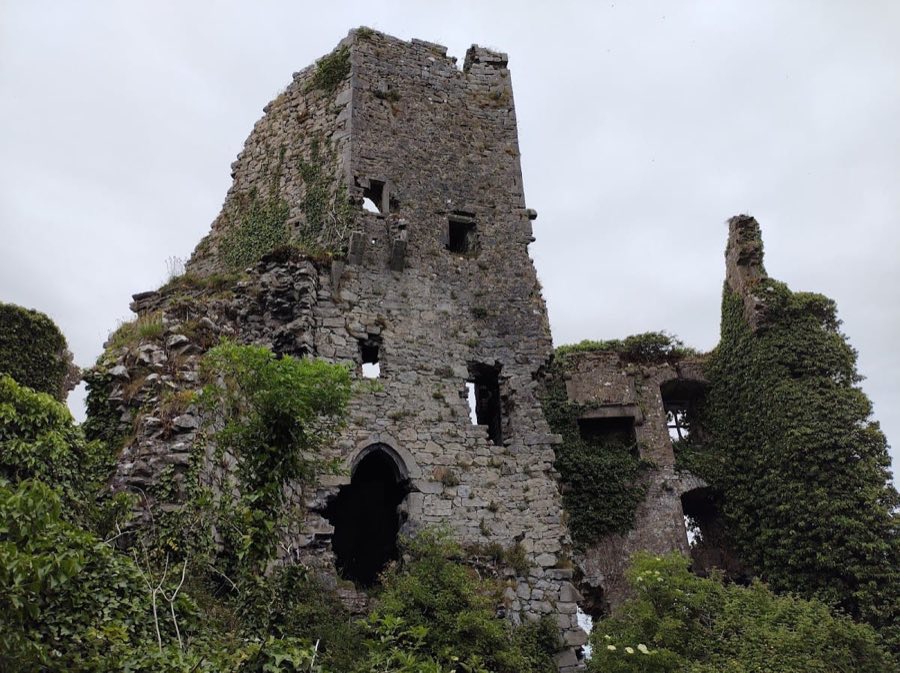
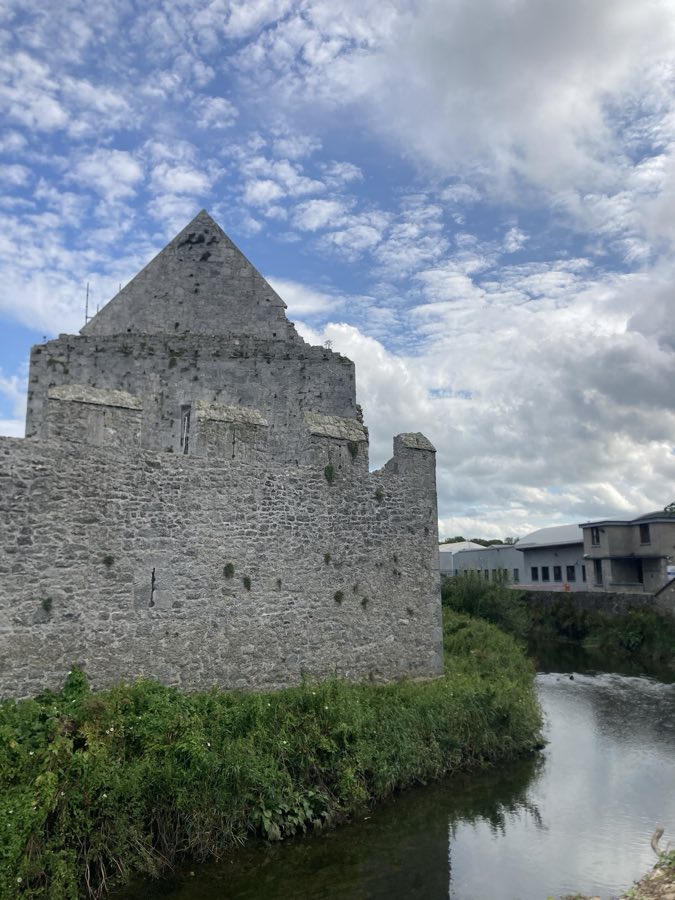
Carrigogunnell Castle
Ireland
CastleIntact15th century
No. 50521
Tower house · Ireland
No. 50521 · 52.700 N, 8.812 W
For rent
Bunratty Castle is marked for bookable castle accommodation. Nightly pricing, sleeps count, stay rules, and amenities are displayed only when public operator data is available.
Rental type: Hotel / bookable stay, Short-stay rental
Short-term availability: Bookable accommodation signal
Quick summary
Bunratty Castle is a tower house in Ireland with origins associated with the 17th century.
See all castles in IrelandThe site of Bunratty Castle in County Clare, Ireland, has a long history beginning as a Viking settlement and trading camp during the 9th and 10th centuries. This early settlement was reportedly destroyed by High King Brian Boru in 977, although no archaeological evidence has confirmed the exact location of this Viking camp.
Around 1250, King Henry III of England granted the district of Tradraighe to Robert de Muscegros. He likely built the first castle here, a wooden motte-and-bailey structure using timber from the nearby royal forest at Cratloe. This castle served as a center for Anglo-Norman control and was granted market rights in 1253, marking the beginning of organized settlement in the area.
In 1276, the lands passed to Thomas de Clare, who constructed the first stone castle on the site, known as the second Bunratty Castle. This large, lime-washed white tower was occupied from about 1278 until 1318. It faced repeated attacks from the O’Brien clan and was destroyed during the Irish Bruce Wars in 1318. After its destruction, the castle was abandoned and fell into ruin, with no physical remains surviving today.
A third castle was built in the 1350s as part of English efforts to secure the Shannon estuary, led by Sir Thomas de Rokeby. Its exact location is unknown, but local tradition places it near the site of the later Bunratty Castle Hotel. This castle was soon captured and destroyed by Irish clans, ending its brief use.
The current and fourth castle was begun around 1425 by the MacNamara clan and completed by Sean Finn MacNamara. Around 1500, the castle passed to the O’Brien clan, who expanded it and made it their principal residence, moving their seat from Ennis. This castle became the main stronghold of the O’Briens in the region.
In 1558, Lord Lieutenant Thomas Radclyffe seized the castle from Donal O’Brien and granted it to his nephew Connor O’Brien. Connor’s son, Donogh O’Brien, made improvements including installing a new lead roof. During the Irish Confederate Wars of the 1640s, Barnabas O’Brien allowed English Parliamentary forces under Lord Forbes to occupy the castle in 1646. The castle was defended by Rear-Admiral Penn but eventually surrendered to Confederate forces after a siege.
The castle remained in O’Brien hands into the late 17th century. In 1712, Henry O’Brien, 8th Earl of Thomond, sold the castle and surrounding lands to Thomas Amory, who then sold it to Thomas Studdert around 1720. The Studdert family abandoned the castle in favor of a more modern house built in 1804, leading to the castle’s decline. It was later used as a Royal Irish Constabulary barracks in the mid-19th century. By the late 19th century, the Great Hall roof had collapsed.
In 1956, the 7th Viscount Gort purchased the castle and, with government support, restored it. The restoration included reroofing and stabilizing the structure, preventing further ruin. The castle opened to the public in 1960 as a museum displaying 17th-century furniture, tapestries, and artworks. In 2023, ownership transferred from Shannon Heritage to Clare County Council as part of a wider handover of regional heritage sites.
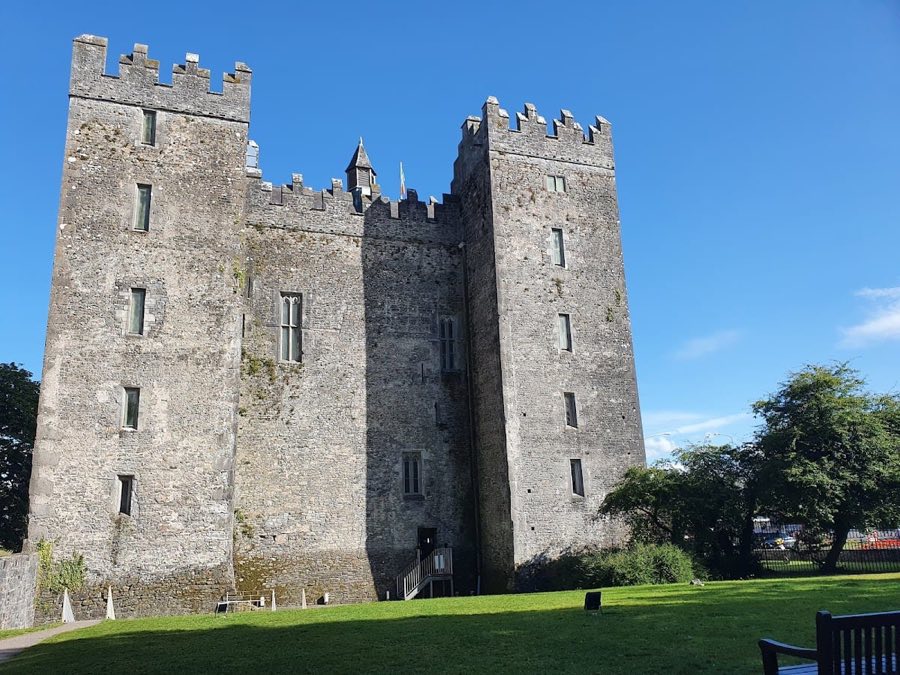
The current Bunratty Castle is a large 15th-century stone tower house located in the center of Bunratty village near the Owenogarney River, which flows into the Shannon Estuary. It was originally built by the MacNamara clan and later expanded by the O’Brien family, who made it their chief residence.
The castle is constructed primarily of stone, typical of tower houses from the period. It features thick defensive walls and was originally surrounded by a ditch or fosse, a common medieval defensive feature. The castle’s interior now contains period furnishings, tapestries, and artworks dating from the 17th and 18th centuries, reflecting its historical use and restoration.
No physical remains survive of the earlier stone castle built by Thomas de Clare between 1278 and 1318. This second castle was a large lime-washed white tower surrounded by a 130-meter-long ditch, but its stones were later reused locally, leaving no visible traces.
The locations and details of the first wooden motte-and-bailey castle and the third 14th-century castle remain unknown. Local tradition places the third castle near the site of the later Bunratty Castle Hotel, but no archaeological confirmation exists.
The castle and its surrounding folk park include about 30 buildings, such as Ardcrone Church, forming an open-air museum complex. By the late 19th century, the castle’s condition had deteriorated significantly, with the Great Hall roof collapsed. Mid-20th-century restoration efforts reroofed and stabilized the structure, preserving it for future generations.
No. 45329
No. 90644
No. 38567
No. 20600
Comments
Comments for Bunratty Castle will require a verified account before posting.
We'll send a verification link before your first comment is published.