No. 51980
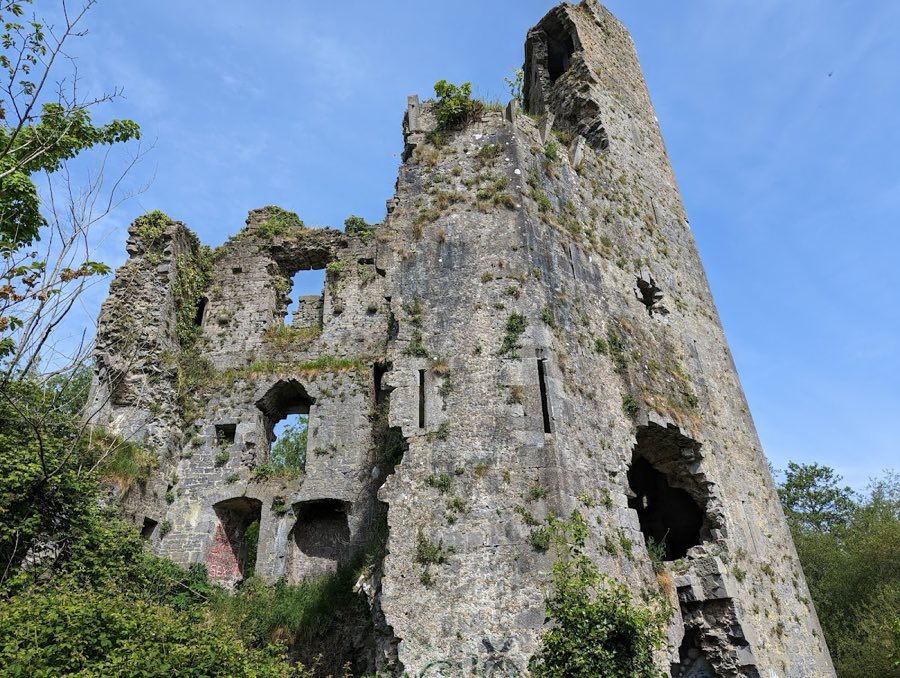
Castle Troy
Ireland
CastleRuinFor events13th century
No. 90644
Castle · Ireland
No. 90644 · 52.670 N, 8.626 W
For events
King John's Castle, Limerick is marked as a château or castle venue lead. Capacity, indoor/outdoor spaces, catering rules, and accommodation options are published only after public verification.
Event types: Private events, Cultural gatherings, Filming and photography
Quick summary
King John's Castle, Limerick is a castle in Limerick, Ireland with origins associated with the 10th century.
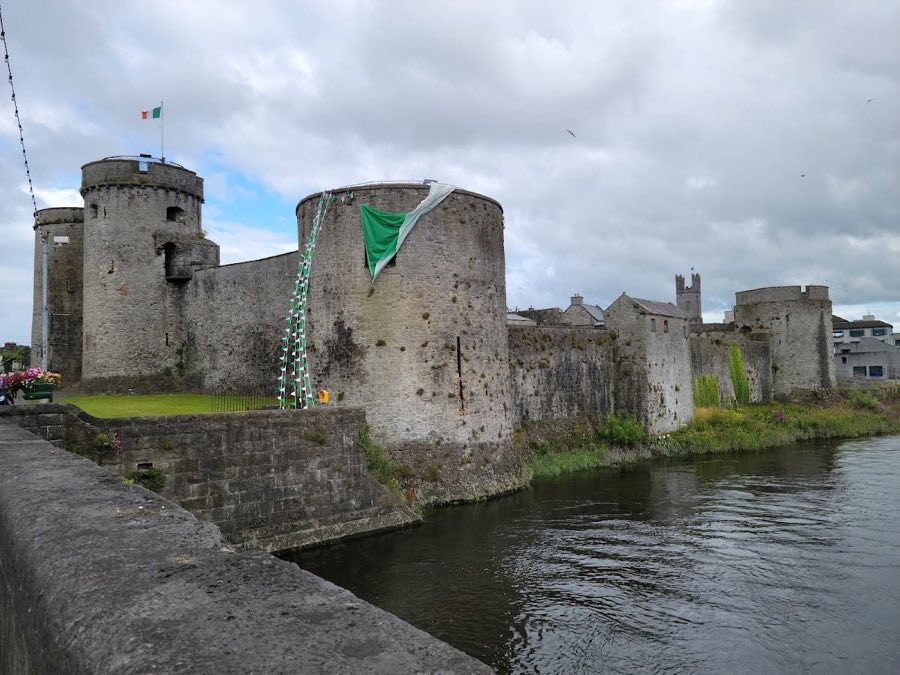
See all castles in IrelandKing John’s Castle is situated on King’s Island in the city of Limerick, Ireland. The site originally hosted a Viking fortress established in 922 by the Viking leader Thormodr Helgason, also known as Tomrair mac Ailchi. This early stronghold served as a base for Viking raids along the River Shannon, but by the 10th century, local Irish clans had subdued the Viking presence in the area.
In 1195, the Anglo-Normans captured Limerick under the leadership of John, Lord of Ireland, who later became King John of England. Around the year 1200, he commissioned the construction of the current castle, which was completed by approximately 1210. The fortress was strategically placed to guard the frontier between the Gaelic kingdoms to the west and the Norman-controlled lands to the east and south. During Norman rule, Limerick flourished as a port and commercial center. Notably, the castle contained a mint in its north-east tower, authorized by King John to produce coins, some of which are preserved today in the Limerick museum.
The castle and the city endured a series of five sieges throughout the 17th century. In 1642, during the Irish Confederate Wars, Protestant forces used the castle as a refuge while fleeing the Irish Rebellion of 1641. They were besieged by Irish Confederate troops led by Garret Barry, who employed mining techniques to undermine the castle walls, causing significant damage. Later sieges took place during the Cromwellian conquest in 1650-51 and during the Williamite War in 1690-91, the latter concluding with the Treaty of Limerick.
From 1791 onward, the castle was repurposed as a British military barracks, accommodating over 400 soldiers. During this period, the towers were altered to support modern artillery. In the 20th century, the castle’s courtyard saw the construction of 22 houses between 1935 and 1989, which were later removed. Archaeological excavations conducted in 1900 and again in 1990 uncovered remains of the earlier Viking settlement, features of a pre-Norman village, and evidence related to the 1642 siege, including mines and counter-mines. Between 2011 and 2013, the site underwent a significant redevelopment that included the addition of a modern visitor center with interactive exhibits and amenities.
King John’s Castle is a 13th-century Anglo-Norman fortress located within the medieval “English Town” area of Limerick on King’s Island, adjacent to the River Shannon. The castle’s layout is five-sided, formed by curtain walls that enclose a rectangular courtyard. The lower sections of these walls curve outward, a design intended to deflect incoming projectiles. Large round towers reinforce both the gate and the curtain walls; these towers extend beyond the walls to allow archers to fire along the castle’s perimeter, providing overlapping fields of defense.
Unlike many castles of its time, King John’s Castle does not have a central keep, or donjon. Instead, it features a high curtain wall, originally taller than it stands today, built to withstand attacks from medieval siege engines. The main entrance was once protected by a drawbridge spanning a moat, now dry, and connected to a barbican, a fortified outpost or gateway. The north-east tower within the castle housed the mint authorized by King John, where coins were produced.
Inside the courtyard, there were originally several important structures, including a great hall used for banquets, kitchens, military tents, and stables. While these internal buildings have been destroyed over time, the remains of the great hall are still visible today. The castle walls suffered partial destruction during the 1642 siege, which led to restoration efforts. Archaeological investigations have revealed defensive architectural elements and features related to the siege, such as mines and counter-mines used in attempts to breach the walls. The site has been extensively restored and conserved, with a modern visitor center constructed above the archaeological remains, offering exhibition space and views over the courtyard and river.
No. 51980
No. 45329
No. 69384
No. 50521
Comments
Comments for King John's Castle, Limerick will require a verified account before posting.
We'll send a verification link before your first comment is published.