No. 52567
Château de Beaujeu
France
ChâteauRuin16th century
No. 38448
No. 38448 · 47.411 N, 2.888 E
Quick summary
Buranlure is a castle in France with origins associated with the 14th century.
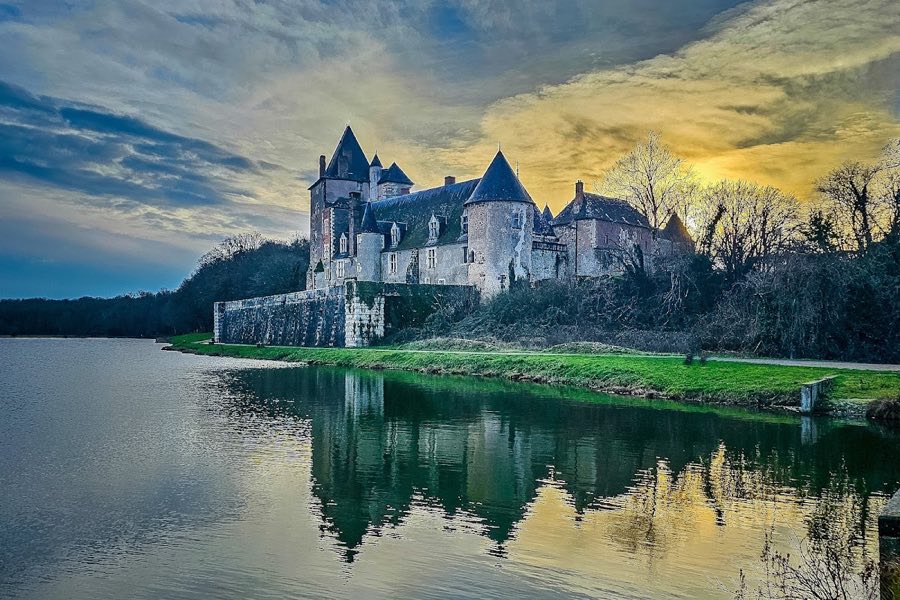
See all castles in FranceBuranlure, in Boulleret, France, is a medieval fortified manor established by feudal lords under the County of Sancerre and developed chiefly between the 14th and 16th centuries, with later Renaissance alterations. Its riverside location on the former bed of the Loire placed it on the frontier between the French king’s domain, centred at Bourges, and the duchy of Burgundy, so the estate served an important defensive and military role in the later Middle Ages.
From the 14th century into the 16th century the estate belonged to local noble families and played a defensive part in the region, particularly under the de Bar family. During the Hundred Years’ War the house functioned as a base for royal troops; from 1420, when Anglo–Burgundian forces held the nearby town of Cosne, Buranlure sheltered forces loyal to the king of France.
Religious conflict reached the estate during the Wars of Religion. In 1573 the lord of Buranlure, Antoine de Bar, raised men to support Marshal Claude de La Châtre in the siege of Sancerre, which was then a Protestant stronghold.
The de Bar line gradually abandoned the old residence and in 1769 the estate passed to the Perrinet‑Langeron family. They converted the small castle into farm buildings because they valued the surrounding pastures more than the medieval stonework; this practical reuse continued into the early 20th century and effectively prevented extensive modernization of the structures.
By the end of the Second World War the buildings were badly worn by time and successive occupations. In 1944 Arnaud de Vogüé, a descendant of the Perrinet‑Langeron family, carried out a program of careful repair aimed at restoring the château’s historic appearance. The property was listed as a monument historique on 25 May 1944 and has remained in the same family since the eighteenth‑century purchase. In recent decades the house has also been used as a location for film and television productions, including Le Grand Inquisiteur (1979), Parking (1985), Dandin (1987–88), the television Les Trois Mousquetaires (2005), and the productions Henri IV and La Commanderie (both 2008 and 2010). The site is opened to the public in July and August and during European Heritage Days.
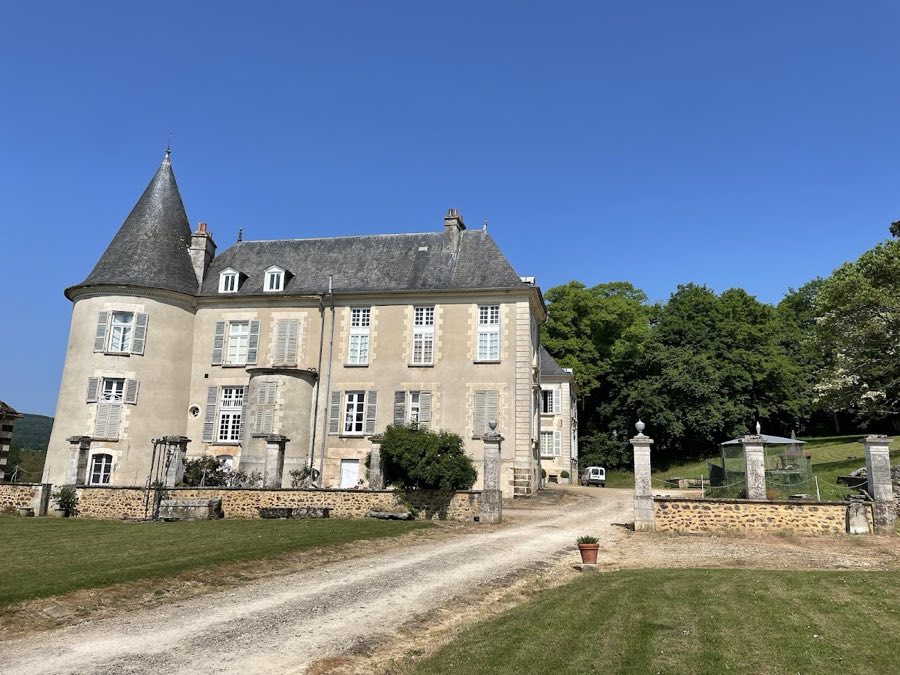
The site is arranged around a semicircular lower courtyard that faces the main approach and contains agricultural annexes. Built of local stone, this outer space still preserves a dovecote (pigeon house), stables and barns that reflect the estate’s long use as farmland. Access from the road is carried by an 18th‑century single‑arch stone bridge, which replaced an earlier drawbridge and became the principal means of entry.
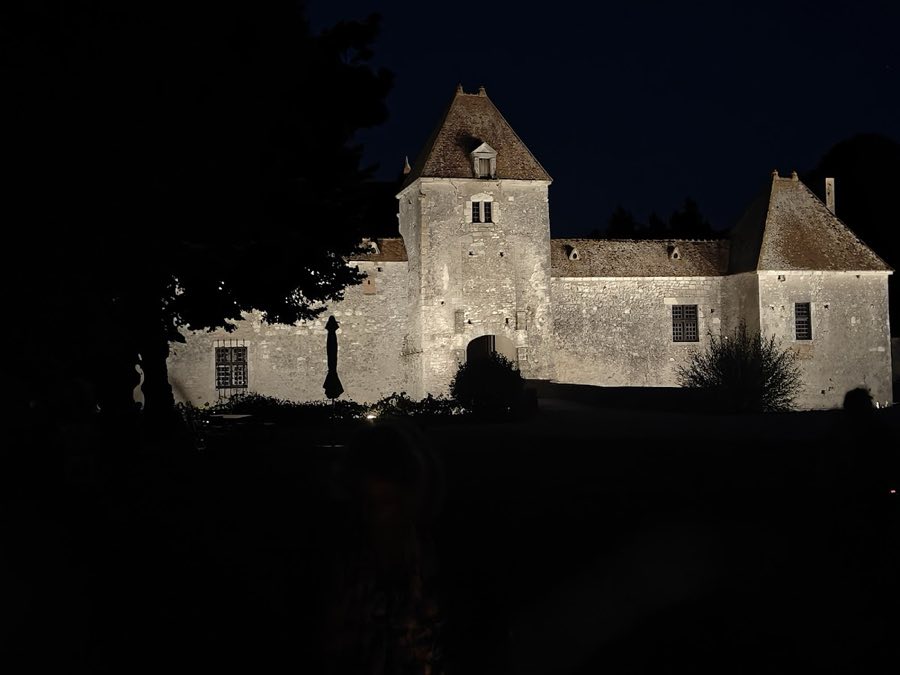
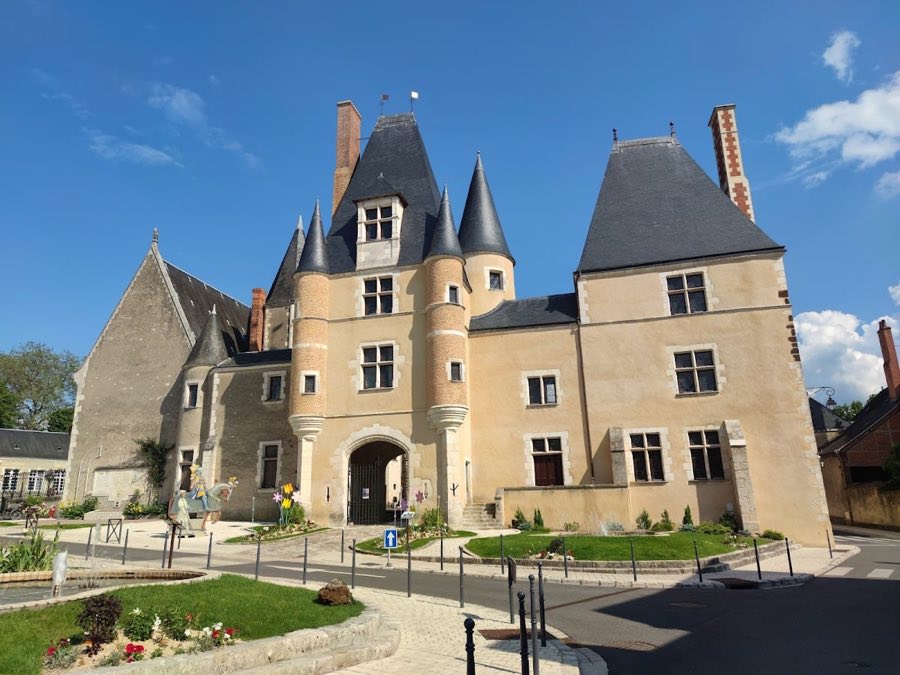
Passing beneath a square gate tower leads into the inner courtyard, which is enclosed by buildings erected on the foundations and fragments of the original feudal castle. At the far side of the court stands a building from the 15th century whose front is divided by a small staircase turret; its openings are fitted with windows framed by colonnettes (small columns) and by prismatic moldings, features that date that range of work to the late medieval period.
The wings that close the court to the north and south are later additions. In the 16th and 17th centuries the outer walls were opened with larger windows, and the roofs were decorated with carved stone dormer windows in a Renaissance manner. On the first floor of the south wing there is a chapel and an adjoining room whose fireplace mantel bears a carved Renaissance frieze showing a mythological combat between horsemen. Overall, the buildings show successive phases of medieval construction, early modern remodelling and practical agricultural reuse, and many elements survive either restored in place or conserved following the mid‑20th‑century repairs.
No. 52567
No. 69236
No. 89557
No. 17095
Comments
Comments for Buranlure will require a verified account before posting.
We'll send a verification link before your first comment is published.