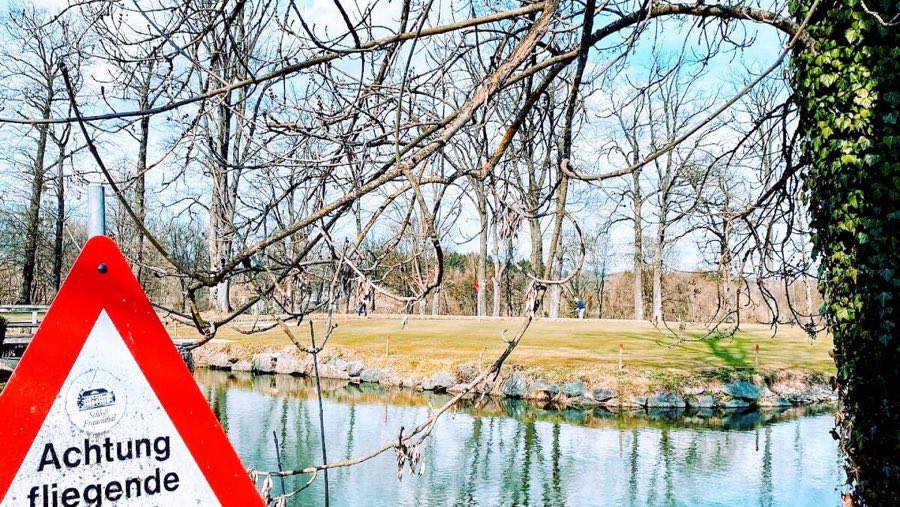
No. 47150
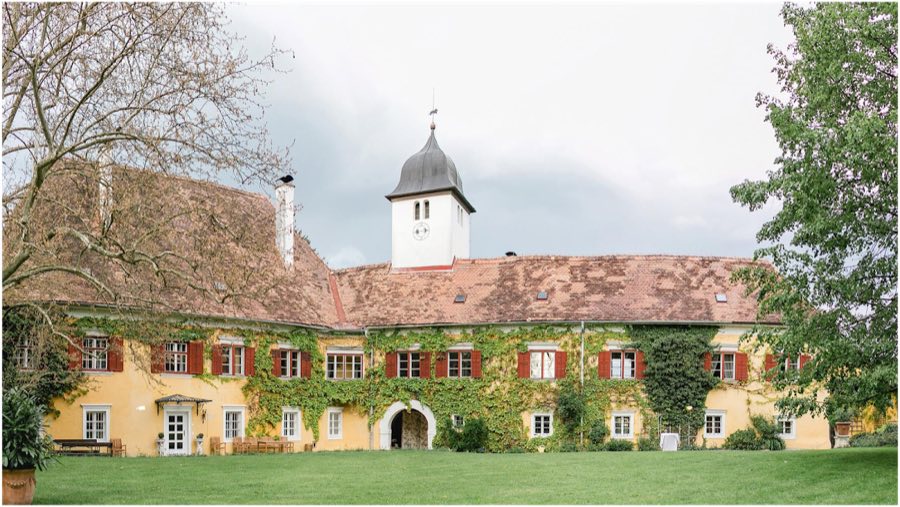
Frauenthal Castle
Austria
PalaceIntact16th century
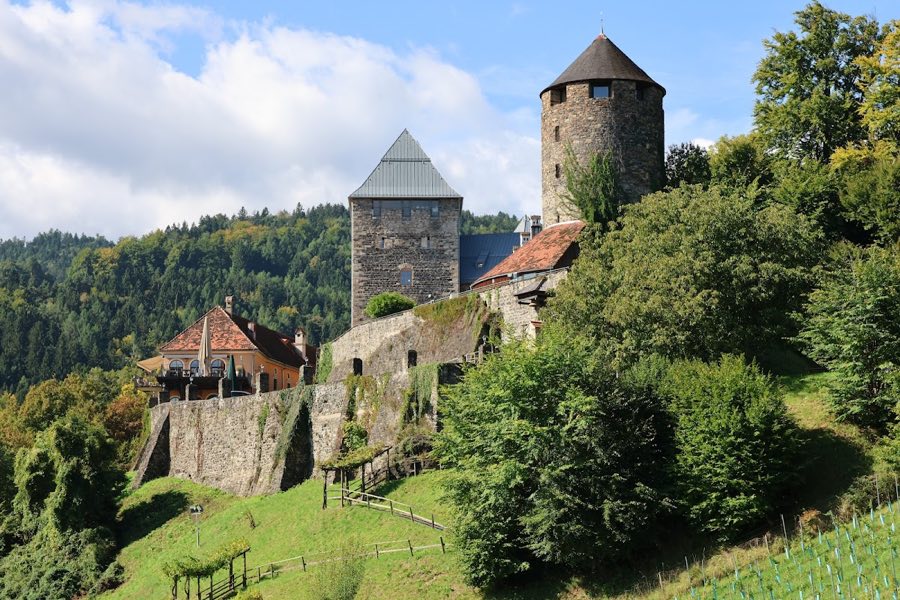
No. 65137
Castle · Austria
No. 65137 · 46.813 N, 15.197 E
Quick summary
Burg Deutschlandsberg is a castle in Austria with origins associated with the 7th century.
See all castles in AustriaBurg Deutschlandsberg in Deutschlandsberg, Austria, was established by the medieval Archbishopric of Salzburg.
The site shows human activity long before the castle. A level area in the northeast, called the Tanzplatz (also recorded as Tanzkogel or Tanzboden), produced Neolithic material of the Lasinjak culture dated about 3900 to 3300 BCE and pottery of the Retz-Gajary type from the early Copper Age, roughly 2800 to 2400 BCE. Later prehistoric occupation included a fortified settlement of the Hallstatt period with defensive works and buildings of La Tène date.
Traces continue through the Roman period and into the Early Middle Ages, with finds extending to the 7th century. In the southern part of the castle area archaeologists have identified material from an earlier installation of the 10th and 11th centuries, indicating continuity of use before the medieval stone complex was built.
Around the year 970 Emperor Otto I gave the area to the Archbishopric of Salzburg. In the first half of the 12th century a stone building with a polygonal early tower was erected, probably under Archbishop Konrad I, and the estate was placed in the hands of a ministerial family, the Lonsbergers. A certain Fridericus de Lonsberch is recorded as burgrave in 1153, the same year a mass chapel dedicated to Saint Lawrence is attested. The site appears in written form as castrum “Lonsperch” in the years 1185 and 1188.
In 1292 the Landsberger Bund was concluded at the site. During the 13th century the western part of the complex burned, and in the 14th century a Gothic castle was built with the earlier tower restored. From 1479 until 1490 King Matthias Corvinus of Hungary occupied the castle; it was returned to the Archbishopric of Salzburg, who strengthened its defenses. In 1532 the castle withstood an attack by Ottoman forces. The Recess of Vienna of 1535 incorporated the territory into Styria.
The property passed into private hands and back over the following centuries. The Kuenburger family acquired the castle in 1595. The Archbishopric repurchased it in 1630 and used the buildings as the administrative center for its western Styrian possessions and as the seat of the local court, the Landgericht Deutsch-Landsberg, until 1803. After secularisation the castle became state property in 1803, was bought by Count Moritz von Fries in 1811, and then passed to the Liechtenstein family in 1820.
In the nineteenth century the bell tower burned after a lightning strike on 7 August 1830. Later alterations included the shortening of the north round tower in 1876 and the demolition of the Romanesque tower in the late nineteenth century (1885 and 1890 are recorded). The town of Deutschlandsberg purchased the compound in 1932. By about 1945 the buildings had fallen into serious decay; stabilisation and clearance work took place under Mayor Paul Dittrich between 1946 and 1948. From 1958 the town adapted the existing structures—retaining their historic layout—for a museum project called “Archeo Norico,” for event spaces and for hospitality uses, and the Burgmuseum opened in 1981.
Conservation work has continued in the twenty-first century. The Romanesque tower was reconstructed on its original site in 2011 and 2012 following an early nineteenth-century design. The castle cistern, which had been enlarged around 1631, was made accessible and presented to the public in 2014. Rebuilding of the ring wall on the steep slope above the Laßnitz gorge began in 2014. The main tower received a new steep, tent-like roof in 2017, a 15 meter-high covering of titanium-zinc set at a 60 degree pitch modeled on a nineteenth-century form. Major parts of these recent projects were funded by European Regional Development and provincial subsidies; the Romanesque tower reconstruction cost about €800,000 and the main tower roof project about €270,000. The castle is protected under monument law and the high northeastern area known as the Altburg or Tanzboden is designated as a protected archaeological site. The Burgmuseum’s metal holdings have attracted criticism from established archaeologists, who state that many pieces likely originated in decades of illicit digging and questionable purchases and therefore lack secure provenance.
Perched on a rocky spur above the Laßnitz in the Klause valley, the complex presents a compact arrangement of medieval buildings clustered around defensive walls and a steep drop to the stream. Sources give elevations of 511 meters in one account and 398 meters in another. The main approach enters from the northeast where a forecourt and the present gateway sit above medieval foundations; archaeological work in this entrance zone uncovered traces of buildings that once contained two tiled stoves.
The oldest visible masonry is concentrated in the southwest sector. There a dominant Gothic tower house dates to the first half of the fourteenth century, and immediately behind it stands the remains of an early polygonal tower from the beginning of the twelfth century. That early tower had been defended by a ditch, over which a chapel was later placed. A residential block, the palas, adjoins these towers; the ditch now seen in front of the tower house is identified as the second moat of the site.
To the north of the tower house a group of buildings extended in early modern times. A Renaissance range dated 1604 forms the northern tract, linked to the older core by a covered passage and called the Kienburg. South of this northern range a hall converted for later use is described as the knight’s hall. A stable tract once occupied the northwest side; it has been removed but is still visible in historic illustrations.
Water management and storage survive as distinct archaeological features. A cistern enlarged about 1631 was designed to collect roof water, channel it through settling devices and a sand filter, and store it for use; this cistern was cleared and made accessible in 2014. The Romanesque tower was rebuilt on its original footprint in 2011 and 2012 as a four-storey structure with a steep tent-like roof and is employed for museum purposes. The main tower received a reconstructed steep roof in 2017 matching a nineteenth-century silhouette, and work to rebuild the ring wall on the steep Laßnitz-facing slope began in 2014.
Excavations carried out in 2015 and 2016 produced a large archaeological assemblage. Teams recovered 47,940 ceramic fragments, of which 4,756 are rim sherds, 40,550 are wall sherds and 2,634 are base fragments. Several thousand animal bones were also recovered, and 2,952 of those were identified to species. Important discoveries from these investigations have been published and selected objects are displayed in the Burgmuseum. The northeastern plateau, the Altburg or Tanzboden, retains traces of prehistoric settlement and is protected as an archaeological area.
No. 47150
No. 72194
No. 70688
No. 45350
Comments
Comments for Burg Deutschlandsberg will require a verified account before posting.
We'll send a verification link before your first comment is published.