No. 52646
Oberburg Driedorf
Germany
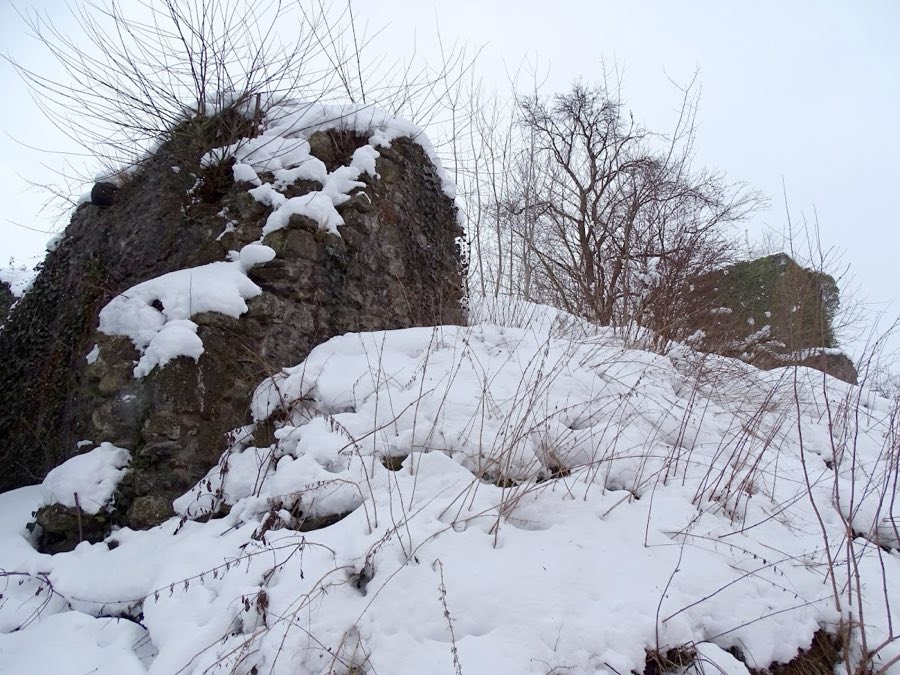
CastleRuinFor events14th century
No. 58431
Castle · Germany
No. 58431 · 50.854 N, 8.218 E
Quick summary
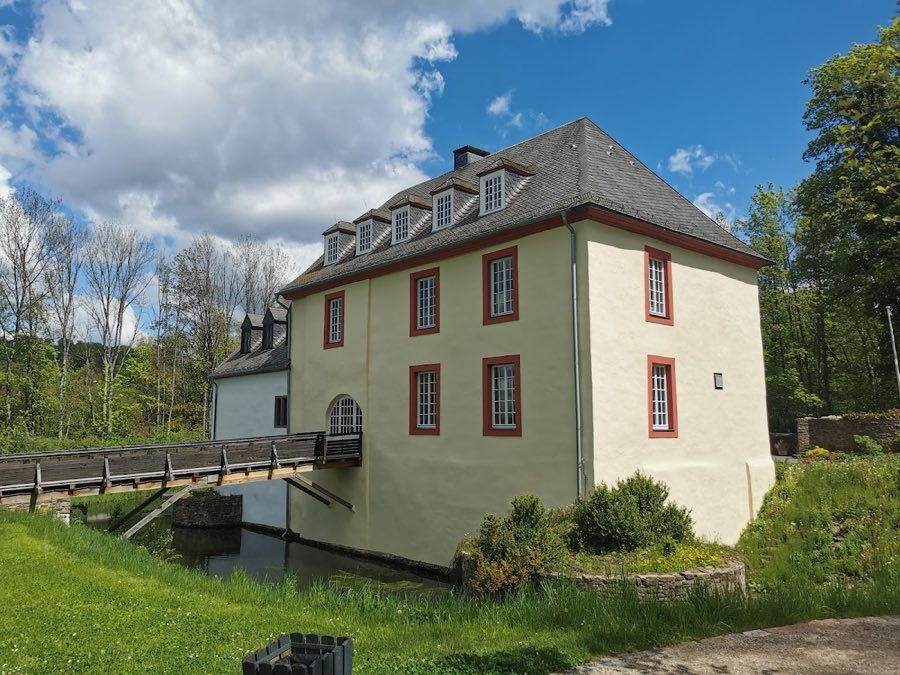
Burg Hainchen is a castle in Germany with origins associated with the 14th century.
See all castles in GermanyBurg Hainchen is recorded from at least 1290 and originated in the medieval period as the fortified residence of local lords in what is now Netphen, Germany. An earlier document of 1239 records Count Heinrich II of Nassau transferring the revenues of the Netphen parish to the Premonstratensian nunnery at Keppel at the request of his vassal Friedrich vom Hain, who had founded that house on his estate.
In 1313 the then-owners sold the site to Count Heinrich I of Nassau-Siegen, bringing the property into Nassau influence in the early 14th century. By 1355 the castle was held as a Nassau fief and granted to the knight Konrad von Bicken. A descendant, Philipp von Bicken, secured the entire holding, including the castle and the valley called Tal zum Hain, as a fief in 1443 and carried out enlargements that added a chapel on the northeast side of the main house.
In the opening decades of the 1500s the von Bicken family made the water castle their principal residence and strengthened it with defensive walls and bulwarks. In 1511 the Nassau liege lord Johann V agreed that Nassau troops could be stationed there in perpetuity. Johann Adam von Bicken, born at the castle, later entered the church hierarchy and served from 1601 to 1604 as Archbishop and Elector of Mainz and as Archchancellor of the Holy Roman Empire.
By the 18th century the von Bicken line was economically weakened and sold the property in 1711 to the Prince of Nassau-Siegen; further transfers placed Burg Hainchen in the possession of Prince Wilhelm IV of Orange on 7 July 1747. In the 19th century, after the site passed to Prussia, the buildings fell into decay and in 1864 the last two main towers were taken down, their masonry reused to build the road between Hainchen and Rittershausen.
In the 20th century the structure was assigned to the Prussian forest administration for housing and economic uses and in 1945 empty rooms temporarily accommodated the bombed-out St. Josefs children’s home. A conservation workshop proposed in the 1960s by Professor Otto Sticht did not proceed, but stewardship passed in the 1970s to the Siegerländer Burgenverein, which promoted conservation and rebuilding. Work began with a foundation-stone laying on 21 February 1976 and the restored water castle was handed over on 15 January 1977. Since restoration the site has been operated by the Institut Lebenshilfe as a place for recreation and residential support for people with disabilities and for elderly guests, and the adjacent park has been maintained as a cultural meeting area.
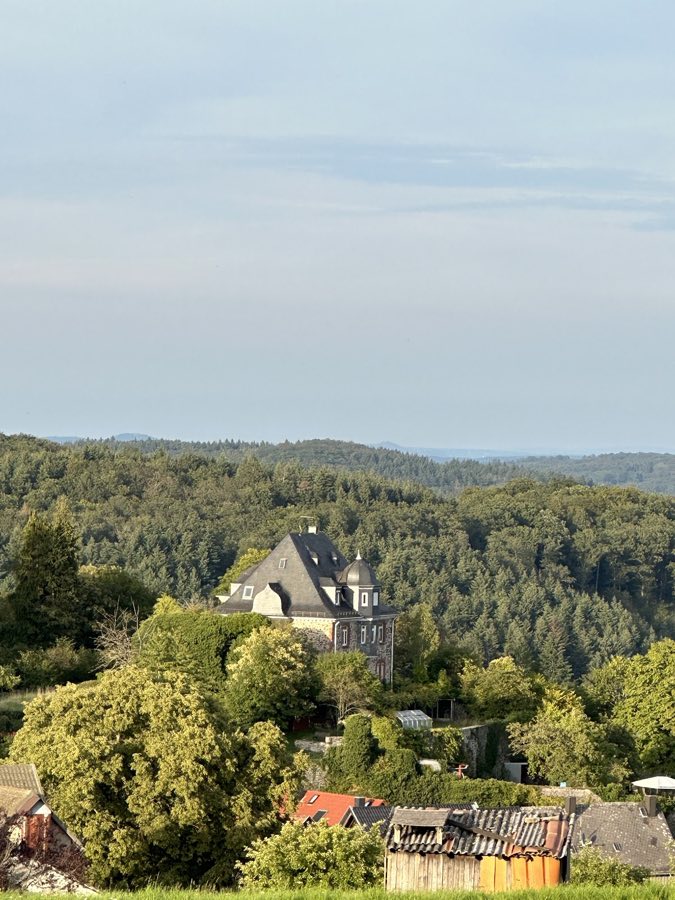
Burg Hainchen is organised as a water castle with wet ditches and fortifications; documentary evidence records that the site was entirely surrounded by two ditches and was strengthened with walls and bulwarks during early 16th-century works. The fortress originally featured four corner towers; two surviving main towers were dismantled in 1864 and their masonry removed for local road construction.
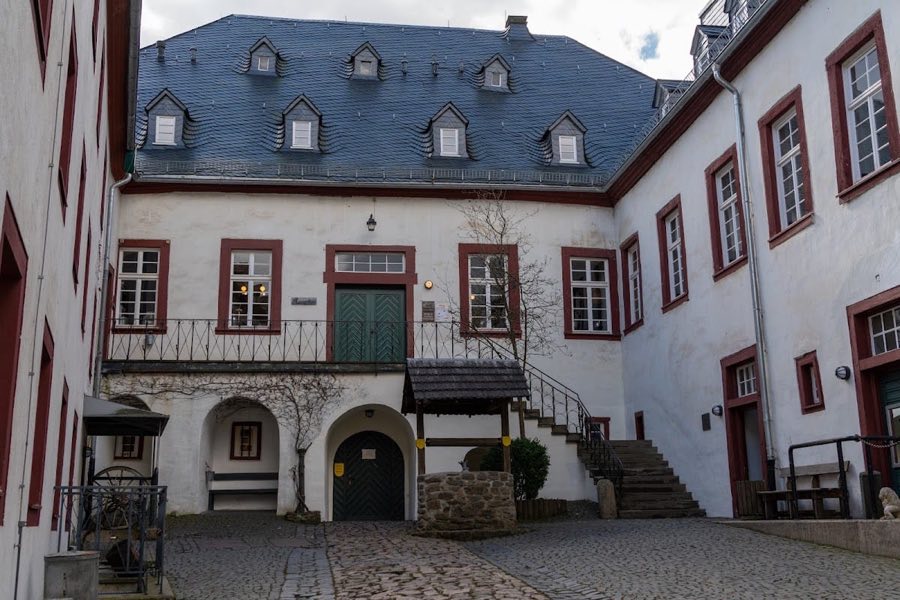
The complex retains a medieval barrel-vaulted cellar, an in situ example of stone vaulting beneath the principal building, and ground-floor vaulting associated with work dated to 1537, showing a sequence of construction that continued into the early modern period. An annex chapel on the northeast side dates to the enlargement undertaken by Philipp von Bicken.
Surviving fittings include an oak door dated 1557 and the cross-ribbed vault of the room known as the old kitchen; both elements endured later interventions and were conserved in 20th-century restorations. The building fabric experienced practical reuse over time: tower masonry was taken for road work in the 19th century and early 20th-century occupation by the Prussian forest administration introduced residential and economic uses. Parts of the complex housed the damaged St. Josefs children’s home in 1945, and 1970s conservation work conserved the oak door, the vaulted cellar and the old kitchen vault while returning the site to active use.
The castle is accompanied by a park of roughly 33,000 square metres that is historically and spatially linked to the estate and now functions as a cultural meeting place.
No. 52646
No. 77514
No. 28483
No. 30311
Comments
Comments for Burg Hainchen will require a verified account before posting.
We'll send a verification link before your first comment is published.