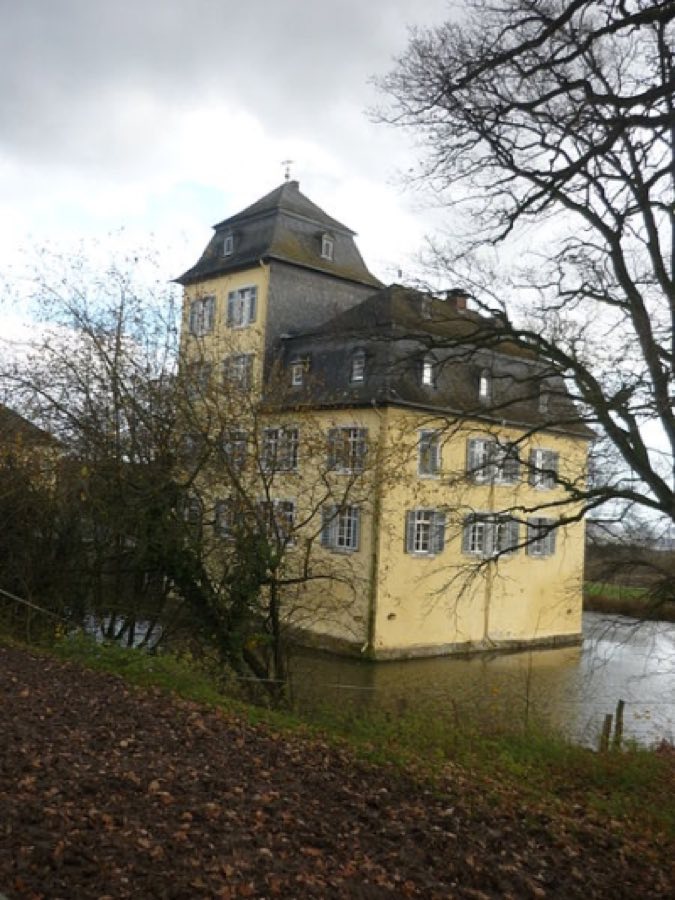
No. 11708
Hof Neuroth
Germany
Manor houseRestored19th century
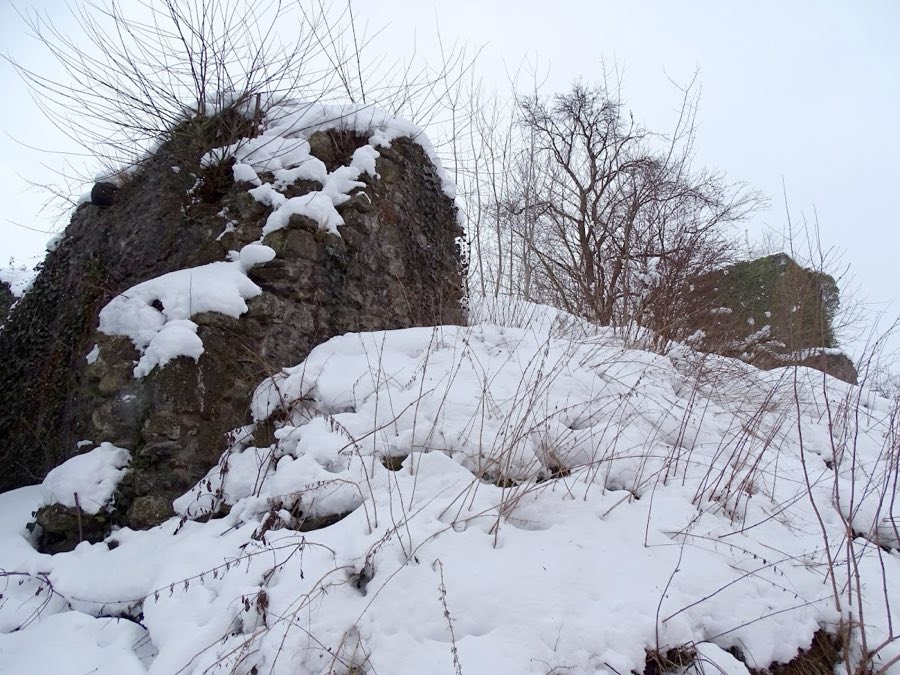
No. 52646
Castle · Germany
No. 52646 · 50.635 N, 8.184 E
For events
Oberburg Driedorf is marked as a château or castle venue lead. Capacity, indoor/outdoor spaces, catering rules, and accommodation options are published only after public verification.
Event types: Private events, Cultural gatherings, Filming and photography
Quick summary
Oberburg Driedorf is a castle in Germany with origins associated with the 14th century.
See all castles in GermanyOberburg Driedorf stands above the town of Driedorf in the municipality of Driedorf, Germany, and was erected by regional medieval lords in the late thirteenth or early fourteenth century.
The castle’s origins are linked to events around 1305 when King Albrecht I granted town rights to Driedorf, and one reconstruction holds that the stronghold was raised at about that time. Emich I, who held the Nassau portion of the local lordship and whose main residence was the Junkernschloss in Driedorf, was associated with the place; the upper fortification appears to have been built to protect the town’s defensive wall. An alternative attribution credits Count Otto with building the castle at the end of the thirteenth century.
In 1368 Heinrich of Nassau-Hadamar, a grandson of Emich I, died. His brother Emich III was judged unfit to rule, and Ruprecht of Nassau-Sonnenberg, who had married their sister Anna around 1362, assumed guardianship. With the older Nassau-Hadamar line disappearing from records by about 1394, Ruprecht, supported by Heinrich II of Hesse, seized control of Driedorf asserting it as a fief that had reverted to Hesse; he was formally enfeoffed. Johann I of Nassau-Dillenburg also laid claim, producing a bitter dispute over the place.
Ruprecht died in 1390. His widow Anna remarried Diether VIII of Katzenelnbogen, and through that marriage Diether acquired one third of Driedorf. When Diether died in 1402 the castle and lordship passed to Landgrave Hermann II of Hesse and to Johann IV of Katzenelnbogen, who divided possession between them and carried out a program of renewal at the stronghold. In 1479, after the Katzenelnbogen line died out, Driedorf was transferred to Heinrich III of Hesse-Marburg. After protracted legal contests the lordship returned to the House of Nassau in 1557, and the castle saw further renewal work in 1604.
Severe fires affected the building and the town in 1635 and again in 1672, progressively damaging the fortifications. A major blaze in 1812 left the castle in ruins; it was not rebuilt, and later town expansion covered and altered the remains. The site has since been conserved and renovated and is recorded as a protected cultural monument of Hesse.
The castle lay directly against Driedorf’s defensive circuit, forming a linked complex in which the fortification wall enclosed the settlement and the castle’s battlements formed part of that circuit. Archaeological evidence records a surrounding curtain wall with five towers that were integrated into the town’s defences, so that the castle and the urban ramparts functioned as a single fortified ensemble.
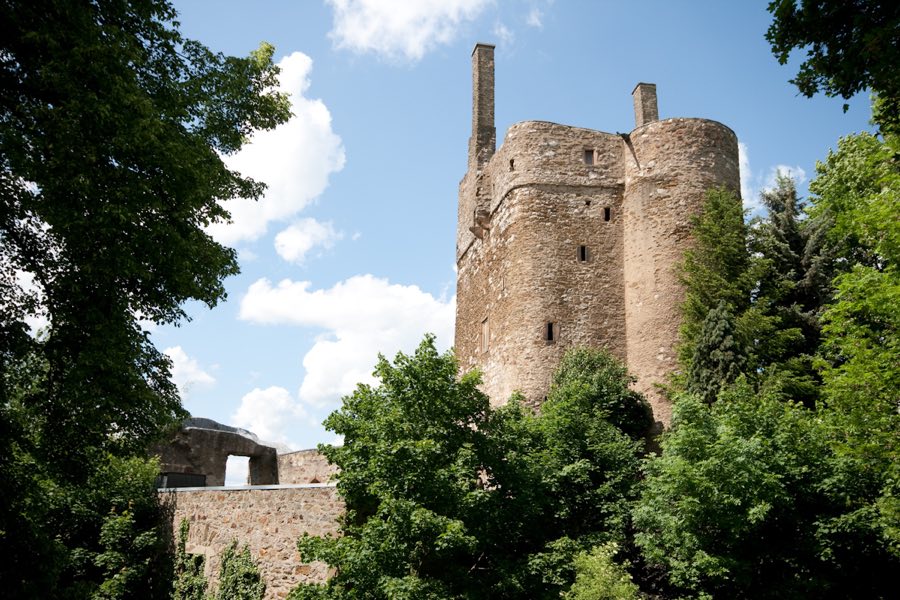
At the northwestern edge of the town a rectangular main tower, described historically as the upper tower, still stands where it meets the town fortification. Physical traces show this tower connecting into the defensive wall and the surviving section of the enclosing wall that once formed the inner ward. These structural relationships demonstrate how the tower and the adjacent wall worked together to guard the town’s perimeter.
Today the restored ruin and the preserved tower survive as visible reminders of the medieval complex. The ruin has undergone conservation and renovation work, and the intact tower is located on private land and may be seen only from the public street. The preserved elements remain in situ and display the arrangement in which the castle was built as an integral part of Driedorf’s town defences.
No. 11708
No. 79217
No. 58431

No. 30311
Comments
Comments for Oberburg Driedorf will require a verified account before posting.
We'll send a verification link before your first comment is published.