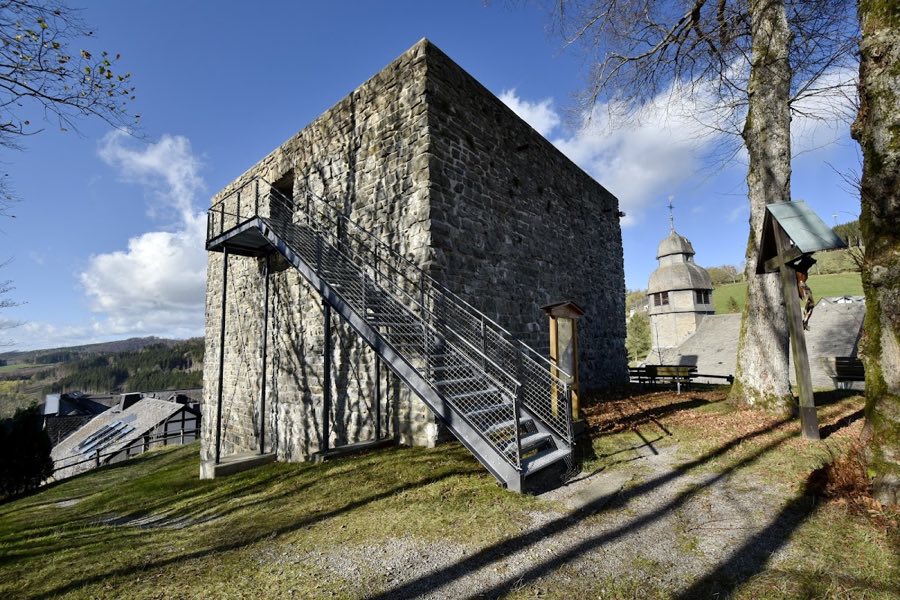
No. 87849
Burg Rappelstein
Germany
CastleRuin14th century
No. 77514
No. 77514 · 50.994 N, 8.551 E
Quick summary
Burg Hatzfeld is a castle in Germany with origins associated with the 13th century.
See all castles in GermanyBurg Hatzfeld stands in the municipality of Hatzfeld (Eder), Germany; it was built in the 13th century by the medieval noble family von Hatzfeld and served as their ancestral stronghold.
The family’s presence at this place reaches back before the castle. A noble court connected with the von Hatzfeld appears in records for 1138 at the site now occupied by the Emmaus Chapel, which was formerly the village church dedicated to St. Cyriacus in Nieder‑Hatzfeld. By 1194 members of the family were more closely aligned with the Archbishopric of Mainz than with Hesse. A fortified site on a projecting spur above the Eder is first mentioned in 1282, and the completed 13th‑century castle became the principal residence of the house.
The estate was held in joint family ownership, which repeatedly produced internal conflict. A 1331 peace agreement among the kin permitted the erection of a second residential building within the castle complex. Longstanding disagreements culminated in mutual imprisonments among relatives in 1383. That same year an arrangement appointed a shared steward to administer the joint property. A later agreement of 1419 regulated the castle guard by means of armed servants. Renewed disputes in 1491 and 1497 led to further peace agreements and a rearrangement of the expanded living quarters, including the creation of a smaller dwelling; the last recorded accord of this kind dates to 1545.
The von Hatzfeld family expanded their local holdings and official duties during the later Middle Ages. Around 1387 they acquired the villages of Bringhausen and Eifa and acted as administrators for Mainz in several places, including service at Mellnau. Military pressure from Hesse reached the castle in 1379 when Hessian forces besieged town and fortress; parts of the castle suffered heavy damage, though the fortress was not captured. Earlier obligations shifted the castle’s feudal status: in 1311 the family rendered the fortress as a fief to Hesse, while a town court established on the slope beside the Eder in 1340 remained under Mainz authority. In 1464 Hesse’s landgraves became pledge holders of the Mainz administrative district that included Hatzfeld.
Lineal change and transfers followed. The Hatzfeldt‑Hatzfeldt branch became extinct in 1570. After that the landgraves claimed half the lordship as a reverted fief and later acquired the remainder in purchases completed in 1588 and again in 1772. A different branch, the Hatzfeldt‑Wildenburger line, rose in rank to become imperial counts and, through possession of the Silesian lordship of Trachenberg, were elevated to princely status in 1748.
The castle fell out of continuous use from the 16th century onward. Observers described it as partly deserted in 1570, though a small portion remained occupied into the early 18th century, with habitation recorded in 1707. In 1842 the Grand Ducal Darmstadt building authority ordered demolition of some ruined sections. During the late 20th century a local association for castle and local history cleared the site. Work to stabilise and sanitize the remains has progressed since 1991, and excavations during this period have produced small finds. The hill with the ruins remains in family hands today and is owned by Sebastian, Count von Hatzfeldt.
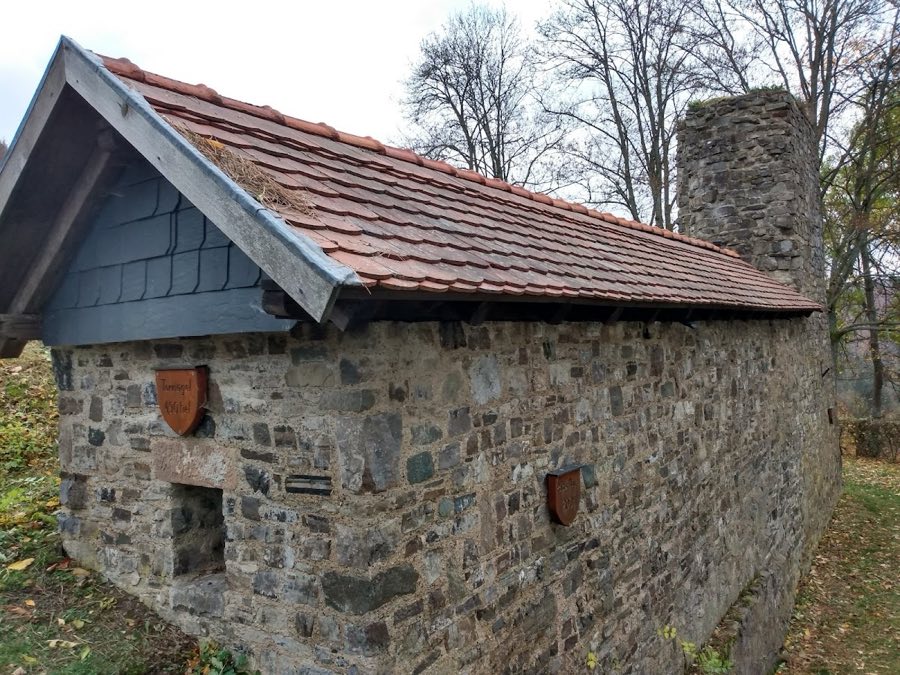
The castle occupies a rocky spur on the hillside above the Eder valley at about 435 metres elevation, forming a classic spur castle set above the river slope. The surviving complex preserves the footprint of medieval occupation with remnants that record both living and defensive arrangements developed during its active period.
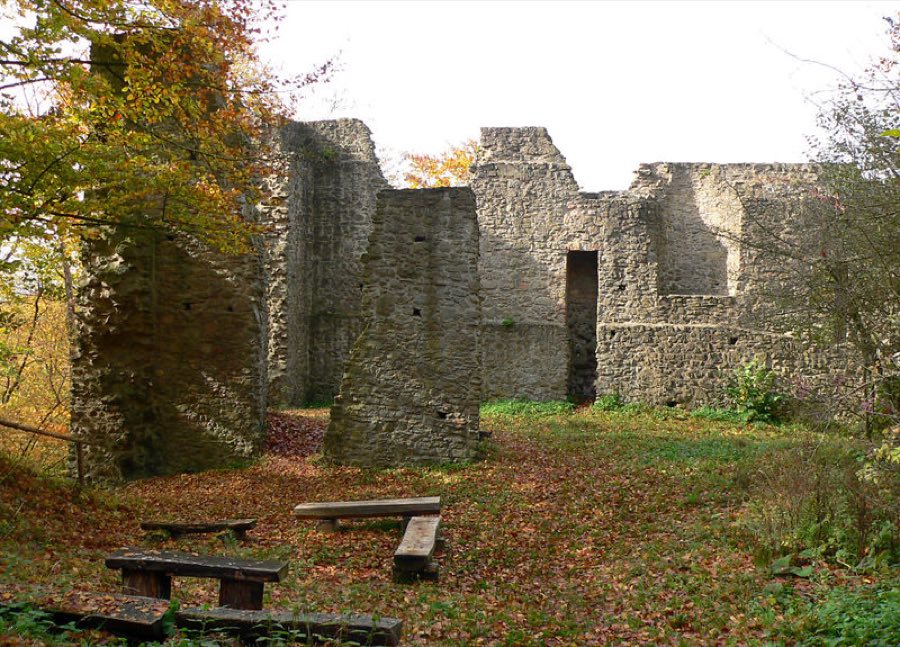
A southeastern defensive tower is explicitly documented among the standing fragments and represents one of the principal fortification elements still identifiable on the site. The interior space of another tower is also attested, showing the presence of vertical defensive and domestic structures. A surviving castle gate marks the approach into the core area. Residential architecture is evidenced by the remains of the main dwelling building that stood within the enclosure; historical agreements record permission for a second residential house in 1331 and later reallocation that produced an additional smaller house, all of which are reflected in the ruined building traces.
Archaeological work and clearance since 1991 have produced small finds associated with occupation, notably belt buckles, clay figurines and ceramic vessels. These objects were recovered during excavations tied to the conservation of the ruin. The site today remains fragmentary, with portions reduced to ruinous walls and cleared spaces; sections removed on the instruction of the 19th‑century building authority are part of that later alteration. Local historical accounts attribute the recent clearing and ongoing stabilisation to the efforts of the regional castle and local history association, and the Burgberg with its ruins continues in possession of the von Hatzfeldt family.
No. 87849
No. 24467
No. 58431
No. 69244
Comments
Comments for Burg Hatzfeld will require a verified account before posting.
We'll send a verification link before your first comment is published.